
Opinion|Videos|January 2, 2026
Therapeutic Goals and Quality-of-Life Considerations in Transformed Disease
Author(s)Amitkumar Mehta, MD, Lucy Bailey, CRNP
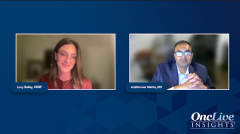
The experts next focus on clarifying the therapeutic goals for patients with transformed follicular lymphoma, particularly older adults. NP Bailey emphasizes that treatment goals must balance disease control, symptom reduction, hospitalization avoidance, and overall quality of life, while also recognizing that transformation introduces a potential opportunity for cure through aggressive modalities such as CAR T-cell therapy. Dr. Mehta and Bailey discuss how rapid disease progression may necessitate interim therapies to stabilize the patient until definitive treatment can be delivered. They revisit the diminishing role of autologous transplant in this population, noting that CAR T-cell therapy has largely supplanted transplant as the preferred curative-intent strategy. The segment also highlights the importance of individualized decision-making. Age alone should not exclude patients from cellular therapy, but comorbidities, functional reserve, and social support structures must be carefully assessed. The faculty stress the importance of realistic goal setting, clear communication, and aligning treatment intensity with patient priorities. This segment offers a nuanced discussion of how to approach transformed disease with both clinical rigor and patient-centered care principles.
Advertisement
Episodes in this series
The experts next focus on clarifying the therapeutic goals for patients with transformed follicular lymphoma, particularly older adults. NP Bailey emphasizes that treatment goals must balance disease control, symptom reduction, hospitalization avoidance, and overall quality of life, while also recognizing that transformation introduces a potential opportunity for cure through aggressive modalities such as CAR T-cell therapy.
Dr. Mehta and Bailey discuss how rapid disease progression may necessitate interim therapies to stabilize the patient until definitive treatment can be delivered. They revisit the diminishing role of autologous transplant in this population, noting that CAR T-cell therapy has largely supplanted transplant as the preferred curative-intent strategy.
The segment also highlights the importance of individualized decision-making. Age alone should not exclude patients from cellular therapy, but comorbidities, functional reserve, and social support structures must be carefully assessed. The faculty stress the importance of realistic goal setting, clear communication, and aligning treatment intensity with patient priorities.
This segment offers a nuanced discussion of how to approach transformed disease with both clinical rigor and patient-centered care principles.
Advertisement
Related to this article
Breast cancer experts address frequently asked questions on adjuvant and metastatic CDK4/6 inhibitor selection in HR-positive breast cancer.
The European Commission approved pembrolizumab plus enfortumab vedotin for muscle-invasive bladder cancer, irrespective of cisplatin eligibility.
Thoracic oncologists weigh how TROP2-directed antibody-drug conjugates fit into sequencing and combination strategies for EGFR-mutated NSCLC.
Patients with pancreatic cancer experience measurable changes in body composition years before diagnosis that differ from those seen in similar individuals without cancer.
Lisaftoclax plus acalabrutinib earned breakthrough therapy status in China for untreated CLL/SLL.
Andrea Cercek, MD, discusses the FDA approval of dostarlimab and its significance for dMMR locally advanced rectal cancer management.
Fadi Haddad, MD, discusses TKI adherence barriers, adverse effect management, and the role of alternative TKI formulations in CML.
Updated ARC-20 data showed casdatifan activity as monotherapy and in combinations across treatment lines in advanced clear cell RCC.
Advertisement
Advertisement
Trending on OncLive
1
FDA Approval of Dostarlimab Brings Potential Organ-Sparing Approach in dMMR Locally Advanced Rectal Cancer
2
Casdatifan Demonstrates Activity in Advanced Clear Cell RCC
3
Treatment Tailoring and Weighing Alternative Formulations Support Optimal TKI Deployment in CML
4
HER2+ Maintenance Therapy Approvals and Innovative Brain Metastasis Care Reshape Breast Cancer Management
5