

The first-line combination of lenvatinib and pembrolizumab elicited durable responses with a manageable safety profile in patients with non–clear cell renal cell carcinoma, according to findings from the phase 2 KEYNOTE-B61 trial.

Associate Editor, OncLive
Ashling Wahner joined MJH Life Sciences in 2022. She produces OncLive's podcast, OncLive On Air, and helps ensure timely publication of news content and announcements from the FDA approval pipeline. She also attends conferences live and virtually to conduct video interviews and produce written coverage. Email: [email protected]
The first-line combination of lenvatinib and pembrolizumab elicited durable responses with a manageable safety profile in patients with non–clear cell renal cell carcinoma, according to findings from the phase 2 KEYNOTE-B61 trial.

The combination of the TIGIT inhibitor domvanalimab and the A2R antagonist etrumadenant enhances the clinical activity of the PD-1 inhibitor zimberelimab when administered as triplet therapy in patients with PD-L1–high, metastatic non–small cell lung cancer.
The FGFR2 inhibitor RLY-4008 generated early evidence of efficacy in patients with cholangiocarcinoma harboring FGFR2 fusions, according to findings from the phase 1/2 ReFocus trial, which were presented at the 2023 ASCO Annual Meeting.

The combination of panitumumab and standard-of-care trifluridine-tipiracil rechallenge delivered a progression-free survival benefit vs trifluridine-tipiracil alone in the third-line setting in patients with refractory RAS wild-type metastatic colorectal cancer, meeting the primary end point of the phase 2 VELO trial.
Whitfield B. Growdon, MD, shares the potential implications of first-line PARP maintenance in newly diagnosed ovarian cancer, the importance of treating patients with effective therapies as early as possible, and where combination regimens could fit into the treatment paradigm going forward.
Whitfield B. Growdon, MD, discusses the role PARP inhibitors have played in ovarian cancer since their introduction to the field, the updated clinical trial data that contributed to the indication withdrawals for these agents, and where future research in this area may be headed.

Eileen O’Reilly, MD, and Benjamin Weinberg, MD, discuss the importance of conducting biomarker testing as the gastrointestinal cancer treatment arena continues to evolve, the need for increased gene fusion testing, and the negative effects of inadequate biomarker testing in the gastrointestinal cancer population.
Yiming Wu, PhD, discusses the rationale for studying splicing defects in patients with chronic lymphocytic leukemia without spliceosome mutations, shared key findings from this study, and emphasized how these findings support further research with METTL3 in chronic lymphocytic leukemia and other hematologic malignancies with RNA splicing dysregulation.

Ribociclib plus switch endocrine therapy induced a statistically significant progression-free survival benefit compared with placebo plus switch endocrine therapy in patients with hormone receptor–positive, HER2-negative, metastatic breast cancer.

Xingming Zhang, MD, discusses unmet needs in fumarate hydratase–deficient renal cell carcinoma; shares key efficacy, safety, and quality of life findings from a phase 2 trial of sintilimab plus axitinib; and elaborates on the next steps for this research, including an analysis of biomarkers and potential resistance mechanisms.

Polymorphic alleles of ABCB1 or VEGF were predictive of lenalidomide efficacy in patients with mantle cell lymphoma who received lenalidomide maintenance after autologous stem cell transplant.

Treatment with ruxolitinib generated superior responses vs treatment with best available therapy in patients with hydroxycarbamide-intolerant or -resistant polycythemia vera, according to findings from the phase 2 MAJIC-PV trial.
Morie A. Gertz, MD, discusses the limitations of the current Mayo Stage IV amyloidosis treatment landscape, the rationale for investigating birtamimab in this population, and the importance of raising awareness for the AFFIRM-AL trial.

Abemaciclib plus endocrine therapy delivered sustained survival benefits with a tolerable safety profile when used as adjuvant treatment in Chinese patients with high-risk, hormone receptor–positive, HER2-negative early breast cancer.

The addition of venetoclax to lenalidomide and rituximab produced early evidence of clinical efficacy with a tolerable safety profile in previously untreated patients with mantle cell lymphoma.
Ana Alfonso Piérola, MD, PhD, discusses the rationale for targeting retinoic acid receptor alpha in patients with higher-risk myelodysplastic syndrome, the goals of the SELECT MDS-1 trial investigating tamibarotene, and where the future of research and treatment for this patient population is headed.

Kevin M. Waters, MD, PhD, discusses key findings from a study that reinforced the rationale for Claudin18.2 testing, the prevalence of this protein in gastric cancers, and how this potential therapeutic target represents the evolving role of pathology in cancer diagnosis and care.

Treatment with sintilimab in combination with axitinib resulted in tumor shrinkage with tolerable adverse effects in patients with advanced fumarate hydratase–deficient renal cell carcinoma.
Cretostimogene grenadenorepvec in combination with pembrolizumab produced high complete response rates with a tolerable safety profile in patients with Bacillus Calmette-Guérin–unresponsive non–muscle invasive bladder cancer.

Michael Andreeff, MD, PhD, discusses the potential benefits of E-selectin inhibition in the AML tumor microenvironment, data that have contributed to the further development of uproleselan in this population, and additional AML targets under investigation that may broaden the treatment landscape.

Treatment with nivolumab plus ipilimumab and a subsequent TKI was effective in patients with metastatic clear cell renal cell carcinoma.

Brian Ball, MD, discusses the significance of targeting RARA in AML, the rationale for SELECT-AML-1, and additional AML research that may contribute to the broadening treatment paradigm in the future.

The bispecific antibody petosemtamab delivered responses with a manageable safety profile in patients with advanced head and neck squamous cell carcinoma.

First-line durvalumab plus up to 6 cycles of platinum and etoposide is safe and tolerable with signals of clinical efficacy consistent with those previously seen in patients with treatment-naïve extensive-stage small cell lung cancer.
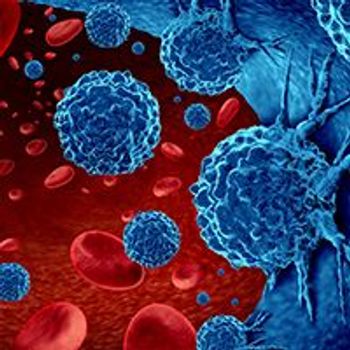
The PD-L1 inhibitor sugemalimab produced durable responses with a tolerable safety profile in patients with relapsed/refractory natural killer/T-cell lymphoma, according to findings from a preplanned primary analysis of the multicenter, single-arm, phase 2 GEMSTONE-201 trial.

The combination of batiraxcept and cabozantinib is safe and generated early evidence of efficacy in pretreated patients with advanced or metastatic clear cell renal cell carcinoma.
In pancreatic cancer, the role of the endoscopist continues to evolve as technologies like endoscopic ultrasound–guided biopsies present clinicians with increasingly accurate information to characterize the tumor microenvironments of individual patients and determine effective targeted therapies.

RLY-2608 led to sustained target inhibition with minimal effect on glucose homeostasis, acceptable safety, and antitumor activity in patients with PIK3CA-mutant solid tumors, according to interim data from the dose-escalation portion of the first-in-human phase 1 ReDiscover trial.

Patients with African ancestry with colorectal cancer have fewer actionable gene mutations than those with European ancestry, leading to fewer targeted treatment options in this population.
The combination of tafasitamab and lenalidomide followed by tafasitamab maintenance prolonged responses in patients with relapsed/refractory diffuse large B-cell lymphoma.