

Bupathi highlights key points that were presented at an OncLive Institutional Perspectives in Cancer, including implications of the EV-302 trial findings; data updates from the phase 1/2 ICRA trial; and future directions for urothelial cancer.

Associate Editor, OncLive
Ashling Wahner joined MJH Life Sciences in 2022. She produces OncLive's podcast, OncLive On Air, and helps ensure timely publication of news content and announcements from the FDA approval pipeline. She also attends conferences live and virtually to conduct video interviews and produce written coverage. Email: [email protected]
Bupathi highlights key points that were presented at an OncLive Institutional Perspectives in Cancer, including implications of the EV-302 trial findings; data updates from the phase 1/2 ICRA trial; and future directions for urothelial cancer.

The FDA has granted breakthrough therapy designation to the HER2-targeted antibody-drug conjugate BNT323/DB-1303 for use as a potential therapeutic option in patients with advanced endometrial cancer who have progressed on or after treatment with immune checkpoint inhibitors.

Hope Cottrill, MD, highlights practice-changing developments in endometrial cancer care, the benefits of local control with radiation in patients with locally aggressive disease, and questions that remain regarding treatment sequencing with immunotherapy.

Marijo Bilusic, MD, PhD, highlights key insights about renal cell carcinoma that were presented at the meeting covering considerations on sequencing TKIs, the need for further research to elucidate novel therapies, and the importance of offering clinical trials to all patients with genitourinary malignancies.
Oral decitabine/cedazuridine and parenteral hypomethylating agents were associated with similar levels of comorbidities and disease burden in patients with myelodysplastic syndrome.

Brexucabtagene autoleucel is safe and effective in real-world patients with relapsed/refractory mantle cell lymphoma, regardless of the presence of high-risk features.

The brain-penetrant oral selective estrogen receptor degrader SIM0270 exhibited a favorable safety profile and early signals of antitumor activity in patients with estrogen receptor-positive, HER2-negative locally advanced or metastatic breast cancer, including those with ESR1 mutations.

Tovorafenib elicited rapid, clinically meaningful tumor responses in pediatric patients with low-grade gliomas, including those with optic pathway gliomas, regardless of prior MAPK inhibitor status.

The addition of tucatinib to ado-trastuzumab emtansine (T-DM1) significantly improved progression-free survival vs placebo plus T-DM1 in patients with previously treated HER2-positive metastatic breast cancer, including those with brain metastases.

Hope Cottrill, MD, highlights key points that were presented at a State of the Science Summit meeting, including the role of bevacizumab plus PARP inhibitors in ovarian cancer management, how to manage adverse events associated with antibody-drug conjugates, and ongoing research in ovarian cancer risk reduction.

Thomas Powles, MD, MBBS, MRCP, discusses key background information about the EV-302 trial; the efficacy and safety findings from this trial; and the future implications of the data from several emerging trials in urothelial cancer.
Marijo Bilusic, MD, PhD, highlights key points presented at the meeting, including considerations with PARP inhibitor combinations for patients with mCRPC, how disease characteristics factor into treatment selection for patients with hormone-sensitive prostate cancer, and more.
Bradley J. Monk, MD, FACOG, FACS, and Paolo Tarantino, MD, discuss key data with B7-H4–directed antibody-drug conjugates across solid tumor types, the evolving role of antibody-drug conjugates in gynecologic cancers, and the importance of determining optimal sequencing with these agents in breast cancer.
The FDA has granted clearance for an investigational new drug application for a phase 1/2 safety lead-in trial investigating the engineered tumor-infiltrating lymphocyte KSQ-001EX in patients with melanoma, head and neck squamous cell carcinoma, and non–small cell lung cancer.

The FDA has received reports of T-cell malignancies in patients who have been treated with CD19- or BCMA-directed autologous CAR T-cell immunotherapies.

Subgroup analyses from non–small cell lung cancer clinical trials, such as the phase 3 POSEIDON and FLAURA2 trials, can help personalize treatment decisions with immunotherapy and targeted therapy based on individual mutational profiles.

Andrew Evens, DO, MBA, MSc, highlights key points presented during the 2023 Rutgers Cancer Institute of New Jersey’s Annual Oncology Clinical Practice and Research Summit, the clinical implications of these presentations, and lymphoma treatment innovations that Rutgers Cancer Institute is providing to patients throughout New Jersey.

Maintenance therapy with selinexor improved progression-free survival compared with placebo in patients with TP53 wild-type advanced or recurrent endometrial cancer, regardless of microsatellite instability status.

Nabil F. Saba, MD, FACP, and Shravan Kandula, MD, highlight the significance of the approval of toripalimab for nasopharyngeal carcinoma; key data from JUPITER-02 and POLARIS-02 trials; and how the addition of this agent to the treatment armamentarium heightens the importance of multidisciplinary collaboration.
Bayer has voluntarily recalled 1 lot of the larotrectinib 20 mg/mL oral solution that is packaged in 100-mL glass bottles because of the presence of Penicillium brevicompactum contamination that was observed during ongoing, routine stability testing.

Bhagirathbhai Dholaria, MBBS, discusses limitations in the current CLL standards of care that necessitate more effective therapies; BTK inhibitors and degraders on the horizon for this population; and the potential future role of CAR T-cell therapy for patients with CLL.

The TKI bezuclastinib plus standard-of-care sunitinib may become the new second-line standard treatment for patients with gastrointestinal stromal tumor that has progressed on imatinib.
Andre Goy, MD, discusses the agents that are currently available for the treatment of patients with relapsed/refractory mantle cell lymphoma, explains the prevalence of high-risk features in this population, and emphasizes the importance of enrolling patients into clinical trials to move the needle forward.

The European Commission has approved rucaparib as first-line maintenance therapy for patients with advanced ovarian cancer, regardless of BRCA mutation status, who have responded following the completion of frontline platinum-based chemotherapy.

Paul Nathan, MBBS, PhD, MRCP, discusses the differences between cutaneous melanoma and uveal melanoma that have led to unique unmet needs for patients with the latter malignancy; updated findings from the IMCgp100-202 trial; and how these findings may influence future clinical practice.
Andrew Kuykendall, MD, discusses the current role of JAK inhibitors in myelofibrosis, the importance of chronic graft-vs-host disease awareness in patients with myeloid malignancies receiving transplant, and unmet needs for patients with chronic myelomonocytic leukemia.

China’s National Medical Products Administration has approved durvalumab plus gemcitabine and cisplatin for frontline use in adult patients with locally advanced or metastatic biliary tract cancer.
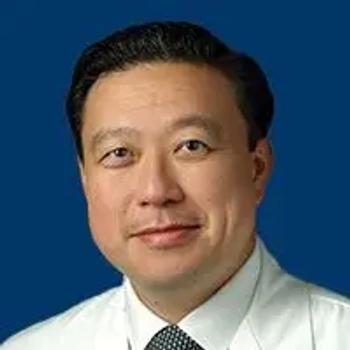
Stephen V. Liu, MD, discusses strategies for treatment and disease management for patients with advanced non–small cell lung cancer who are awaiting biomarker test results.

Kathryn C. Arbour, MD, discusses the unique mechanism of action of RMC-6236, the preliminary efficacy and safety findings for this agent in patients with KRAS-mutant NSCLC, and future directions for the RMC-6236-001 trial.
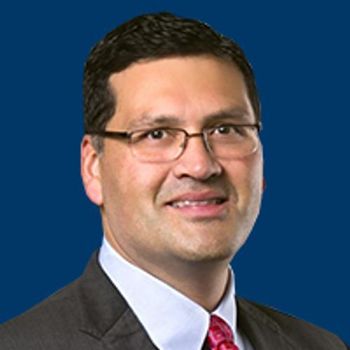
Jesus Berdeja, MD, discussed considerations when choosing between bispecific antibodies and CAR T-cell therapy for patients with multiple myeloma, clinical trials that may move CAR T-cell therapy into earlier lines, and research with agents directed at targets other than BCMA.