

An investigational monoclonal antibody called daratumumab has received breakthrough therapy designation from the FDA for the treatment of patients with double refractory multiple myeloma.
An investigational monoclonal antibody called daratumumab has received breakthrough therapy designation from the FDA for the treatment of patients with double refractory multiple myeloma.

A study of patients newly initiated to erlotinib therapy for NSCLC found that there is no uniformity in the billing codes used for pharmacogenomic testing prior to starting the drug, making it difficult to analyze treatment patterns and cost impact.

While radiotherapy can be an effective treatment for early-stage breast cancer, incidental irradiation of the heart during treatment may increase the risk of developing ischemic heart disease.

Lambrolizumab, an investigational antibody designed to target the programmed death-1 (PD-1) pathway in patients with melanoma, received a breakthrough therapy designation from the FDA after promising results from a small single-arm study.

Digital rectal examination should remain a standard for screening for prostate cancer and may even be able to identify cases of the disease that are not picked up by the PSA test.
The question of whether it should be legal to patent genes has reached the US Supreme Court, and the impending decision by the highest federal court in the country could significantly transform the current research landscape.

A novel small molecule inhibitor called CH1iB may be able to block a mechanism that enables human papilloma virus to cause head and neck cancer.

Researchers have identified a mechanism that explains why patients with glioblastoma have not had successful outcomes when treated with inhibitors of mTOR despite the fact that it is overexpressed in approximately 90% of cases.
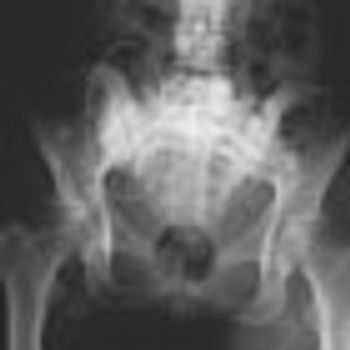
A small study found that microwave ablation therapy reduced pain associated with bone and soft tissues by half in the majority of patients treated with the technique.

The drug palbociclib (formerly known as PD-0332991) has received has received a "breakthrough therapy designation" from the FDA for the treatment of patients with breast cancer.

After receiving breakthrough therapy designation from the FDA for the treatment of two B-cell malignancies earlier this year, ibrutinib has received an additional breakthrough designation.

As a result of sequestration-related federal budget cuts, Medicare reimbursement has been reduced by 2% across the board, with the reduction affecting a number of services offered to cancer patients.

Patients with advanced thyroid cancer who develop resistance to treatment with radioiodine may benefit from the experimental drug selumetinib.

A phase II study found that the novel small-molecule inhibitor selumetinib is well tolerated and achieved an objective response in patients with low-grade serous carcinoma of the ovary or peritoneum.

Hormonal therapies that target androgen are the focus of several ongoing clinical trials for the treatment of advanced prostate cancer, and as more data accrues, clinicians are gaining valuable insight as to how these drugs can best be used to manage the disease.

The compound LDK378, a highly selective inhibitor of ALK, has been granted "Breakthrough Therapy Designation" by the FDA for the treatment of patients with ALK-positive metastatic non-small cell lung cancer.

The FDA approved the radioactive diagnostic imaging agent technetium Tc 99m tilmanocept (Lymphoseek Injection) to identify lymph nodes for potential removal in patients with breast cancer or melanoma.

Shaji K. Kumar, MD, is working to understand the genomic intricacies of multiple myeloma, particularly the role played by activity associated with the TP53 gene.
New research suggests that there may be five distinct subgroups of head and neck cancer in which specific genetic profiles may be utilized to guide treatment decisions in patients.
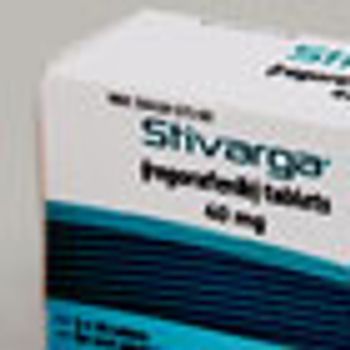
The FDA approved regorafenib for the treatment of gastrointestinal stromal tumors that cannot be removed surgically and no longer respond to other FDA-approved treatments for the disease.

The FDA has approved ado-trastuzumab emtansine, also known as T-DM1, for HER2-positive metastatic breast cancer.

Genetic or drug-induced alterations of the enzyme CYP2D6 that result in reduced metabolism of tamoxifen are associated with a higher risk of recurrence and death in women with ER–positive breast cancer who receive the drug.

The investigational agent ibrutinib was granted "Breakthrough Therapy Designations" by the FDA as a singular therapy for a pair of B-cell malignancies: relapsed or refractory mantle cell lymphoma and Waldenström's macroglobulinemia.

The phase III PICASSO 3 trial examining palifosfamide plus doxorubicin in metastatic soft tissue sarcoma has reached its goal for progression-free survival events.
The FDA announced the approval of pomalidomide for the treatment of multiple myeloma after patients have relapsed or become refractory to other cancer drugs.

In interviews with OncologyLive, Debu Tripathy, MD, and William Gradishar, MD, discussed their views of the most important abstracts presented during the San Antonio Breast Cancer Symposium.

Patients with breast cancer who do not exhibit amplifications of the HER2 gene may still have mutations of HER2 that drive the progression of their cancer, suggesting that these mutations could serve as therapeutic targets.

Several recent clinical trials have yielded positive data that may open up new treatment options for patients with glioblastoma.

The FDA has announced the approval of the first generic version of Doxil, which is expected to help alleviate a shortage of the drug that has continued since November 2011.

A new drug screening method revealed that cholesterol-reducing statin drugs used in combination with cyclin-dependent kinase inhibitors might serve as an effective treatment approach for certain types of melanoma.