
In this segment, the panel discusses how emerging therapies may be incorporated into treatment for patients with advanced squamous non-small cell lung cancer (NSCLC) who have experienced challenges with prior immune checkpoint inhibitors.

Christian Rolfo, MD, PhD, is the director of the Division of Medical Oncology at The Ohio State University Comprehensive Cancer Center—James and a professor in the College of Medicine at The Ohio State University
In this segment, the panel discusses how emerging therapies may be incorporated into treatment for patients with advanced squamous non-small cell lung cancer (NSCLC) who have experienced challenges with prior immune checkpoint inhibitors.
In this segment, the panel discusses treatment considerations for patients with advanced squamous non-small cell lung cancer (NSCLC) who have progressed following immunotherapy and platinum-based chemotherapy but do not want additional chemotherapy.
In this segment, the panel discusses the emerging safety profile of next-generation CTLA-4-directed therapy in advanced squamous non-small cell lung cancer (NSCLC) and how toxicity findings should be interpreted alongside efficacy data.
In this segment, the panel reviews additional clinical data from the initial stage of the trial evaluating next-generation CTLA-4-directed therapy in advanced squamous non-small cell lung cancer (NSCLC).
In this segment, the panel examines early clinical data for a next-generation CTLA-4-directed therapy in patients with advanced squamous non-small cell lung cancer (NSCLC) whose disease has progressed following PD-L1 inhibitor and chemotherapy treatment.
In this segment, the panel explores the rationale for selectively targeting CTLA-4 within the tumor microenvironment in advanced squamous non-small cell lung cancer (NSCLC), with particular attention to intratumoral regulatory T cells (Tregs) and the potential to improve antitumor activity while limiting systemic toxicity.
In this segment, the panel discusses next-generation CTLA-4-directed therapies being engineered with the goal of improving selectivity and reducing the systemic toxicities associated with earlier CTLA-4 inhibitors in advanced squamous non-small cell lung cancer (NSCLC).
In this segment, the panel discusses the importance of proactive monitoring and multidisciplinary management of immune-related toxicities in patients with advanced squamous non-small cell lung cancer (NSCLC).
In this segment, the panel discusses the toxicity profile of CTLA-4-directed therapies and how experience with immune-modulating treatments has influenced their use in advanced squamous non-small cell lung cancer (NSCLC).
In this segment, the panel explains the biological rationale for combining CTLA-4 and PD-1 inhibition in advanced squamous non-small cell lung cancer (NSCLC).
In this segment, the panel discusses the potential role of genomic testing and biomarker identification in advanced squamous non-small cell lung cancer (NSCLC), particularly as new therapeutic approaches emerge following immunotherapy.
In this segment, Dr. Christian Rolfo reviews emerging therapeutic approaches being investigated for patients with advanced squamous non-small cell lung cancer (NSCLC) following progression on immunotherapy.
Explore post-immunotherapy options for advanced squamous NSCLC, weighing docetaxel±ramucirumab, patient concerns, and why new trials matter.
When immunotherapy stops working in squamous NSCLC, clinicians weigh docetaxel±ramucirumab, weekly dosing, and clinical trials.
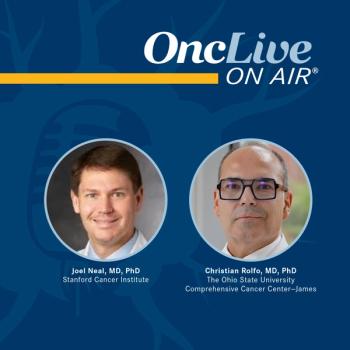
Drs Neal and Rolfo discuss the significance of the FDA approval of taletrectinib for the treatment of locally advanced or metastatic, ROS1-positive NSCLC.
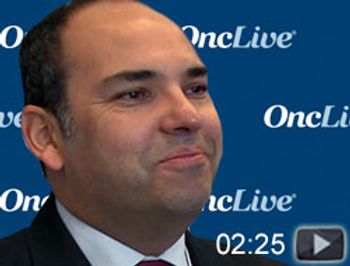
Christian Diego Rolfo, MD, PhD, professor and unit coordinator at Antwerp University discusses the European perspective on precision medicine in lung cancer and the importance of clinical trials across different markets.
October 21st 2026
October 21st 2026
October 28th 2026
October 28th 2026
September 28th 2026
