
Opinion|Videos|November 4, 2026
Clinical Data for CTLA-4 Therapy in Squamous NSCLC
In this segment, the panel reviews additional clinical data from the initial stage of the trial evaluating next-generation CTLA-4-directed therapy in advanced squamous non-small cell lung cancer (NSCLC).
Advertisement
Episodes in this series
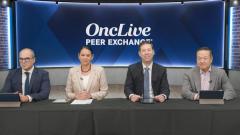
In this segment, the panel reviews additional clinical data from the initial stage of the trial evaluating next-generation CTLA-4-directed therapy in advanced squamous non-small cell lung cancer (NSCLC). Dr. Narjust Florez discusses data with a median follow-up of 14.5 months, noting similar median progression-free survival between the investigational therapy and docetaxel groups, while median overall survival had not yet been reached in the available analysis. The panel highlights an overall survival hazard ratio of 0.46 and a higher overall response rate with the investigational therapy, including more partial responses and stable disease compared with docetaxel. However, the experts emphasize that these findings remain hypothesis-generating. Dr. Florez and Dr. Christian Rolfo note that the confidence interval around the hazard ratio is wide and that the initial stage included a relatively small number of patients. The panel stresses that response rate alone does not establish durability and that longer follow-up is needed to determine the duration of benefit. The discussion also considers how efficacy, durability, and toxicity will collectively inform interpretation of the subsequent trial data.
Advertisement
Related to this article

See what leading breast oncologists have to say about practice-informing data to come out of the 2026 ESMO Congress.

Community hematologists/oncologists discussed bispecific antibody integration in community practice for relapsed/refractory multiple myeloma.
TP53 Comutations, Long-Term Toxicity, and Sunvozertinib Access Shape EGFR+ NSCLC Treatment Decisions
Faculty at an OncLive Scientific Interchange and Workshop discussed factors that help inform treatment selection in advanced EGFR-mutated NSCLC.

Roswell Park researchers identified a promising strategy to overcome resistance to KRAS-targeted cancer therapies.
Faculty at an OncLive Scientific Interchange and Workshop discussed operationalizing outpatient bispecific antibody therapy for relapsed/refractory multiple myeloma.
Keith Flaherty, MD, FAACR, discusses the 2026 AACR Cancer Progress Report and how the oncology field can build on the report’s findings.

Praful Ravi, MB, BChir, MRCP, discusses the LASER futility readout, PSMA heterogeneity in clear cell RCC, and next steps for radiopharmaceuticals.
Erica L. Mayer, MD, MPH, discusses the FDA approval of camizestrant for ESR1-mutated HR+/HER2– breast cancer and the importance of ctDNA monitoring.
Advertisement
Advertisement
Trending on OncLive
1
Breast Cancer Experts Spotlight Practice-Informing and Thought-Provoking Data From ESMO 2026
2
TP53 Comutations, Long-Term Toxicity, and Sunvozertinib Access Shape EGFR+ NSCLC Treatment Decisions
3
Phase 1 Study of BGB-B2033 (GPC3 x 4-1BB Bispecific Antibody) Monotherapy: First Disclosure of Dose Optimization and Dose Escalation Update in Advanced Hepatocellular Carcinoma
4
Outpatient Models and Prophylactic Measures Help Bring Bispecifics Into Community Practice for R/R Myeloma
5