
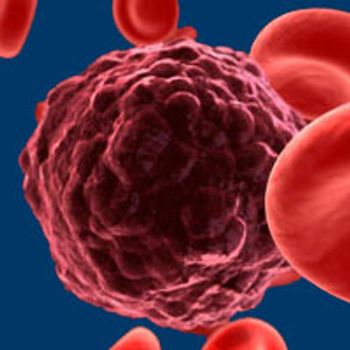
The FDA has granted a priority review to moxetumomab pasudotox for the treatment of adult patients with hairy cell leukemia who have received at least 2 prior lines of therapy.

Senior Editor, OncLive®
Jason Harris has worked in journalism for more than 20 years, including stints at daily newspapers and niche publications for oncology and cardiology. He is a senior editor for OncologyLive® and managing editor for Oncology Fellows and the annual Giants of Cancer Care® album. He also contributes to the OncLive On Air and OncFellows podcasts. Email: jharris@onclive.com
The FDA has granted a priority review to moxetumomab pasudotox for the treatment of adult patients with hairy cell leukemia who have received at least 2 prior lines of therapy.

Larotrectinib induced an “unprecedented” objective response rate of 93% in patients with TRK fusion–positive solid tumors.

The European Medicines Agency has accepted a marketing authorization application for olaparib to treat women with BRCA-mutated, HER2-negative metastatic breast cancer who previously received chemotherapy in the neoadjuvant, adjuvant, or metastatic setting.
Molecular minimal residual disease was associated with a higher rate of relapse and a lower rate of relapse-free survival and overall survival for patients with newly-diagnosed acute myeloid leukemia.

In an extended follow-up of results from the CheckMate-205 trial, nivolumab (Opdivo) induced an overall objective response rate of 69% in patients with relapsed/refractory classical Hodgkin lymphoma after autologous hematopoietic cell transplantation.

Adding trastuzumab to chemotherapy increased progression-free survival for patients with advanced HER2/neu-positive uterine serous carcinoma.

Nivolumab induced an overall response rate of 20.5% in patients with recurrent or metastatic nasopharyngeal carcinoma (NPC).

Japanese regulators have granted a Sakigake designation to trastuzumab deruxtecan (DS-8201), for the treatment of patients with HER2-positive gastric cancer that is refractory to trastuzumab (Herceptin).

EP2006, a filgrastim biosimilar, produced safety results equivalent to those observed with referent filgrastim in a combined analysis of 2 phase III breast cancer studies from the United States and Europe.

A rolling new drug application has been completed for larotrectinib (LOXO-101) for the treatment of adult and pediatric patients with locally advanced or metastatic solid tumors harboring an NTRK gene fusion.

The European Medicines Agency’s Committee for Medicinal Products for Human Use has recommended adding the option of a 4-week dosing schedule to the label for nivolumab for the treatment of patients with advanced melanoma and previously treated renal cell carcinoma (RCC).

The European Medicines Agency’s Committee for Medicinal Products for Human Use has adopted a positive opinion for the marketing authorization of ABP 980, a biosimilar to trastuzumab.

Japan’s Pharmaceuticals and Medical Devices Agency has approved lenvatinib mesylate for the frontline treatment of patients with unresectable hepatocellular carcinoma.

Rovalpituzumab Tesirine (Rova-T) delivered disappointing preliminary results in the third-line setting for patients with relapsed/refractory small cell lung cancer with high DLL3 expression.
Ponatinib maintained deep, durable responses in heavily pretreated patients with chronic-phase chronic myeloid leukemia (CP-CML).

The regimen of venetoclax (Venclexta) plus rituximab (Rituxan) lowered the risk of disease progression or death by 83% versus bendamustine (Treanda) plus rituximab in patients with relapsed or refractory chronic lymphocytic leukemia.
The NCCN has added the combination of TTFields (Optune) and temozolomide (Temodar) to its guidelines for Category 1 treatment of newly diagnosed glioblastoma following maximal safe resection and completion of radiation therapy.

The FDA has granted a priority review to a supplemental new drug application (sNDA) for enzalutamide (Xtandi) for the treatment of men with nonmetastatic castration-resistant prostate cancer.

The Centers for Medicare & Medicaid Services has announced that it will cover diagnostic laboratory tests using Next Generation Sequencing for patients with advanced cancer.

Atezolizumab in combination with cobimetinib induced a 31% disease control rate in patients with heavily-pretreated metastatic colorectal cancer.

The addition of weekly carboplatin following surgery and radiation therapy did not improve freedom from locoregional relapse in patients with high-risk cutaneous head and neck squamous cell carcinoma.
The NCCN has updated its colorectal cancer (CRC) guidelines, recommending a weekly regorafenib dose-escalation strategy beginning at 80 mg and ending at 160 mg for previously treated patients with metastatic CRC.

Both prior chemotherapy and a dependence on glycolysis appear to reduce the potential to develop T cells into chimeric antigen receptor T-cell therapy.

The FDA has granted a breakthrough therapy designation to erdafitinib for the treatment of metastatic urothelial carcinoma.

The FDA has put a clinical hold on a phase I/II study of axalimogene filolisbac plus durvalumab (Imfinzi) for the treatment of patients with cervical cancer or head and neck cancer.

The FDA has granted a priority review to pembrolizumab (Keytruda) for the treatment of advanced cervical cancer with disease progression on or after chemotherapy.

The NCCN now lists apalutamide (Erleada) as a category 1 recommendation for the treatment of patients with nonmetastatic castration-resistant prostate cancer.

Lenvatinib mesylate (Lenvima) will be developed and commercialized in a collaboration between its creator, Japan’s Eisai Co. Ltd, and Merck.

Blinatumomab (Blincyto) received an 8 to 4 vote from the FDA’s Oncologic Drugs Advisory Committee in favor of an indication for the treatment of MRD-positive B-cell precursor acute lymphoblastic leukemia.

Investigators found no statistically significant difference in survival between radical prostatectomy alone and external beam radiotherapy plus brachytherapy with or without ADT after adjusting for imbalances in prostate cancer prognostic factors.