

YTB323, a novel, autologous CD19-directed CAR-T cell therapy, displayed a favorable safety profile and efficacy across multiple dose levels in adult patients with relapsed/refractory diffuse large b-cell lymphoma.

Kyle Doherty joined MJH Life Sciences in 2021 and is the lead editor for Oncology Fellows. He also produces print content for OncologyLive, as well as news and conference updates for OncLive.com. Email: [email protected]
YTB323, a novel, autologous CD19-directed CAR-T cell therapy, displayed a favorable safety profile and efficacy across multiple dose levels in adult patients with relapsed/refractory diffuse large b-cell lymphoma.

The combination of duvelisib plus romidepsin was shown to be highly active in patients with relapsed/peripheral T-cell lymphoma, according to final results from the dose expansion stage of a phase 1 trial.

Axicabtagene ciloleucel, an autologous anti-CD19 CAR T-cell therapy, resulted in clinically meaningful improvement in quality of life at day 100 compared with standard of care as a second-line treatment of patients with relapsed/refractory large B-cell lymphoma.
Tisagenlecleucel produced a high overall response rate and complete response rate in adult patients with relapsed/refractory follicular lymphoma who had received 2 or more prior lines of therapy, according to results from an extended follow-up analysis of patients with at least 12 months of follow-up of the phase 2 ELARA trial.

Lisocabtagene maraleucel demonstrated statistically and clinically meaningful improvement in event-free survival compared with the standard of care as a second-line therapy in patients with relapsed or refractory large B-cell lymphoma.

Neoadjuvant pembrolizumab plus chemotherapy followed by adjuvant pembrolizumab resulted in a statistically significant and clinically meaningful improvement in event-free survival in patients with early-stage triple negative breast cancer.

Bijal Shah, MD, MS, discussed the results of the ZUMA-3 trial and how this approval will enhance the treatment of patients with relapsed or refractory B-cell precursor ALL.

Chimeric antigen receptor T-cell therapies are rapidly shifting the treatment paradigm for a multitude of hematologic malignancies.

The Cancer Cell Map Initiative, developed by investigators at the University of California San Francisco and the University of California San Diego, has successfully charted how hundreds of genetic mutations involved in breast cancer and cancers of the head and neck affect the activity of proteins that ultimately lead to disease.
Investigators aim to expand the treatment portfolio with the phase 3 TROPION-LUNG01 trial, which is designed to examine datopotamab deruxtecan vs docetaxel in patients with advanced or metastatic NSCLC without actionable genomic alterations who have previously received platinum-based chemotherapy and immunotherapy.

The combination of lenvatinib plus pembrolizumab induced durable responses with a manageable safety profile in adults with previously treated, advanced endometrial cancer, according to a long-term follow-up analysis of a phase 1b/2 study (NCT02501096).

An increased understanding of the biology of non–small cell lung cancer has led to a significant increase in therapeutic options for patients.

Each situation for stopping immunotherapy in lung cancer has its own complex nuances to consider before the decision is made to cease treatment.

As the COVID-19 pandemic persists, patients with cancer should receive the full vaccination with 1 of the 3 approved COVID-19 vaccines as soon as they are able, according to Steven Ludlow, PharmD, BCOP, BCPS.
Azanucleosides, such as azacitidine, remain the backbone of disease-modifying therapy for patients with myelodysplastic syndromes, however, new adjuncts are leading to longer remissions and disease-free survival in patients with low-risk disease.

Diego Adrianzen Herrera, MD, shares his experience with a cyberattack at the University of Vermont Health Network and its effect on inpatient and outpatient care delivery.
Investigators look to boost systemic therapy options for patients with malignant pleural mesothelioma with the phase 3 DREAM3R trial.

The accelerated approval of the tissue factor–directed antibody and microtubule inhibitor tisotumab vedotin-tftv bolsters the treatment portfolio for patients with recurrent metastatic cervical cancer.

Alexander J. Stratigos, MD, PhD, discussed the effect cemiplimab will have on the treatment landscape of patients with advanced BCC.
Ahmet Sezer, MD, discusses how the approval of cemiplimab could potentially make a huge impact for patients with advanced non–small cell lung cancer.

The initiation of the phase 3 ENHANCE trial looks to build on the generally early response to azacitidine with the addition of magrolimab, a first-in-class monoclonal antibody, for patients with intermediate-, high-, and very high–risk myelodysplastic syndrome.
Patients with pancreatic ductal adenocarcinoma experience limited benefit with available first- and second-line second line of therapy.
Robert J. Motzer, MD, spoke about the “exceptional” efficacy of the combination and how it fits into the evolving RCC treatment landscape.

Patients with relapsed/refractory multiple myeloma, particularly those who have failed a prior BCMA–targeted therapy, represent a population with an unmet need for effective treatment options. Investigators are hoping to help fill this void with the initiation of the phase 2 MagnetisMM-3 study.

The anti-PD-1 antibody balstilimab in combination with the anti-CTLA-4 antibody zalifrelimab exhibited impressive response rates, duration of response, and overall survival in patients with previously treated recurrent/metastatic cervical cancer.

Erdafitinib in combination with cetrelimab displayed clinically meaningful responses in patients with metastatic or locally advanced urothelial carcinoma harboring FGFR alterations.

Jaffer A. Ajani, MD, unpacks the performance of nivolumab in combination with chemotherapy in some subgroups of gastric cancer.

Large surface area microparticle docetaxel administered via direct intramural injection and intravesical instillations was found to be safe and showed preliminary signs of efficacy in patients with high-risk non-muscle invasive bladder cancer.
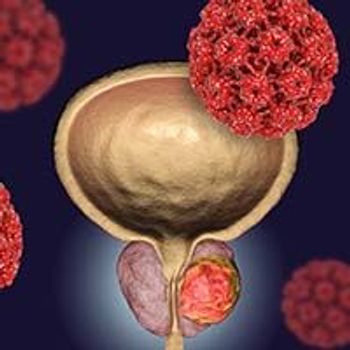
Treatment with neoadjuvant lutetium prostate-specific membrane antigen followed by radical prostatectomy exhibited a favorable safety profile in patients with locally advanced high-risk prostate cancer.

Atezolizumab plus carboplatin and pemetrexed yielded a favorable safety and efficacy profile in patients with advanced non-squamous non-small cell lung cancer with untreated brain metastases.