

Neeraj Agarwal, MD, speaks on the significance of the approval and how the combination of talazoparib and enzalutamide will fit into the treatment landscape of HRR gene–mutated mCRPC.

Kyle Doherty joined MJH Life Sciences in 2021 and is the lead editor for Oncology Fellows. He also produces print content for OncologyLive, as well as news and conference updates for OncLive.com. Email: [email protected]
Neeraj Agarwal, MD, speaks on the significance of the approval and how the combination of talazoparib and enzalutamide will fit into the treatment landscape of HRR gene–mutated mCRPC.

The third-generation EGFR TKI lazertinib displayed a significant efficacy improvement compared with gefitinib in patients with EGFR-mutated advanced non–small cell lung cancer when given in the first-line.
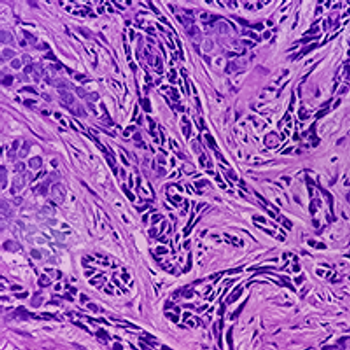
The DecisionDx-Melanoma 31-gene expression profile test displayed the capability to stratify patients with cutaneous melanoma by risk of death from the disease and receival of the 31-GEP test may result in a survival benefit compared with untested patients.

Although the use of immunotherapy treatment approaches continues to become more prevalent in advanced renal cell carcinoma, high-level evidence showing benefit of sequential administration of these agents are limited.

As antibody-drug conjugates become an established part of the lung cancer treatment paradigm, identifying which patients will benefit the most from treatment with these highly specific agents remains a challenge for clinicians.

Efforts to develop the first FDA-approved agent specifically for patients with primary central nervous system lymphoma have been initiated with the phase 2 PROSPECT trial.
Yasushi Goto, MD, PhD, delves into the details of the TROPION-Lung02 trial.
Leading investigators in the multiple myeloma field discuss the latest clinical trial findings, many of which were presented during the 2023 ASCO Annual Meeting.

Treatment with trastuzumab deruxtecan resulted in clinically meaningful efficacy in patients with HER2-positive gastric or gastroesophageal junction cancer following disease progression on or after a trastuzumab-containing regimen.
The addition of lutetium Lu 177 vipivotide tetraxetan to standard-of-care treatment delayed time to worsening of health-related quality of life and skeletal events compared with standard of care alone for patients with metastatic castration-resistant prostate cancer.

John O. Mascarenhas, MD, discusses the design and rationale of the KRT-232-109 trial, key findings from the trial, and potential future directions of the study.

The National Comprehensive Cancer Network has announced a guideline update concerning the treatment of patients with acute lymphoblastic leukemia, B-cell lymphomas, pediatric ALL, and pediatric aggressive mature B-cell lymphoma.

Adagrasib has demonstrated intracranial activity among patients with KRAS G12C–mutated non–small cell lung cancer with untreated central nervous system metastases.
Investigators of the phase 1/2 KOMET-001 trial are seeking to address unmet needs in AML with the investigational menin inhibitor ziftomenib.

Patients with intermediate-2 or high-risk myelofibrosis who received the novel JAK/ACVR1 inhibitor jaktinib experienced a statistically significant improvement in the proportion of patients with a spleen-volume reduction of at least 35% from baseline at week 24 vs those who were treated with hydroxyurea.
Looking to replicate the impressive findings with CAR T-cell therapies observed in patients with hematologic malignancies, investigators have initiated the BASECAMP-1 trial with the hope of identifying patients with advanced solid tumors who will be suitable candidates for treatment in the EVEREST trial.

Fam-trastuzumab deruxtecan-nxki demonstrated clinically meaningful activity across a wide range of HER2 expressing solid tumors, including hard-to-treat tumors, according to findings from the phase 2 DESTINY-PanTumor02 trial.
Nivolumab in combination with doxorubicin, vinblastine, and dacarbazine (AVD) resulted in prolonged progression-free survival (PFS) compared with brentuximab vedotin plus AVD in patients with advanced-stage classical Hodgkin lymphoma.
Treatment with the first-in-class direct and competitive telomerase inhibitor imetelstat resulted in statistically significant and clinically meaningful efficacy in patients with heavily transfusion dependent, non-del(5q) lower-risk myelodysplastic syndrome that is relapsed or refractory to erythropoiesis stimulating agents, according to findings from the phase 3 IMerge trial.
Treatment with ribociclib plus endocrine therapy led to a statistically and clinically meaningful improvement in invasive disease-free survival among patients with hormone receptor–positive/HER2-negative early breast cancer compared with endocrine therapy alone, meeting the primary end point of the phase 3 NATALEE trial.

Investigators are aiming to add another agent to the treatment armamentarium for patients with relapsed or refractory solid tumors, as well as those with non-Hodgkin lymphoma, with the development of KB-0742, a CDK9 inhibitor.

STAT2 expression in patients with hepatocellular carcinoma increases with tumor grade and cancer stage, with increases occurring at greater rates among Asian and African American patients.

Investigators at Dana-Farber Cancer Institute in Boston, Massachusetts, developed a clinical outreach program combining diagnostic and patient navigation services.
Latinx patients with cancer had a low rate of tumor genomic profiling, partially due to structural and cultural barriers, according to findings from a qualitative study presented during the 5th Annual Regional SPEECH Conference and Retreat.
Individuals in Philadelphia and New York City who were screened for the common liver cancer risk factors hepatitis B virus or hepatitis C virus displayed a higher level of knowledge of liver cancer.
Young investigators, fellows, and medical students recently gathered at the Temple University Lewis Katz School of Medicine in Philadelphia, Pennsylvania, to network and share exciting research aimed at addressing disparities in the dissemination of cancer care at the 5th Annual Regional Synergistic Partnership for Enhancing Equity in Cancer Health Conference and Retreat.

Triplet therapy consisting of encorafenib, cetuximab, and binimetinib demonstrated activity and manageable safety as first-line treatment for patients with BRAF V600E–mutated metastatic colorectal cancer.

The upcoming phase 1/2 EVEREST-1 trial, where the novel CAR T-cell therapy A2B530 will be evaluated in patients with solid tumors, aims to push progress for one-and-done engineered therapies in this space.

A statewide policy intervention that discouraged initial breast cancer surgical care for patients with Medicaid insurance in low-volume facilities led to a survival benefit.

Adjuvant treatment with the individualized RNA neoantigen vaccine autogene cevumeran in combination with atezolizumab and chemotherapy induced notable T-cell activity that could be correlated with delayed recurrence in patients with pancreatic ductal adenocarcinoma.