





Biosimilars
Latest News
Advertisement
Video Series






Latest Videos







Podcasts































































Advertisement
More News

The FDA has approved a bioequivalent formulation of olaparib for use in previously approved cancer indications.
The FDA has approved pegfilgrastim-pccg, a pegfilgrastim biosimilar, to decrease the incidence of infection in non-myeloid malignancies.
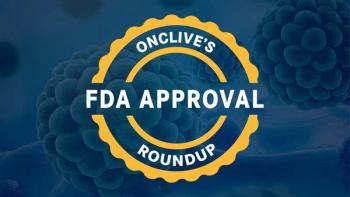
Here is your cheat sheet to all therapeutic options that were cleared by the FDA in March 2026 spanning tumor types.
Here is your cheat sheet to all therapeutic options that were cleared by the FDA in November 2025 spanning tumor types.
Denosumab-desu (Osvyrti and Jubereq) received FDA approval in the same indications as reference denosumab (Prolia and Xgeva).

The FDA has approved pertuzumab-dpzb as the first interchangeable biosimilar for pertuzumab across several indications in HER2-positive breast cancer.
Here is your guide to all therapeutic options that were approved by the FDA in September 2025 spanning tumor types.
The FDA approved Enoby and Xtrenbo, denosumab biosimilars referencing Prolia and Xgeva, respectively.
Two denosumab biosimilars received approval from the FDA for the purpose of increasing bone mass in individuals at high risk for fracture.
Here is your guide to all therapeutic options that were cleared by the FDA in August 2025 spanning tumor types.

The FDA grants accelerated approval to zongertinib in lung cancer, clears dordaviprone in glioma, and awards priority review to liso-cel sBLA in MZL.

Denbrayce was approved in Europe for the treatment of skeletal-related events in advanced malignancies involving the bone and giant cell tumor of the bone.
The European Medicines Agency's CHMP has recommended the use of denosumab biosimilars referencing Prolia and Xgeva in all reference product indications.

The bevacizumab biosimilar Jobevne was approved by the FDA for the treatment of several solid tumor types, including mCRC, NSCLC, and RCC.
Here is your snapshot for all therapeutic options that were approved by the FDA in March 2025 spanning tumor types.
The EMA’s CHMP has issued a positive opinion for the denosumab biosimilars Osvyrti and Jubereq for the same indications as the reference products.
The FDA has approved 2 denosumab biosimilars for all indications of their respective reference medications.
Encorafenib combination boosts survival in BRAF V600E+ mCRC, pertuzumab biosimilar BLA is under review for HER2+ breast cancer, and more from OncLive.

HLX11—a pertuzumab biosimilar—plus trastuzumab/docetaxel met the pCR end point in a phase 3 trial in early or locally advanced HER2-positive breast cancer.

The European Medicines Agency has approved Avzivi, a biosimilar referencing bevacizumab.

First-line cetuximab beta injection has received NMPA marketing approval in RAS/BRAF wild-type metastatic colorectal cancer.
The European Medicines Agency’s Committee for Medicinal Products for Human Use adopted a positive opinion for Avzivi, a monoclonal antibody referencing bevacizumab.

Marketing authorization applications for the denosumab biosimilar HLX14 have been validated by the EMA.

Two biosimilars for reference denosumab have received marketing authorization from the European Commission.
Advertisement
Advertisement
Trending on OncLive
1
FDA Approves Tucatinib Plus Trastuzumab/Pertuzumab as First-Line Maintenance in Advanced HER2+ Breast Cancer
2
VIR-5500 Receives FDA Fast Track Designation in mCRPC
3
Iberdomide Plus Daratumumab/Dexamethasone Yields Significant PFS Benefit in R/R Myeloma
4
FDA Approves Atezolizumab Plus Chemo for Stage III dMMR Colon Cancer
5