
Brain Cancer
Latest News


Larotrectinib Induces Rapid, Durable Responses in Pediatric Patients With TRK Fusion+ CNS Tumors
By Ryan Scott
Advertisement
Latest Videos



































































Advertisement
More News
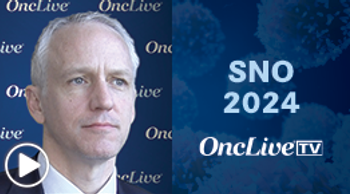
Rimas V. Lukas, MD, discusses the efficacy of eflornithine plus lomustine in recurrent IDH-mutant anaplastic astrocytoma per 2021 WHO diagnostic criteria.

IGV-001, an autologous cell immunotherapy, demonstrated an acceptable safety profile in patients with newly diagnosed glioblastoma.

The NMPA has approved belzutifan for von Hippel-Lindau disease in RCC, CNS hemangioblastomas, or pNETs not requiring immediate surgery.

The FDA has granted orphan drug designation to the herpes simplex virus type 1 oncolytic virus MB-108 for the management of malignant glioma.
In case you missed any, read a recap of every episode of OncLive On Air that aired in October 2024.
The FDA has accepted and granted priority review to the new drug application for the glioma imaging agent TLX101-CDx.

LP-184 has received fast track designation from the FDA for the treatment of patients with glioblastoma.

LMP744 has been granted orphan drug designation by the FDA for the treatment of patients with glioma.
An update on PFS and OS data from the phase 1 MAGIC-G1 study of MTX110 in recurrent glioblastoma has been released.

The FDA has granted rare pediatric disease designation to LP-184 in malignant rhabdoid tumors, rhabdomyosarcoma, and hepatoblastoma.

The phase 2 trial of the gamma-delta T-cell therapy INB-400 plus temozolomide in patients with newly diagnosed GBM has suspended enrollment.
This list features a snapshot of key August FDA oncology decisions, efforts to integrate health equity into guideline development, and more.

Seema Nagpal, MD, discusses the significance of the FDA approval of vorasidenib for adult and pediatric patients with IDH1/2-mutant glioma.

Seema Nagpal, MD, discusses the FDA approval of vorasidenib for patients with astrocytoma or oligodendroglioma harboring IDH1 or IDH2 mutations.
Here is your snapshot of all therapeutic options that the FDA approved in August 2024 and their clinical implications.

An NDA has been submitted to the FDA for TLX101-CDx for the characterization of progressive or recurrent glioma in adult and pediatric patients.

Opaganib has received orphan drug designation from the FDA for use in patients with neuroblastoma.
The FDA has awarded rare pediatric disease designation and orphan drug designation to INV724 for the treatment of neuroblastoma.

Rhenium obisbemeda proved feasible and safe for patients with leptomeningeal metastases in an interim analysis of the phase 1 ReSPECT-LM trial.
The FDA has approved vorasidenib for grade 2 astrocytoma or oligodendroglioma with a susceptible IDH1 or IDH2 mutation.

The European Medicines Agency has approved Avzivi, a biosimilar referencing bevacizumab.

Paxalisib improved OS over SOC in patients with newly diagnosed glioblastoma and unmethylated MGMT promotor status.
Dr. Nader Sanai presents the findings of a phase 0/1 trigger trial (NCT06072586) that evaluates the CNS penetration of BDTX-1535 in patients with recurrent high-grade gliomas and EGFR mutations.
Nathalie Albert, MD, and Matthias Preusser, MD, address audience questions and share their insights on promising and anticipated advancements in neuroimaging techniques, highlighting the potential impact of these emerging strategies on the diagnosis, monitoring, and treatment of glioblastoma.
Medical experts engage in a discussion on the PET RANO 1.0 Response Criteria, which provides guidelines for evaluating treatment response in patients with brain tumors, taking into account both measurable PET-positive disease and non-PET-positive disease, as assessed through initial baseline imaging and subsequent follow-up scans.
Advertisement
Advertisement
Trending on OncLive
1
Dr Fradley on Real-World Atrial Fibrillation and Cardiovascular Outcomes in CLL
2
Earlier CAR T-Cell Therapy Use Highlights Sequencing and Access Considerations in Myeloma
3
Poll Results Highlight Breast Cancer Abstracts of Interest at ESMO 2026
4
CDK4/6 Inhibitors Anchor First-Line Metastatic Breast Cancer Care, But Oral SERDs May Fall Short
5