






Breast Cancer
Latest News
Advertisement
Latest Videos






































































Advertisement
More News

Experts provide an overview of the imaging modalities that can detect estrogen receptor status in patients with breast cancer.
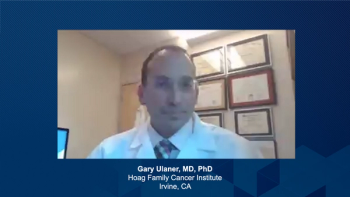
Gary Ulaner, MD, PhD and Jeremy Force, DO review estrogen receptor (ER)-positive breast cancer and the various strategies available for diagnosing estrogen receptor (ER)-positive breast cancer.
Dr. Schwartzberg discusses the rationale to evaluate enobosarm in androgen receptor-positive, estrogen recepetor-positive advanced breast cancer, phase 2 data with the agent, and expectations for the ongoing phase 3 ARTEST trial in this population.

Breast surgeon Suzanne B. Coopey, MD, FACS, has joined Allegheny Health Network Cancer Institute, where she will serve as Director of the Breast Program at the soon-to-open AHN Wexford Hospital.


A panel of breast cancer experts shared their insights on 4 recently approved targeted therapies for patients with relapsed HER2-positive metastatic breast cancer.

Data presented from the INSEMA trial during the 2021 San Antonio Breast Cancer Symposium indicated that patients with early-stage breast cancer had better quality of life outcomes when forgoing a sentinel lymph node biopsy and axillary lymph node dissection. However, patients had improved arm symptoms and functioning with SLNB vs ALND.

Neratinib (Nerlynx) induced positive overall response rates in patients with heavily pretreated hormone receptor–positive/HER2-negative, HER2-mutant metastatic breast cancer when combined with fulvestrant and trastuzumab, and also in patients with metastatic HER2-mutant triple-negative breast cancer when combined with trastuzumab.

Aditya Bardia, MD, MPH, discusses the efficacy results of the phase 3 EMERALD trial in estrogen receptor–positive, HER2-negative metastatic breast cancer.

Certain adverse effects associated with olaparib were minimal and resolved with appropriate management in patients with germline BRCA1/2 mutations in patients with high-risk, HER2-negative, early-stage breast cancer.

Pathologic complete response and event-free survival was not found to be significantly affected by race among patients with high-risk breast cancer who received neoadjuvant chemotherapy; however, disparities were observed among patients who did not achieve a pCR.

Patricia A. Ganz, MD, discusses the quality of life results from the phase 3 OlympiA trial in BRCA-mutated breast cancer.

Megan Kruse, MD, discusses the results of a study comparing clinical features and outcomes of pleomorphic vs non-pleomorphic invasive lobular carcinoma.
Fulvestrant plus the CDK7 inhibitor samuraciclib demonstrated encouraging efficacy in patients with hormone receptor-positive breast cancer who were heavily pretreated with CDK4/6 inhibitors.

Physicians treating patients with early-stage triple-negative breast cancer should employ circulating tumor DNA testing early and often, according to results from the phase 2 cTRAK TN trial.

Trastuzumab deruxtecan led to prolonged progression-free survival and higher responses vs trastuzumab emtansine as second-line therapy in patients with HER2-positive metastatic breast cancer across all patients subgroups, including those with and without baseline brain metastases.

Peter Schmid, MD, PhD, FRCP, discusses additional results from the phase 3 KEYNOTE-522 trial in early-stage triple-negative breast cancer.

Sara A. Hurvitz, MD, discusses the results of subgroup analyses from the phase 3 DESTINY-Breast03 trial in patients with HER2-positive metastatic breast cancer.

Pyrotinib plus capecitabine exhibited longer overall survival (OS), compared with lapatinib plus capecitabine, in patients with HER2-positive breast cancer

Adjuvant treatment with neratinib or ado-trastuzumab emtansine resulted in a greater reduction in the risk of disease recurrence compared with other therapies in an epidemiologic model of HER2-positive, early-stage breast cancer.

Practical considerations for the sequencing or combination of novel antibody drug conjugates to optimize outcomes for patients with HER2-low breast cancer.

Experts take a look at clinical data behind novel antibody drug conjugates and consider how they may impact the management of HER2-low breast cancer.

Focused discussion on the methods used to identify a patient’s HER2 status and why it is important to investigate in patients with breast cancer.
Shared insight on the current state of HER2 classification and testing and in breast cancer, with respect to how it may influence future treatment approaches.

Significant outcome differences were observed in premenopausal vs postmenopausal patients with hormone receptor–positive, HER2-negative breast cancer who had 1 to 3 positive lymph nodes and received adjuvant chemotherapy as well as endocrine therapy.
Advertisement
Advertisement
Trending on OncLive
1
FDA Approves Tucatinib Plus Trastuzumab/Pertuzumab as First-Line Maintenance in Advanced HER2+ Breast Cancer
2
GI Cancer Monthly Rewind: Key News and Expert Insights You May Have Missed in September 2026
3
Five Under 5: Top Oncology Videos for the Week of 10/5/2026
4
FDA Grants Breakthrough Device Designation to Natera’s Multi-Cancer Early Detection Assay
5