




Precision Medicine in Oncology®
Latest News

Advertisement
Latest Videos






























































Advertisement
More News

For nearly 40 years, the University of Chicago Comprehensive Cancer Center has enjoyed a reputation for excellence and innovation.
Antibodies directed against tumor cell antigens or overexpressed proteins are currently the fastest-growing class of targeted cancer therapeutics.
Case-based discussion on sequencing prostate cancer therapies for a 72-year-old man with a metastatic adenocarcinoma with small-cell components, a PSA score of 80, and a Gleason score of 10.

Recent evidence shows that some of the newer molecularly targeted therapies can cause diarrhea, which can lead to dose reductions and alterations.

Although molecularly targeted agents can cause cardiac damage, it appears to be reversible and related to cellular dysfunction, as distinct from agents such as anthracyclines that cause cellular death and irreversible cardiac dysfunction.
Dr. Robert Kirkman, the CEO of Oncothyreon, on the Combination of PX-866 and Docetaxel

Dr. Axel Hauschild, from University Hospital, Schleswig-Holstein, Germany, Discusses the BREAK-3 Trial That Investigated the BRAF Inhibitor Dabrafenib.

Most recurrent endometrial tumors have the same PI3K/Akt mutation profile as found in the primary tumor.

Unexpected target mutations likely doomed a proven therapeutic approach to lung cancer in a test against glioblastoma.
Dr. Alan Sandler, from the Oregon Health & Science University, Discusses the Tivantinib Mechanism of Action
A recent study suggests patients may be selected for therapy based on the number of EGFR gene copies, and evaluated for clinical benefit based on the severity of the rash that often develops.

Dr. David Gandara, from UC Davis Cancer Center, on Thymidylate Synthase Expression in ALK-Positive Non-small Cell Lung Cancer
Dr. Mark Kris, from Memorial Sloan-Kettering Cancer Center, Discusses Lung Cancer Information Presented at the 2012 ASCO Annual Meeting.

With careful attention to detail and conscientious efforts, clinical skills are likely to be transferable from clinical education to meeting research goals.
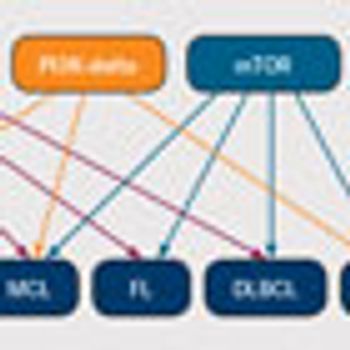
Increased understanding of the molecular mechanisms underlying the pathogenesis of hematologic cancers has led to the development of several promising new classes of targeted therapies.
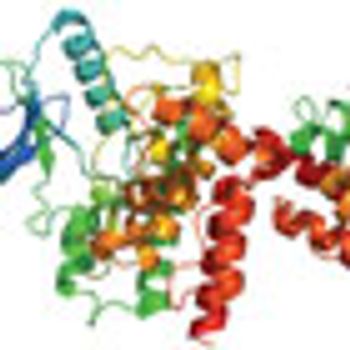
JAK plays an important role in the formation and development of blood cells, and defects in the gene have been identified in myeloproliferative neoplasms.

Dr. Alex Adjei, from Roswell Park Cancer Institute, on the Need for Targeted Therapy Education
Three case studies focused on how best to sequence therapy in prostate cancer were presented by Daniel P. Petrylak, MD, and discussed by a panel that included Robert Dreicer, MD, and Oliver Sartor, MD.
As the cost of sequencing and analyzing genetic data continues to fall, the nation's leading cancer centers keep unveiling ambitious new clinical programs and research projects that will change the way every cancer specialist practices.

The U-M Comprehensive Cancer Center in Ann Arbor offers diagnostic, treatment, and support services while serving as a model for other branches of the U-M Health System and for academic peer organizations nationwide.

Dr. Marie Wood, from the University of Vermont, on Family Histories and Genetic Counseling for Breast and Colorectal Cancers.

Dr. Caroline Robert, from the Institute Gustave Roussy in Paris, France, Discusses the MEK Inhibitor, Trametinib, METRIC Trial Results.
CDX-011, a targeted therapy designed to treat patients with advanced breast cancer, appears to increase PFS in TNBC patients who have received multiple prior lines of therapy and express GPNMB.

Combining Two Targeted Therapies Stalls Disease Progression in Melanoma Patients With BRAF Mutations
A combination of the BRAF inhibitor dabrafenib and the MEK inhibitor trametinib has shown promising activity in patients with advanced melanoma.

Dr. Paul Chapman, from Memorial Sloan-Kettering Cancer Center, on Combining BRAF and MEK Inhibitors for Advanced Melanoma
Advertisement
Advertisement
Trending on OncLive
1
Ifinatamab Deruxtecan BLA Voluntarily Withdrawn in Previously Treated Extensive-Stage SCLC
2
Etentamig Improves Response and PFS vs Standard Therapies in Triple-Class Exposed Relapsed/Refractory Myeloma
3
Dr Voorhees on Eligibility Criteria for the CERVINO Trial in Multiple Myeloma
4
FDA Approves Lirafugratinib for Pretreated, Locally Advanced or Metastatic Cholangiocarcinoma
5