





Precision Medicine in Oncology®
Latest News
Advertisement
Latest Videos


































































Advertisement
More News

Patrick Hwu, MD, discusses the uptake of cellular therapy in the treatment of patients with cancer.

February 2, 2021 - The time to treatment deterioration for symptoms such as cough, dyspnea, and pain in the chest was found to be comparable between treatment-naïve patients with ALK-positive non–small cell lung cancer who received lorlatinib versus crizotinib.
February 2, 2021 - ASCO has chosen molecular profiling driving progress in gastointestinal cancers as its Advance of the Year.

Andrew McKenzie, PhD, discusses the rationale to utilize concurrent tissue- and liquid-based biopsies in lung cancer.

February 1, 2021 — Targeted circulating tumor DNA methylation marker panels possess the potential for early blood-based detection of lung cancer with a high sensitivity and specificity.
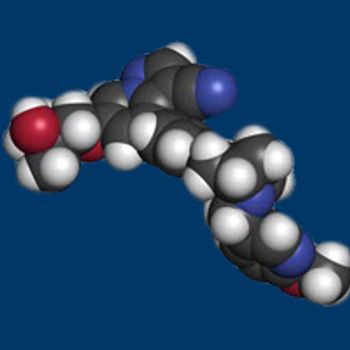
Over the past 2 decades, a growing number of targetable tumor-specific molecular alterations have been identified, ushering in the era of precision oncology. Now, alterations in the RET gene can be added to the list of druggable targets.
January 29, 2021 - Health-related quality of life was maintained for patients with EGFR-positive non–small cell lung cancer who received treatment with adjuvant osimertinib versus placebo, with no clinically meaningful differences noted between study arms.

January 29, 2021 — Mobocertinib (formerly TAK-788) demonstrated clinically meaningful benefit and a manageable safety profile in previously treated patients with metastatic non–small cell lung cancer who have EGFR exon 20 insertion mutations.

January 29, 2021 - Amivantamab elicited high and sustained responses in pretreated patients with non–small cell lung cancer harboring EGFR exon 20 insertion mutations.

January 28, 2021 - Treatment with the KRAS G12C inhibitor sotorasib (formerly AMG 510) elicited a 6.8-month median progression-free survival in patients with KRAS G12C–mutated advanced non–small cell lung cancer.

January 28, 2021 - The NeoADAURA trial will evaluate the safety and efficacy of neoadjuvant osimertinib, as a single agent or in combination with platinum-based chemotherapy compared with chemotherapy alone, in patients with resectable, stage II-IIIB non–small cell lung cancer whose tumors harbor EGFR mutations.
January 28, 2021 - The combination of osimertinib and savolitinib may be able to overcome MET resistance in patients with EGFR-mutant, MET-amplified or -overexpressed non–small cell lung cancer, including those who have previously progressed on a prior EGFR TKI.

January 28, 2021 - Rapid, high, and uniform brain exposure was seen with [11C]osimertinib, followed by a reduction in total brain metastases volume with oral administration of the EGFR TKI in patients with EGFR-mutant non–small cell lung cancer and brain metastases.

January 28, 2021 - NRG1 fusions are detectable in patients with non–small cell lung cancer, providing a rationale to perform larger, retrospective studies assessing therapeutic outcomes in patients with NRG1 fusion–positive tumors and evaluate afatinib in this patient subgroup.

As new findings emerge in the lung cancer treatment paradigm, innovative strategies have resulted in impressive central nervous system activity and encouraging responses with acceptable tolerability.

The importance of objectively valid data is well established in clinical medicine. Such data include an accurate recording of a patient’s clinical history; evaluation of signs and symptoms of illness; and measurement of various routine indicators, such as granulocyte and platelet counts, serum glucose, electrolytes, and liver function tests.
Joshua K. Sabari, MD, discussed the management of patients with early-stage and metastatic lung cancer, the roles of molecular testing, surgery, staging, and ongoing research efforts in the space.

The sustained overall survival benefit with durvalumab and significant disease-free survival benefit benefit with osimertinib in the adjuvant setting represent major advances in the field of non–small cell lung cancer, fueling research with each modality in localized settings.

The current standard of care for patients with non–small cell lung cancer does not include therapies targeting HER2, a mutation that occurs in up to 4% of cases. However, data from recent studies of antibody-drug conjugates directed at HER2 activity are generating excitement about the potential utility of ADCs in this space.

Timothy F. Burns, MD, PhD, dissects the role of osimertinib in EGFR-mutant NSCLC, sheds light on remaining questions in the field, and speaks to some of the most intriguing emerging agents in the space.

Goutham Narla, MD, PhD, discusses advances made with precision medicine in oncology.

Steven Devine, MD, discusses the non-relapse mortality data with Orca-T and how this technologic approach is changing how providers approach patients with hematologic malignancies following transplant.

Nicholas C. Rohs, MD, discusses the role of molecular testing in patients with lung cancer.

Vivek Subbiah, MD, of The University of Texas MD Anderson Cancer Center, discusses the clinical activity of pralsetinib (Gavreto) in RET fusion-positive pancreatic cancer and cholangiocarcinoma.

Bemarituzumab combined with mFOLFOX6 demonstrated a 56% reduction in the risk of disease progression or death compared with placebo and mFOLFOX6 as a frontline treatment in select patients with FGFR2b-positive advanced gastric or gastroesophageal junction adenocarcinoma.
Advertisement
Advertisement
Trending on OncLive
1
Ifinatamab Deruxtecan BLA Voluntarily Withdrawn in Previously Treated Extensive-Stage SCLC
2
Etentamig Improves Response and PFS vs Standard Therapies in Triple-Class Exposed Relapsed/Refractory Myeloma
3
Dr Voorhees on Eligibility Criteria for the CERVINO Trial in Multiple Myeloma
4
Long-Term PERSEUS Data Confirm Durable PFS Benefit With D-VRd in Transplant-Eligible Newly Diagnosed Myeloma
5