

Chronic Lymphocytic Leukemia
Latest News
Advertisement
Latest Videos




















































Advertisement
More News

Experts detail optimal sequencing strategies when patients with relapsed/refractory CLL move on to the next line of therapy.
An in-depth analysis of current therapeutic options in relapsed/refractory chronic lymphocytic leukemia.
High-Risk Patients With R/R CLL
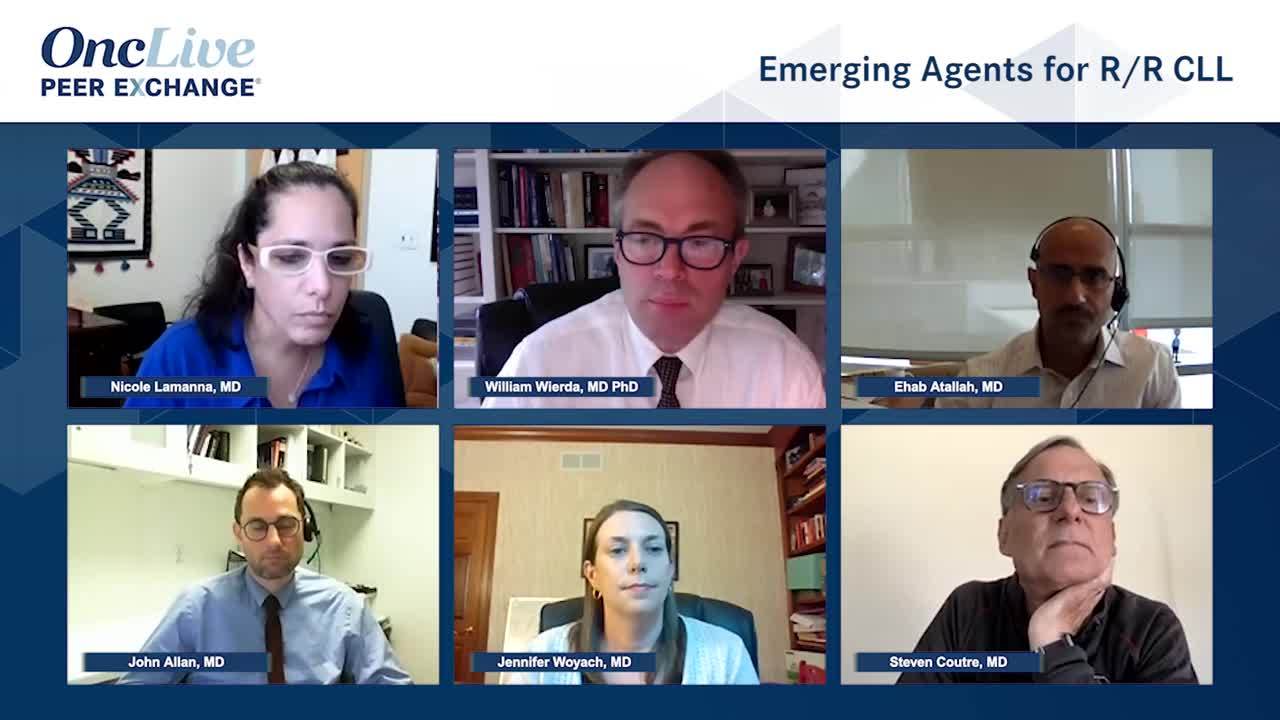
ByWilliam Wierda, MD, PhD, University of Texas MD Anderson Cancer Center,John Allan, MD, Weill Cornell Medicine,Ehab Atallah, MD, Medical College of Wisconsin,Steven Coutre, MD, Stanford University Medical Center,Nicole Lamanna, MD, Herbert Irving Comprehensive Cancer Center,Jennifer Woyach, MD, Ohio State University
A discussion about treatment for high-risk patients with relapsed/refractory (R/R) chronic lymphocytic leukemia (CLL).
CLL: BTK Inhibitors in the R/R Setting
ByWilliam Wierda, MD, PhD, University of Texas MD Anderson Cancer Center,John Allan, MD, Weill Cornell Medicine,Ehab Atallah, MD, Medical College of Wisconsin,Steven Coutre, MD, Stanford University Medical Center,Nicole Lamanna, MD, Herbert Irving Comprehensive Cancer Center,Jennifer Woyach, MD, Ohio State University
Nicole Lamanna, MD, provides an overview of Bruton's tyrosine kinase (BTK) inhibitors for chronic lymphocytic leukemia (CLL) in the relapsed/refractory (R/R) setting.
Key opinion leaders look forward to upcoming improvements in the frontline management of chronic lymphocytic leukemia.
Experts reflect on core decisions inherent in selecting frontline therapy for patients with CLL, specifically regarding the use of BTK inhibitors, BCL2 inhibitors, anti-CD20 agents, and chemoimmunotherapy.
An expert hematologist/oncologist highlights key takeaways for the future management of chronic lymphocytic leukemia given an evolving therapeutic landscape.

Practical advice on optimal toxicity management and sequencing of therapy in patients with chronic lymphocytic leukemia.

Tara Graff, DO, MS, reflects on the head-to-head comparison data of acalabrutinib vs ibrutinib in patients with previously treated CLL.

Expert insight on the use of frontline BTK inhibitor monotherapy over combination therapy in CLL regarding the ELEVATE-TN trial’s readout.
A comprehensive breakdown of the rationale behind targeting BTK signaling in CLL, as well as considerations for clinical experience with the available BTK inhibitors.

Tara Graff, DO, MS, outlines the current treatment paradigm for chronic lymphocytic leukemia by discussing the use of novel agents, molecular testing, and risk stratification.

Updated efficacy outcomes of the phase 3 MURANO trial demonstrated that fixed-duration venetoclax plus rituximab is an effective treatment approach for patients with relapsed/refractory chronic lymphocytic leukemia and did not compromise response to subsequent therapy or overall survival.
CLL: GLOW Trial Overview
ByWilliam Wierda, MD, PhD, University of Texas MD Anderson Cancer Center,John Allan, MD, Weill Cornell Medicine,Ehab Atallah, MD, Medical College of Wisconsin,Steven Coutre, MD, Stanford University Medical Center,Nicole Lamanna, MD, Herbert Irving Comprehensive Cancer Center,Jennifer Woyach, MD, Ohio State University
Steven Coutre, MD, provides an overview of the phase 3 GLOW trial, as well as other novel and emerging combinations for the treatment of chronic lymphocytic leukemia (CLL).
CLL Therapies: Novel Combinations
ByWilliam Wierda, MD, PhD, University of Texas MD Anderson Cancer Center,John Allan, MD, Weill Cornell Medicine,Ehab Atallah, MD, Medical College of Wisconsin,Steven Coutre, MD, Stanford University Medical Center,Nicole Lamanna, MD, Herbert Irving Comprehensive Cancer Center,Jennifer Woyach, MD, Ohio State University
John Allen, MD, provides an overview of data looking at emerging combinations as initial therapy for chronic lymphocytic leukemia (CLL).
A comprehensive breakdown of the tolerability of frontline targeted therapies used to manage chronic lymphocytic leukemia and toxicity management.
Before addressing unmet needs in the management of CLL, Brad S. Kahl, MD, outlines optimal sequencing strategies in the current treatment paradigm.
Brad S. Kahl, MD, shares practical advice on the management of BTK inhibitor–related toxicity in patients with chronic lymphocytic leukemia.
Considerations for the head-to-head data out of ASCO 2021 comparing acalabrutinib and ibrutinib in previously treated chronic lymphocytic leukemia.
Insight on the 4-year follow-up data from ELEVATE-TN and the frontline use of acalabrutinib, with or without anti-CD20 therapy, in patients with CLL.
Brad S. Kahl, MD, reflects on the 7-year follow-up data from the RESONATE-2 trial, which tested ibrutinib as frontline therapy in patients with CLL.
A comprehensive analysis of the CLL treatment landscape, including available agents, risk stratification, and triggers to initiate therapy.
After determining the parameters of high-risk CLL, key opinion leaders clarify optimal frontline management strategies.

Alexey V. Danilov, MD, PhD, discusses the efficacy seen in the ongoing phase 1b study examining the combination of zandelisib and zanubrutinib in patients with relapsed/refractory B-cell malignancies.

The majority of patients with newly diagnosed chronic lymphocytic leukemia have better outcomes with BTK inhibitors compared with standard chemoimmunotherapy, making them the logical choice for frontline therapy.
Advertisement
Advertisement
Trending on OncLive
1
Sacituzumab Govitecan Triplet Elicits Durable Responses in Treatment-Naive Metastatic Urothelial Cancer
2
Perioperative Enfortumab Vedotin Plus Pembrolizumab Improves ctDNA Clearance in Cisplatin-Eligible MIBC
3
Ad Hoc Analysis Supports Contributions of Both Enfortumab Vedotin and Pembrolizumab in Cisplatin-Ineligible MIBC
4
Pembrolizumab Plus Chemo Misses EFS End Point in Cisplatin-Eligible MIBC
5