




Chronic Lymphocytic Leukemia
Latest News
Advertisement
Latest Videos

























































Advertisement
More News

Treatment with acalabrutinib as monotherapy or in combination with obinutuzumab improved quality-adjusted survival compared with chlorambucil plus obinutuzumab in patients with treatment-naïve chronic lymphocytic leukemia.

Meghan Thompson, MD, discusses the results of the phase 1/2 BRUIN study in patients with Richter transformation.

Tadeusz Robak, MD, PhD, discusses the results of the 7-year follow-up analysis of the phase 3 RESONATE-2 trial in chronic lymphocytic leukemia.

During the XIX International Workshop on Chronic Lymphocytic Leukemia, which occurred virtually 17-20 September, Dr. John Byrd was presented the Binet-Rai Medal Award for his outstanding findings, which led to the use of BTK Inhibitors in almost every phase of CLL therapy.

The triplet combination of umbralisib, ublituximab, and pembrolizumab demonstrated durable responses with a tolerable safety profile in patients with relapsed/refractory chronic lymphocytic leukemia and Richter’s transformation.

William G. Wierda, MD, PhD, discusses the fixed-duration cohort results of the phase 2 CAPTIVATE trial in chronic lymphocytic leukemia.

Sikander Ailawadhi, MD, discusses the results of a first-in-human, early phase 1 study of lisaftoclax in patients with hematologic malignancies.
A genome-wide look into changes in three-dimensional chromatin organization between ibrutinib-resistant and parental chronic lymphocytic leukemia cells illustrated the involvement of PAK1 as an oncogenic driver in CLL.

Lisocabtagene maraleucel in combination with ibrutinib was associated with manageable safety for patients with relapsed or refractory chronic lymphocytic leukemia or small lymphocytic lymphoma, according to updated data from the phase 1 TRANSCEND-CLL-004 trial.

Chan Cheah, MBBS, discusses the results of a study evaluating the efficacy and safety of TG-1701 alone and in combination with ublituximab and umbralisib in chronic lymphocytic leukemia.

Alexey V. Danilov, MD, PhD, discusses the efficacy of entospletinib plus obinutuzumab in relapsed/refractory chronic lymphocytic leukemia.
Optical genome mapping was found to effectively detect most abnormalities defined by standard methods, such as chromosome banding analysis, chromosomal microarrays, and fluorescence in situ hybridization, as well as several additional abnormalities of unknown clinical significance, in patients with chronic lymphocytic leukemia.
The use of a cell-free DNA–based minimal residual disease assay demonstrated feasibility and highly concordant results compared with 4-color flow cytometry and improved MRD detection in patients with chronic lymphocytic leukemia who were treated with time-limited venetoclax, acalabrutinib, and obinutuzumab.
CRISPR/Cas9 and mRNA-based gene editing and expression was found to be feasible in evaluating primary chronic lymphocytic leukemia cells.
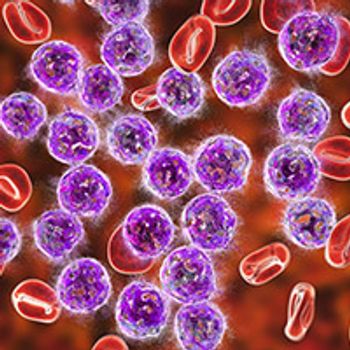
COVID-19 continued to result in high admission and fatality rates among patients with chronic lymphocytic leukemia during the first 13 months of the pandemic, and although risk of severe infection was determined to be independent of age, CLL status, and treatment, being age 75 years or older was revealed to be a significant risk factor for death.
H3B-8800, a splicing molecule that binds to Splicing Factor 3b Subunit 1, has been shown to delay leukemic infiltration in a model of chronic lymphocytic leukemia using NOD-SCID interleukin-2 receptor gamma mice.

Catherine Callaghan Coombs, MD, discusses the rationale for the BRUIN study, key efficacy and safety findings, and next steps with pirtobrutinib in chronic lymphocytic leukemia.

John C. Byrd, MD, discusses key findings from ELEVATE-RR, differences between acalabrutinib and ibrutinib, and future directions with the second-generation inhibitor.

Alexey V. Danilov, MD, PhD, discusses the need to identify novel pathways for targeted therapy in chronic lymphocytic leukemia.

Sitting at the forefront of clinical development, pirtobrutinib and lisocabtagene maraleucel have generated significant enthusiasm in chronic lymphocytic leukemia.

Patients with chronic lymphocytic leukemia are at an increased risk for infection whether they are in the premalignant state of monoclonal B lymphocytosis, during active surveillance for those are treatment naïve, or are on active treatment.

Pirtobrutinib, showcased promising efficacy signals across dose levels in previously treated patients with chronic lymphocytic leukemia and small lymphocytic lymphoma.

Catherine Callaghan Coombs, MD, discusses the efficacy results of the ongoing phase 1/2 BRUIN study with pirtobrutinib in chronic lymphocytic leukemia.

Alexey V. Danilov, MD, PhD, discusses the utility of BTK inhibitors as a treatment option for patients with chronic lymphocytic leukemia.

CLL: Final Thoughts
ByWilliam Wierda, MD, PhD, University of Texas MD Anderson Cancer Center,John Allan, MD, Weill Cornell Medicine,Ehab Atallah, MD, Medical College of Wisconsin,Steven Coutre, MD, Stanford University Medical Center,Nicole Lamanna, MD, Herbert Irving Comprehensive Cancer Center,Jennifer Woyach, MD, Ohio State University
An expert panel provides their final thoughts about the future of the chronic lymphocytic leukemia (CLL) treatment landscape.
Advertisement
Advertisement
Trending on OncLive
1
Sacituzumab Govitecan Triplet Elicits Durable Responses in Treatment-Naive Metastatic Urothelial Cancer
2
Perioperative Enfortumab Vedotin Plus Pembrolizumab Improves ctDNA Clearance in Cisplatin-Eligible MIBC
3
Ad Hoc Analysis Supports Contributions of Both Enfortumab Vedotin and Pembrolizumab in Cisplatin-Ineligible MIBC
4
Pembrolizumab Plus Chemo Misses EFS End Point in Cisplatin-Eligible MIBC
5