

Chronic Lymphocytic Leukemia
Latest News
Advertisement
Latest Videos





















































Advertisement
More News
Dr Lamanna explains the challenges associated with BTK inhibitors.

John Seymour, MD, discusses the safety of acalabrutinib vs ibrutinib in patients with chronic lymphocytic leukemia, and what findings from post-hoc analyses of the ELEVATE-RR trial mean for clinical practice.
Jan Joseph Melenhorst, BSc, MS, PhD, discusses the persistence of CD4+ CAR T-cells in inducing remissions in patients with chronic lymphocytic leukemia.

The China National Medical Products Administration has accepted a supplemental new drug application for zanubrutinib as a treatment option for adult patients with chronic lymphocytic leukemia or small lymphocytic lymphoma.
Nicole Lamanna, MD, and Nirav N. Shah, MD, discuss the chronic lymphocytic leukemia treatment (CLL) landscape, including risk factors and treatment options.
Michael Choi, MD, discusses future research directions in chronic lymphocytic leukemia.
Dr Coombs discusses research that was presented at the 2021 ASH Annual Meeting and Exposition in chronic lymphocytic leukemia, including that with covalent and noncovalent BTK inhibitors, COVID-19 vaccinations, and time-limited combinations.
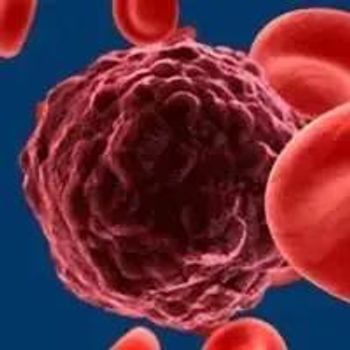
Subcutaneous epcoritamab demonstrated early activity and favorable tolerability in patients with relapsed/refractory chronic lymphocytic leukemia and high-risk features.
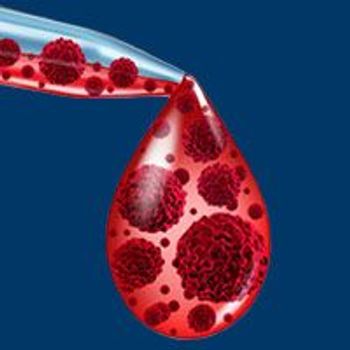
Treatment with ibrutinib in patients with chronic lymphocytic leukemia was linked with increased risk of cardiovascular adverse effects like atrial fibrillation, hospital-diagnosed bleeding, and heart failure, but was not linked with a higher risk of acute myocardial infarction or stroke.

Alexey V. Danilov, MD, PhD, discusses the reduced use of chemoimmunotherapy in chronic lymphocytic leukemia.
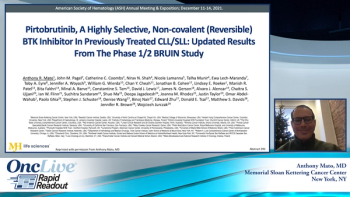
Anthony Mato, MD, discusses updated efficacy and safety results from the phase 1/2 BRUIN study of the noncovalent BTK inhibitor, pirtobrutinib, in patients with previously treated CLL/SLL that was presented at the American Society of Hematology 2021 Annual Meeting.

Zanubrutinib elicited a statistically significant improvement in progression-free survival vs the combination of bendamustine and rituximab in patients with treatment-naïve chronic lymphocytic leukemia and small lymphocytic lymphoma.

Jan A. Burger, MD, PhD, discusses the benefit of combination therapy in patients with chronic lymphocytic leukemia.

Danielle M. Brander, MD, discusses the role of achieving minimal residual disease negativity with venetoclax-based regimens in chronic lymphocytic leukemia.
Mazyar Shadman, MD, MPH, discusses the methods utilized in an ongoing phase 1/2 trial evaluating MB-106, an investigational CD20-directed CAR T-cell therapy, in patients with relapsed/refractory B-cell non-Hodgkin lymphoma and chronic lymphocytic leukemia.
John F. Seymour, discusses the findings from a post-hoc analysis of the phase 3 ELEVATE-RR trial examining the adverse effects experienced with the BTK inhibitors acalabrutinib and ibrutinib in patients with relapsed or refractory chronic lymphocytic leukemia.
Michael Choi, MD, discusses the long-term efficacy of ibrutinib given as a frontline treatment in chronic lymphocytic leukemia.

Jan A. Burger, MD, PhD, discusses choosing frontline therapy in chronic lymphocytic leukemia.

Richard R. Furman, MD, and Nitin Jain, MD, share insight on the evolving treatment landscape of CLL, particularly for treatment in early line settings.
Nitin Jain, MD, and Richard R. Furman, MD, discuss the standard treatment criteria for CLL and answer audience questions on the appropriate circumstances to adjust, switch, and discontinue therapy.
Nitin Jain, MD, comments on the use of novel treatment strategies, including CAR T-cell therapy, being evaluated to treat patients with CLL.

Paolo Ghia, MD, PhD, discusses the key takeaways of the phase 2 CAPTIVATE study in chronic lymphocytic leukemia.

At the onset of the pandemic, hematology/oncology physicians were challenged in counseling patients with serious underlying malignant conditions about their risk for severe disease due to COVID-19.
Mazyar Shadman, MD, MPH, discusses the safety profile of MB-106, a third-generation, CD20-directed CAR T-cell therapy, in patients with relapsed/refractory B-cell non-Hodgkin lymphoma and chronic lymphocytic leukemia.
Paolo Ghia, MD, PhD, discusses the design of the phase 2 CAPTIVATE study in treatment-naïve chronic lymphocytic leukemia.
Advertisement
Advertisement
Trending on OncLive
1
Adjuvant Giredestrant Preserves QOL With Sustained Tolerability in ER+, HER2– Early Breast Cancer
2
Sacituzumab Govitecan Triplet Elicits Durable Responses in Treatment-Naive Metastatic Urothelial Cancer
3
Perioperative Enfortumab Vedotin Plus Pembrolizumab Improves ctDNA Clearance in Cisplatin-Eligible MIBC
4
Ad Hoc Analysis Supports Contributions of Both Enfortumab Vedotin and Pembrolizumab in Cisplatin-Ineligible MIBC
5