



Chronic Lymphocytic Leukemia
Latest News

Pirtobrutinib Demonstrates Encouraging Efficacy, Favorable Safety in Previously Treated CLL/SLL
By Kristi Rosa

Ibrutinib/Obinutuzumab Combo Elicits Durable Responses in Relapsed/Refractory CLL
By Kristi Rosa
Advertisement
Latest Videos




























































Advertisement
More News

Practical considerations for treatment selection in patients who progress on CAR T-Cell therapy.
Dr. Jae Park comments on the findings from the ELIANA study and tisagenlecleucel as a potential option for adults with R/R B-ALL.
An oncologist specializing in the treatment of patients with B-ALL discusses the study design, efficacy, safety, and two-year updated results of the phase I/II ZUMA-3 study evaluating brexucabtagene autoleucel in adult patients with R/R B-ALL.
Jae Park, MD, shares an overview of available therapeutic options for patients with R/R B-ALL.

Nemtabrutinib, a potent, non-covalent BTK inhibitor, continued to demonstrate antitumor activity with an acceptable safety profile in patients with chronic lymphocytic leukemia and small lymphocytic lymphoma.

The addition of venetoclax to ibrutinib resulted in a high rate of minimal residual disease negativity in the blood and marrow of patients with previously untreated chronic lymphocytic leukemia.

Zanubrutinib achieved favorable health-related quality of life outcomes compared with bendamustine plus rituximab in patients with treatment-naïve chronic lymphocytic leukemia and small lymphocytic lymphoma.

Venetoclax plus obinutuzumab remains an effective fixed-duration treatment option for patients with chronic lymphocytic leukemia and coexisting conditions, according to updated efficacy and safety data from the ongoing phase 3 CLL14 trial.
The phase 3 BRUIN CLL-313 trial is currently recruiting patients with treatment naïve chronic lymphocytic leukemia or small lymphocytic lymphoma to evaluate the efficacy and safety of pirtobrutinib monotherapy vs bendamustine plus rituximab.

Jeff Sharman, MD, discusses 5-year follow-up data from the phase 3 Elevate CLL TN trial in treatment-naïve patients with chronic lymphocytic leukemia.
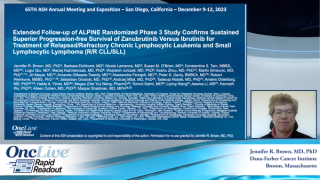
Time-limited targeted therapy with venetoclax plus obinutuzumab with or without ibrutinib demonstrated superior progression-free survival outcomes compared with standard chemoimmunotherapy in patients with chronic lymphocytic leukemia.
Patients with relapsed/refractory chronic lymphocytic leukemia or small lymphocytic leukemia assigned to zanubrutinib reported better health-related quality of life than those administered ibrutinib.
The fixed-duration, frontline combination comprised of ibrutinib and venetoclax continued to produce deep, durable responses with a clinically meaningful progression-free survival benefit in patients with chronic lymphocytic leukemia or small lymphocytic lymphoma.

This publication highlights expert perspectives on the current therapeutic landscape in chronic lymphocytic leukemia with emphasis on factors affecting treatment selection including novel regimens, combination therapies, and ongoing clinical trials.

The BRUIN CLL-321 trial is evaluating pirtobrutinib monotherapy compared with investigator’s choice of idelalisib plus rituximab or bendamustine plus rituximab among patients with chronic lymphocytic leukemia or small lymphocytic lymphoma who have previously received covalent BTK inhibitor treatment.

At approximately 5 years of follow-up, findings from the phase 3 ELEVATE-TN study show that treatment outcomes are more favorable with acalabrutinib with or without obinutuzumab compared with obinutuzumab and chlorambucil in treatment-naïve chronic lymphocytic leukemia.

Fixed-duration venetoclax plus rituximab has shown sustained progression-free survival, overall survival, and minimal residual disease benefits vs bendamustine plus rituximab in patients with relapsed/refractory chronic lymphocytic leukemia, regardless of high-risk biomarkers.

The fixed-duration combination of ibrutinib and venetoclax produced deep responses and improved progression-free survival vs chlorambucil plus obinutuzumab when used in previously untreated patients with chronic lymphocytic leukemia who were older and/or who had comorbidities, according to findings from the phase 3 GLOW trial.

For the 10th consecutive year, OncLive® is honored to recognize oncology leaders whose innovations have contributed to immeasurable improvements in outcomes for countless patients.

Nurix Therapeutics has initiated an ongoing phase 1 trial to examine NX-2127, an immunomodulatory oral BTK inhibitor, in patients with chronic lymphocytic leukemia.

Although lower fatality rates were reported during the omicron wave of the COVID-19 pandemic in patients with chronic lymphocytic leukemia, close monitoring and preemptive antiviral therapy is still recommended following a positive SARS-CoV-2 test, particularly in patients with close hospital contacts and those older than 70 years of age with at least one comorbidity.

Dr Taylor discusses the significance of BTK inhibition in chronic lymphocytic leukemia, describes the key objectives of, and methods used, for the genomic analyses performed by his team, underscores the clinical significance of the data yielded from this research, and outlines where future efforts will focus.

Richard R. Furman, MD, discusses current treatment options in chronic lymphocytic leukemia.

Anthony Mato, MD, MSCE, discusses current data surrounding BTK inhibitors in chronic lymphocytic leukemia, the benefits of targeted therapies in this population, ways to begin addressing unmet needs, and the importance of improved clinical trial designs for varying patient populations.
The time-limited combination of ublituximab and umbralisib plus ibrutinib resulted in an undetectable minimal residual disease rate of 77% in patients with chronic lymphocytic leukemia, according to findings from a phase 2 trial (NCT04016805)
Advertisement
Advertisement
Trending on OncLive
1
Adjuvant Giredestrant Preserves QOL With Sustained Tolerability in ER+, HER2– Early Breast Cancer
2
Sacituzumab Govitecan Triplet Elicits Durable Responses in Treatment-Naive Metastatic Urothelial Cancer
3
Perioperative Enfortumab Vedotin Plus Pembrolizumab Improves ctDNA Clearance in Cisplatin-Eligible MIBC
4
Ad Hoc Analysis Supports Contributions of Both Enfortumab Vedotin and Pembrolizumab in Cisplatin-Ineligible MIBC
5