






Chronic Lymphocytic Leukemia
Latest News
Advertisement
Latest Videos




























































Advertisement
More News

Mazyar Shadman, MD, MPH, discusses the efficacy and safety of zanubrutinib in chronic lymphocytic leukemia, as well as data derived from the agents use which supports the regulatory approval of zanubrutinib in this patient population.

Mazyar Shadman, MD, MPH, discusses the evolution of BTK inhibitors in CLL, highlights how treatment patterns have evolved with the continued emergence of data on ibrutinib, acalabrutinib, and zanubrutinib, and expands on how pirtobrutinib and liso-cel could address unmet needs for this patient population.
The National Medical Products Administration in China has approved acalabrutinib for use in adult patients with chronic lymphocytic leukemia or small lymphocytic lymphoma who have previously received at least 1 therapy.

Prioty Islam, MD, MSc, discusses the current status of the first-generation BTK inhibitor ibrutinib following the FDA approvals of next-generation BTK inhibitors in patients with chronic lymphocytic leukemia and expands on the few instances in the clinic where she may lean toward treatment with ibrutinib instead of the next-generation BTK inhibitors zanubrutinib or acalabrutinib.

Individualized myelofibrosis treatment begins with correctly identifying a patient’s disease subtype and considering their symptoms, from which accurate decisions regarding the use of JAK inhibitors vs radiation vs hypomethylating agents can lead to spleen and symptom burden reductions.

The FDA has granted clearance for a global, registrational, phase 3 study examining lisaftoclax in combination with a BTK inhibitor in patients with relapsed/refractory chronic lymphocytic leukemia or small lymphocytic lymphoma who received prior treatment with a BTK inhibitor.

Prioty Islam, MD, MSc, discusses the impact of the updated safety and efficacy data seen with FDA-approved BTK inhibitors in patients with chronic lymphocytic leukemia.

Prioty Islam, MD, MSc, discusses findings from the BRUIN trial, highlights the potential benefits of using noncovalent BTK inhibitors instead of or before covalent BTK inhibitors in patients with MCL or CLL, and previewed ongoing clinical trials investigating this class of agents in earlier treatment lines in these populations.

Treatment with fixed-duration ibrutinib plus venetoclax for patients with chronic lymphocytic leukemia in the first-line setting elicited durable responses and sustained progression-free survival outcomes regardless of high-risk genomic features.

Administration of glofitamab after pretreatment with obinutuzumab provided encouraging antitumor activity with high and durable complete response rates and a manageable safety profile in heavily pretreated patients with Richter syndrome.

Susan M. O’Brien, MD, discusses the use of pirtobrutinib for patients with hematologic malignancies who developed resistance to BTK inhibition.

The treatment landscape for PNH is rapidly evolving, and clinicians have more effective and convenient treatment options for patients that have helped control the disease and improve survival. T
Alexey Danilov, MD, PhD, presents an analysis of data from the Phase 1 TRANSCEND CLL 004 study investigating lisocabtagene maraleucel in patients with relapsed/refractory CLL or SLL.
Paolo Ghia, MD, PhD, reviews data from the ELEVATE-RR trial investigating acalabrutinib versus ibrutinib for the treatment of relapsed/refractory chronic lymphocytic leukemia (R/R CLL).

The choice of BTK inhibitor regimen for patients with chronic lymphocytic leukemia must be tailored to the patient, taking into consideration their preferences and comorbidities, as well as potential treatment-related adverse effects.
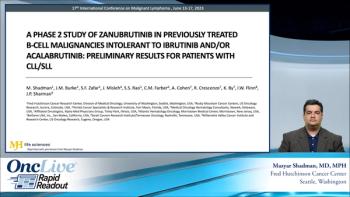
Key opinion leader Mazyar Shadman, MD, MPH, reviews data from a clinical trial studying zanubrutinib in the context of ibrutinib- and/or acalabrutinib-intolerant CLL/SLL.
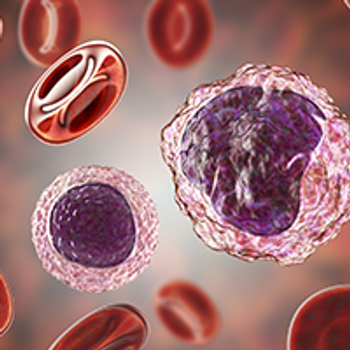
The combination of venetoclax, atezolizumab, and obinutuzumab elicited responses and prolonged time progression, in patients with chronic lymphocytic leukemia with Richter transformation, according to data from the phase 2 MOLTO trial.

John M. Burke, MD, expands on the use of novel BTK inhibitor regimens in mantle cell lymphoma, treatment sequencing challenges and other unmet needs in diffuse-large B-cell lymphoma, the evolution of management strategies for myeloproliferative neoplasms, and the potential influence of new and emerging therapeutics in chronic lymphocytic leukemia.

Fixed-duration therapy with venetoclax plus obinutuzumab led to 60% reduction in the risk of progression or death compared with chlorambucil plus obinutuzumab, with benefit seen regardless of TP53 or IGHV mutation status, in previously untreated patients with chronic lymphocytic leukemia.

Zanubrutinib plus obinutuzumab and venetoclax demonstrated lasting responses characterized by sustained progression-free survival and undetectable minimal residual disease in peripheral blood and bone marrow in previously untreated patients with chronic lymphocytic leukemia or small lymphocytic lymphoma.

Extended follow-up from the phase 3 SEQUOIA trial demonstrated that zanubrutinib maintained a progression-free survival benefit compared with bendamustine plus rituximab in previously untreated patients with chronic lymphocytic leukemia or small lymphocytic lymphoma.

Patients with relapsed/refractory chronic lymphocytic leukemia treated with ibrutinib in the phase 3 RESONATE trial achieved a significantly longer median progression-free survival compared with those in the phase 3 ALPINE trial, as well as a higher yet nonsignificant 2-year PFS estimate vs those in the phase 3 ELEVATE-RR trial.

Luke J. Mountjoy, DO, discusses the implications of the SEQUOIA and the ALPINE trial, the importance of coming up with feasible and effective treatment options for patients with 17p deletions and TP53 mutations, and the investigation of liso-cel in patients with relapsed/refractory CLL.

Ibrutinib did not prolong survival vs placebo and is linked with increased susceptibility to bleeding in patients with asymptomatic early-stage chronic lymphocytic leukemia, suggesting that a watch-and-wait approach should continue as the standard for this population.

Treatment with fixed-duration venetoclax plus rituximab continued to show superior survival benefit vs bendamustine and rituximab in patients with relapsed/refractory chronic lymphocytic leukemia, according to 7-year follow up data from the phase 3 MURANO trial.
Advertisement
Advertisement
Trending on OncLive
1
Adjuvant Giredestrant Preserves QOL With Sustained Tolerability in ER+, HER2– Early Breast Cancer
2
Sacituzumab Govitecan Triplet Elicits Durable Responses in Treatment-Naive Metastatic Urothelial Cancer
3
Perioperative Enfortumab Vedotin Plus Pembrolizumab Improves ctDNA Clearance in Cisplatin-Eligible MIBC
4
Ad Hoc Analysis Supports Contributions of Both Enfortumab Vedotin and Pembrolizumab in Cisplatin-Ineligible MIBC
5