



Chronic Lymphocytic Leukemia
Latest News

Advertisement
Latest Videos























































Advertisement
More News

Michael Choi, MD, discusses several key considerations for the treatment of chronic lymphocytic leukemia.

The FDA has granted fast-track status to NX-5948 for use in relapsed or refractory chronic lymphocytic leukemia or small lymphocytic lymphoma.

Michael Choi, MD, discusses key differences between BTK degraders & BTK inhibitors in the management of relapsed/refractory chronic lymphocytic leukemia.
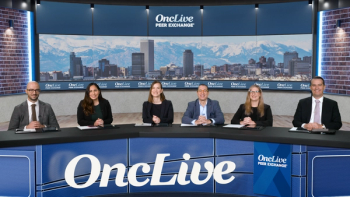
Javier Pinilla, MD, PhD, provides a brief overview of the changing CLL treatment landscape, discussing the influence of off-target adverse events and the development of treatment resistance on the evolution of BTK inhibitor therapy.

Alexey Danilov, MD, PhD, discusses how further research may address unmet needs in chronic lymphocytic leukemia or mantle cell lymphoma.
Joanna Rhodes, MD, MSCE, explores the general approach to treatment-naïve CLL patients with high-risk factors such as del17p and TP53 mutations.
Brian Hill, MD, PhD, discusses the use of BTK inhibitor monotherapy in CLL and presented recent long-term data updates from studies such as the 6-year follow-up of ELEVATE-TN and the extended follow-up from SEQUOIA.
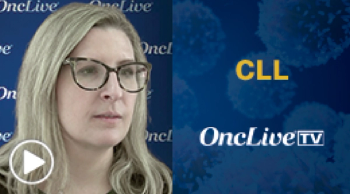
Joanna M. Rhodes, MD, MSCE, discusses the use of pirtobrutinib after covalent BTK inhibition in chronic lymphocytic leukemia or small lymphocytic lymphoma.

Lori A. Leslie, MD, discusses the significance of the FDA approval of pirtobrutinib for this population alongside the unmet needs it may address, highlights the efficacy and notable toxicities seen with the agent in the BRUIN study, and expands on the continued investigation of pirtobrutinib vs other standard-of-care regimens in various CLL subtypes.

Tatyana Feldman, MD, discusses updated safety and efficacy data from the phase 1/2 TRANSCEND CLL 004 trial in patients with relapsed/refractory chronic lymphocytic leukemia or small lymphocytic lymphoma.
In case you missed it, below are some of the drugs that were approved by the FDA in the month of December.
In case you missed it, here is a recap of the most popular episodes of OncLive On Air® from 2023.
The FDA has approved label updates for zanubrutinib to include data from the ALPINE trial in relapsed/refractory chronic lymphocytic leukemia, and axicabtagene ciloleucel to include findings from the primary overall survival analysis of the ZUMA-7 trial in relapsed/refractory large B-cell lymphoma.
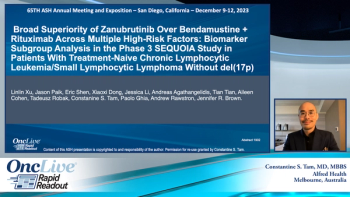
Constantine S. Tam, MD, MBBS, presents the biomarker subgroup analysis from the phase 3 SEQUOIA study investigating zanubrutinib in patients with treatment-naïve chronic lymphocytic leukemia/small lymphocytic lymphoma without del(17p).

Paolo Ghia, MD, PhD, describes the various cohorts of the SEQUOIA study, expands on outcomes from a biomarker subgroup analysis with zanubrutinib vs bendamustine plus rituximab, and more.
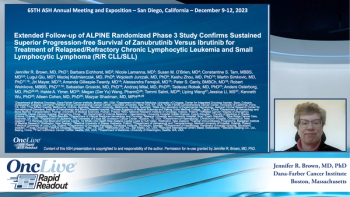
Jennifer R. Brown, MD, PhD, presents data from the extended follow-up of the ALPINE study investigating zanubrutinib in relapsed/refractory chronic lymphocytic leukemia and small lymphocytic lymphoma.
Catherine Coombs, MD discusses the present CLL front-line treatment landscape, addressing considerations like choosing fixed-duration or continuous therapy and variations in first-line approaches based on age and ECOG status.
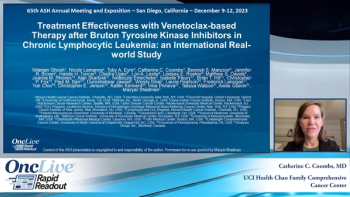
Catherine C. Coombs, MD, presents data investigating venetoclax-based therapy after Bruton tyrosine kinase inhibitors in chronic lymphocytic leukemia.

Jennifer R. Brown, MD, PhD, discusses the clinical implications of the ALPINE study and highlights a subgroup analysis of acquired mutations in patients with chronic lymphocytic leukemia, demonstrating which mutations were associated with resistance to covalent BTK inhibitors.
Treatment with zanubrutinib conferred a PFS benefit vs bendamustine plus rituximab across most biomarker subgroups of patients with treatment-naive chronic lymphocytic leukemia or small lymphocytic lymphoma without del(17p), according to findings from the phase 3 SEQUOIA trial.

Jennifer A Woyach, MD, discusses the efficacy of pirtobrutinib in patients with chronic lymphocytic leukemia or small lymphocytic lymphoma who progressed on treatment with a covalent BTK inhibitor, including subgroups with or without previous exposure to a BCL2 inhibitor.

Responses on the non-covalent BTK inhibitor pirtobrutinib remained high in patients with relapsed chronic lymphocytic leukemia who expressed frequent baseline BTK mutations, according to a genomic analysis of the phase 1/2 BRUIN trial.
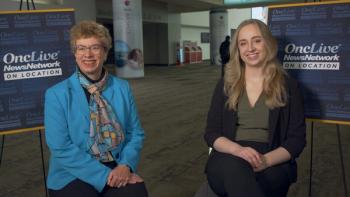
OncLive® will be LIVE with OncLive® News Network: On Location at the 2023 ASH Annual Meeting. Each day, we will broadcast a series of interviews with top thought leaders, to learn their thoughts and reactions to data presented across oncology during the conference.
Paolo Ghia, MD, PhD, full professor, discusses a biomarker subgroup analysis of the phase 3 SEQUOIA trial investigating zanubrutinib vs bendamustine plus rituximab in patients with treatment-naive chronic lymphocytic leukemia or small lymphocytic lymphoma without 17p deletions.

Ibrutinib plus venetoclax, given at a duration determined by minimal residual disease, improved progression-free survival and overall survival vs fludarabine, cyclophosphamide, and rituximab in patients with treatment-naive chronic lymphocytic leukemia.
Advertisement
Advertisement
Trending on OncLive
1
Adjuvant Giredestrant Preserves QOL With Sustained Tolerability in ER+, HER2– Early Breast Cancer
2
Arcotatug Tavatecan Improves Survival in CLDN18.2+ Advanced Gastric or GEJ Adenocarcinoma
3
Sacituzumab Govitecan Triplet Elicits Durable Responses in Treatment-Naive Metastatic Urothelial Cancer
4
Perioperative Enfortumab Vedotin Plus Pembrolizumab Improves ctDNA Clearance in Cisplatin-Eligible MIBC
5