




Chronic Lymphocytic Leukemia
Latest News
Advertisement
Latest Videos






















































Advertisement
More News
In case you missed it, read a recap of every episode of OncLive On Air recorded in February 2024.

Saad J. Kenderian, MD, CHB, discusses the FDA approval of lisocabtagene maraleucel for chronic lymphocytic leukemia or small lymphocytic lymphoma.

The FDA has granted accelerated approval to lisocabtagene maraleucel for the treatment of select patients with relapsed/refractory CLL or SLL.

Patients with relapsed/refractory chronic lymphocytic leukemia experienced long-lasting responses with venetoclax.

The FDA has lifted a partial clinical hold on a phase 1 trial evaluating NX-2127 in relapsed/refractory B-cell malignancies
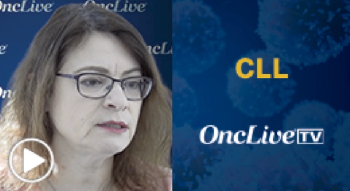
Tatyana Feldman, MD, discusses the TRANSCEND CLL 004 trial in patients with relapsed/refractory chronic lymphocytic leukemia or small lymphocytic lymphoma.
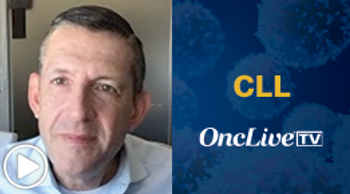
Mikkael A. Sekeres, MD, discusses how the emergence of BTK inhibitors have shifted approaches to the management of chronic lymphocytic leukemia.
An indirect comparison study in relapsed/refractory chronic lymphocytic leukemia demonstrated survival benefits with zanubrutinib vs acalabrutinib.

The FDA has approved a label expansion for ibrutinib with an oral suspension formulation in all current indications.
In case you missed it, read a recap of every episode of OncLive On Air recorded in January 2024.

Lisocabtagene maraleucel elicited durable responses in patients with relapsed/refractory chronic lymphocytic leukemia or small lymphocytic lymphoma.

Jan Joseph Melenhorst, PhD, emphasizes how research investigating chronic lymphocytic leukemia biology may result in more targeted CAR T-cell products.
Tatyana Feldman, MD, highlights updated data for liso-cel in relapsed/refractory chronic lymphocytic leukemia/small lymphocytic lymphoma.

Paolo Ghia, MD, PhD, discusses long-term efficacy data for fixed-duration ibrutinib plus venetoclax in first-line chronic lymphocytic leukemia.
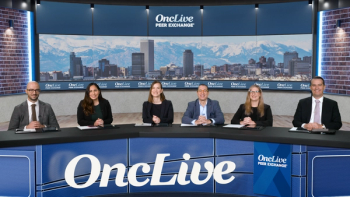
A panel of expert oncologists offer closing thoughts on the future treatment landscape and unmet needs in CLL.
Expert oncologists explore emerging therapies being investigated in CLL, including BTKi degraders, CAR-T therapy, and bispecific antibodies, and discussed their potential impact in shaping the future of CLL treatment.

Michael Choi, MD, discusses the potential FDA approval of lisocabtagene maraleucel in patients with relapsed/refractory chronic lymphocytic leukemia.
Tatyana Feldman, MD, discusses the launch of the TRANSCEND CLL 004 trial in relapsed/refractory chronic lymphocytic leukemia/small lymphocytic lymphoma.
The expert panel discusses recent data regarding the mechanisms of resistance to non-covalent BTK inhibitors in CLL.
Jacqueline Barrientos, MD, MS, discusses the role of non-covalent BTK inhibitors in R/R CLL and provided concise comments on the latest data, including insights from the ongoing BRUIN and Bellwave trials.
Callie Coombs, MD, discusses the investigation of notable BTK inhibitor combination trials in patients with chronic lymphocytic leukemia.
Javier Pinilla, MD, PhD explores evidence on molecular mechanisms leading to resistance in second-generation BTK inhibitors for CLL, providing insights from recently presented data at ASH 2023.
A panel of expert oncologists explore the influence of hypertension risk and other cardiovascular AEs in guiding treatment selection with BTKis, sharing insights from ASH 2023.
Faculty provide insights into the selection of BTK inhibitors, emphasizing the role of efficacy, toxicity, and quality of life data in treatment decisions, and exploring the impact of MAIC data.
Panel experts examine considerations for BTKi-based strategies in R/R CLL, highlighting pivotal findings from head-to-head trials, including acalabrutinib vs ibrutinib in ELEVATE-RR and zanubrutinib vs ibrutinib in ALPINE, covering safety, quality of life, and extended follow-up data.
Advertisement
Advertisement
Trending on OncLive
1
Adjuvant Giredestrant Preserves QOL With Sustained Tolerability in ER+, HER2– Early Breast Cancer
2
Arcotatug Tavatecan Improves Survival in CLDN18.2+ Advanced Gastric or GEJ Adenocarcinoma
3
Sacituzumab Govitecan Triplet Elicits Durable Responses in Treatment-Naive Metastatic Urothelial Cancer
4
Perioperative Enfortumab Vedotin Plus Pembrolizumab Improves ctDNA Clearance in Cisplatin-Eligible MIBC
5