





Chronic Lymphocytic Leukemia
Latest News
Advertisement
Latest Videos























































Advertisement
More News
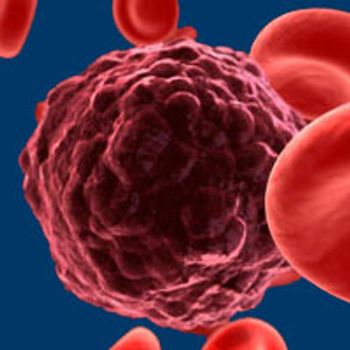
With changing treatment paradigms, particularly the use of oral targeted agents, predictive value and use of prognostic factors to determine treatment choice are shifting in CLL.

Javier Pinilla-Ibarz, MD, PhD, associate member, Malignant Hematology and Immunology Program at the H. Lee Moffitt Cancer Center, discusses the outcomes of patients with high-risk chronic lymphocytic leukemia (CLL) and how ibrutinib (Imbruvica) targets these patients.

John C. Byrd, MD, sheds light on the game-changing efficacy of ibrutinib in chronic lymphocytic leukemia.
Kanti R. Rai, MD, professor, The Karches Center for Oncology Research, The Feinstein Institute for Medical Research, director, Center for Oncology and Cell Biology, Long Island Jewish Medical Center, professor, Medicine and Molecular Medicine, Hofstra Northwell School of Medicine, discusses the change in the treatment paradigm for chronic lymphocytic leukemia (CLL).

Concurrent treatment with CTL-119 cell therapy and ibrutinib (Imbruvica) led to complete marrow clearance of leukemic cells in 8 of 9 evaluable patients with heavily pretreated or genetically high-risk chronic lymphocytic leukemia, results of a pilot study showed.
Jeff Sharman, MD, medical director, Hematology Research, The US Oncology Network, discusses the phase III findings of the GENUINE study, the combination of ublituximab (TG-1101) and ibrutinib (Imbruvica) for patients with previously treated high-risk chronic lymphocytic leukemia (CLL).
Induction therapy with fludarabine and rituximab followed by lenalidomide consolidation therapy (FR-L) demonstrated a distinct plateau in overall survivalbeyond that seen with FR or FR plus cyclophosphamide (FCR) alone for patients with symptomatic, untreated non-del(11q) chronic lymphocytic leukemia.

The combination of ublituximab and ibrutinib demonstrated an objective response rate of 78% for patients with previously treated high-risk chronic lymphocytic leukemia.
Jeff Sharman, MD, discusses the prospects for progress in targeting elements of the BCR pathway.

Richard R. Furman, MD, discusses the continued evolution of the field of chronic lymphocytic leukemia and how physicians decide on the optimal treatment sequence for their patients.

Sameer Parikh, MD, hematologist, Mayo Clinic, discusses the utilization and significance of the Chronic Lymphocytic Leukemia (CLL)-International Prognostic Index (IPI).

Sameer A. Parikh, MD, discusses how the International Prognostic Index has assisted physicians with their patients who have CLL, the optimal sequencing of therapies, and other emerging molecular targets in this disease.
Richard R. Furman, MD, Morton Coleman, M.D. Distinguished Associate Professor of Medicine, Joan and Sanford I. Weill Department of Medicine, Weill Cornell Medicine/NewYork-Presbyterian Hospital, discusses the use of prognostic markers in the treatment of patients with chronic lymphocytic leukemia (CLL).

Nitin Jain, MD, assistant professor, Department of Leukemia, The University of Texas MD Anderson Cancer Center, discusses the treatment of patients with chronic lymphocytic leukemia who have developed Richter’s transformation.

Steven Coutre, MD, discusses ongoing efforts to enhance frontline outcomes for patients with CLL.
William G. Wierda, MD, PhD, medical director of the Leukemia Center at The University of Texas MD Anderson Cancer Center, discusses the need for continuous treatments for patients with chronic lymphocytic leukemia (CLL).
Veronique Leblond, MD, head of the Department of Hematology, Pitié Salpêtrière Hospital, Paris, France, discusses the treatment of patients with chronic lymphocytic leukemia (CLL) who have relapsed after initial treatment.
Andrew D. Zelenetz, MD, PhD, medical director of Quality Informatics at Memorial Sloan Kettering Cancer Center, discusses an early-phase trial of nivolumab (Opdivo) plus ibrutinib (Imbruvica) in patients with chronic lymphocytic leukemia (CLL).
Achieving a complete response following ABVD chemotherapy offered the best chance for survival for patients with chronic lymphocytic leukemia who developed Hodgkin lymphoma following Richter transformation, according to a retrospective study published in the American Journal of Hematology.
Results of a systematic literature search published online in Clinical Lymphoma, Myeloma & Leukemia showed that ibrutinib was associated with superior survival and fewer adverse events compared with bendamustine in patients with chronic lymphocytic leukemia.

Sameer Parikh, MD, hematologist, Mayo Clinic, discusses first-line therapy choices for patients with chronic lymphocytic leukemia (CLL).

Andrew D. Zelenetz, MD, PhD, medical director of Quality Informatics at Memorial Sloan Kettering Cancer Center, discusses the potential with acalabrutinib and BGB-3111 for the treatment of patients with chronic lymphocytic leukemia (CLL).

Patients with chronic lymphocytic leukemia who stopped treatment with ibrutinib (Imbruvica) for toxicities had longer survival than those who discontinued for other reasons, including progression and Richter transformation.

Andre Goy, MD, chairman and director, chief of Lymphoma, and director of Clinical and Translational Cancer Research at John Theurer Cancer Center, discusses recent updates in the treatment of patients with chronic lymphocytic leukemia (CLL).
Kanti R. Rai, MD, professor, The Karches Center for Oncology Research, The Feinstein Institute for Medical Research, director, Center for Oncology and Cell Biology, Long Island Jewish Medical Center, professor, Medicine and Molecular Medicine, Hofstra Northwell School of Medicine, discusses the downfalls of chemotherapy in chronic lymphocytic leukemia (CLL).
Advertisement
Advertisement
Trending on OncLive
1
Adjuvant Giredestrant Preserves QOL With Sustained Tolerability in ER+, HER2– Early Breast Cancer
2
Sacituzumab Govitecan Triplet Elicits Durable Responses in Treatment-Naive Metastatic Urothelial Cancer
3
Perioperative Enfortumab Vedotin Plus Pembrolizumab Improves ctDNA Clearance in Cisplatin-Eligible MIBC
4
Ad Hoc Analysis Supports Contributions of Both Enfortumab Vedotin and Pembrolizumab in Cisplatin-Ineligible MIBC
5