





Colorectal Cancer
Latest News
Advertisement
Latest Videos







































































Advertisement
More News

Kanwal PS Raghav, MBBS, MD, discusses ABBV-400 in combination with fluorouracil, folinic acid, and bevacizumab in previously treated mCRC.

Michael Foote, MD, discusses the use of EGFR inhibitors in the first vs subsequent lines of therapy for patients with metastatic colorectal cancer.

Patients with BRAF V600E-mutant metastatic colorectal cancer experience poor clinical outcomes, according to real-world data.

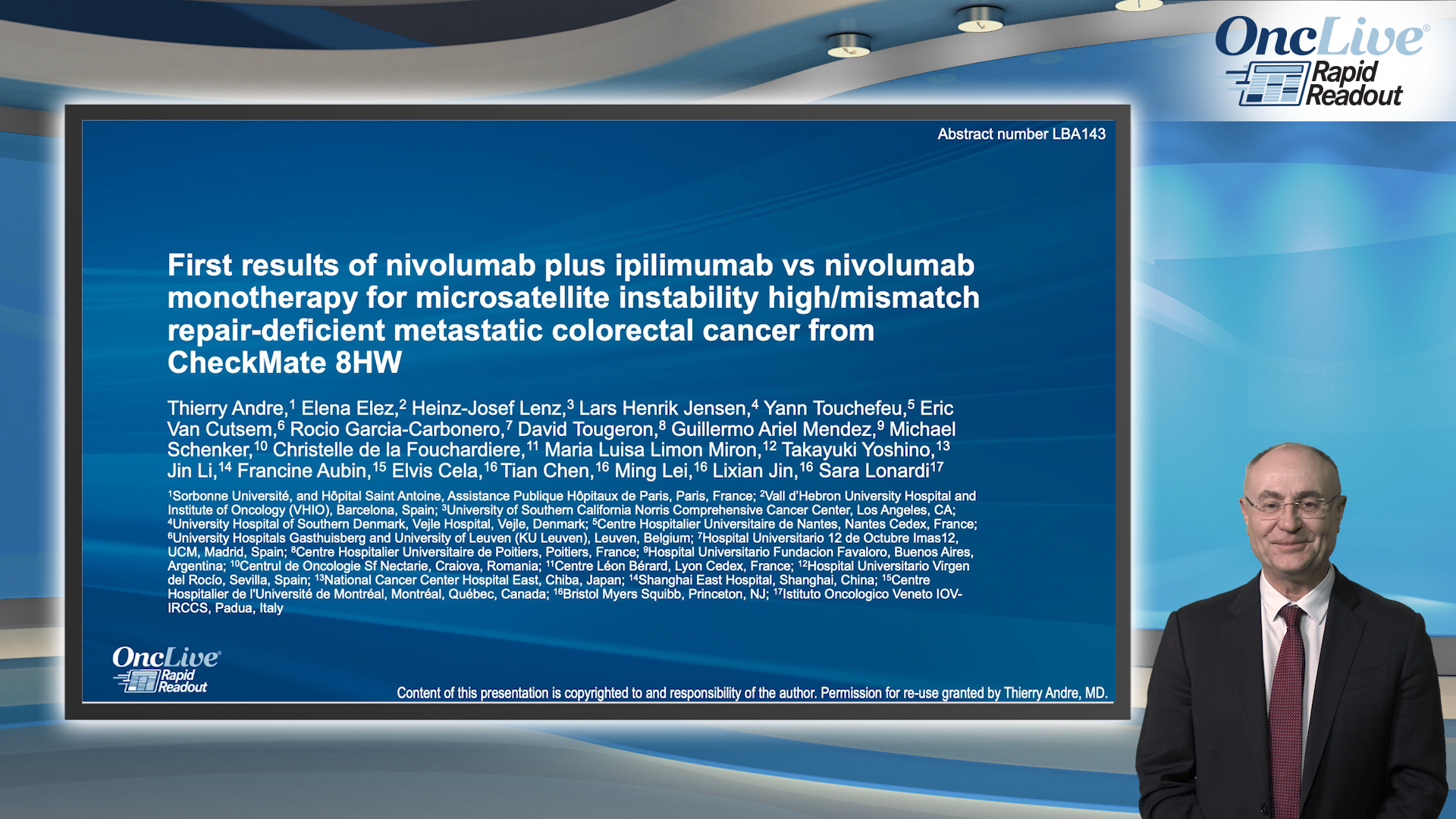
Thierry André, MD, discusses the efficacy of nivolumab plus ipilimumab vs nivolumab monotherapy in MSI-H/dMMR mCRC.

Aasma Shaukat, MD, MPH, discusses the sensitivity of the PREEMPT CRC blood-based assay in detecting colorectal cancer for patients at average risk.
Detectable ctDNA after neoadjuvant chemotherapy was associated with the recommendation for TME in patients with T1-3, N0 low or mid rectal cancer.

A longer-term follow-up analysis showed that adagrasib/cetuximab demonstrated clinically meaningful efficacy in KRAS G12C–mutated advanced CRC.

Updated phase 2 data revealed fruquintinib plus TAS-102 could offer survival benefits in pretreated metastatic colorectal cancer.

A recap of the top data presented at the 2025 Gastrointestinal Cancers Symposium.
Although 83.7% of treatment decisions remained unchanged, findings from Signatera influenced adjuvant chemotherapy usage in 16.3% of cases for stage II/III CRC.

Kanwal P.S. Raghav, MD, MBBS, discusses a phase 2 study of ABBV-400 plus 5-FU, folinic acid, and bevacizumab in pretreated patients with metastatic CRC.
Encorafenib plus cetuximab and mFOLFOX6 improved responses in BRAF V600E–mutated metastatic colorectal cancer.
Nivolumab plus ipilimumab led to early and sustained PFS benefits vs nivolumab alone across all lines of therapy in patients with dMMR/MSI-H mCRC.

Scott Kopetz, MD, PhD, FACP, discusses findings from the phase 3 BREAKWATER study of frontline encorafenib plus cetuximab with or without chemotherapy in BRAF V600E–mutated metastatic CRC.

Treatment with a single cycle of neoadjuvant pembrolizumab demonstrated a pCR rate of 44% in patients with dMMR colon cancer.
Trifluridine/tipiracil showed a numerical, but not significant, DFS improvement in all patients with residual disease after curative resection of CRC.
Aspirin reduced the risk of disease recurrence in colorectal cancer harboring PI3K pathway alterations.

ctDNA positivity was associated with worse DFS overall but significantly better DFS with celecoxib vs placebo in stage III resected colon cancer.

Health Canada approved fruquintinib for select patients with metastatic colorectal cancer.

Sotorasib doublet gets approved for KRAS G12C–mutated CRC, acalabrutinib triplet is cleared for previously untreated MCL, and more from OncLive.

Aparna Parikh, MD, discusses the importance of upfront molecular testing in patients with metastatic colorectal cancer.

The FDA approved sotorasib plus panitumumab for adult select patients with KRAS G12C–mutated metastatic colorectal cancer.

Arvind N. Dasari, MD, MS, discusses the roles for the FDA-approved agents fruquintinib and TAS-102 plus bevacizumab in the mCRC treatment paradigm.
Phase 1 data showed the potential for invikafusp alfa as a precision cancer immunotherapeutic agent in solid tumors after exposure to PD-(L)1 therapy.

Here is your snapshot of all therapeutic options greenlit by the FDA in December 2024 spanning tumor types.
Advertisement
Advertisement
Trending on OncLive
1
The OncFive: Top Oncology Articles for the Week of 10/4/2026
2
FDA Grants Breakthrough Device Designation to Natera’s Multi-Cancer Early Detection Assay
3
FDA Approves Atezolizumab Plus Chemo for Stage III dMMR Colon Cancer
4
FDA Flashback: Hematologic Cancer Decisions and News From September 2026
5