



Colorectal Cancer
Latest News


Nivolumab Plus Ipilimumab Improves HRQOL Vs Nivolumab Alone in MSI-H/dMMR mCRC
By Kristi Rosa
Advertisement
Latest Videos





































































Advertisement
More News

The FDA grants approval to Dato-DXd in EGFR+ NSCLC, revumenib sNDA is under priority review for NPM1-mutant AML, and more from OncLive this week.

Zanzalintinib plus atezolizumab improved overall survival in previously treated, non–MSI-H metastatic colorectal cancer.
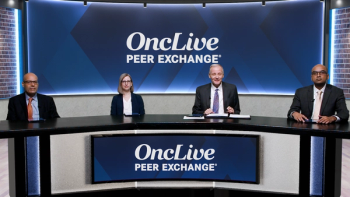
Panelists discuss how doublet immunotherapy with ipilimumab and nivolumab provides superior outcomes compared to single-agent PD-1 therapy or chemotherapy in microsatellite instability-high colorectal cancer, supporting the “hit hard, hit early” approach.
Panelists discuss how the BREAKWATER trial demonstrates that upfront treatment with encorafenib plus cetuximab significantly improves outcomes in BRAF V600E-mutated colorectal cancer, turning a historically poor prognostic marker into a targetable opportunity.

Dirk Arnold, MD, PhD, on the investigation of amivantamab vs cetuximab, both in combination with chemotherapy, in RAS/BRAF wild-type mCRC.

Real-World Analysis Suggests Social Determinants of Health May Be Associated With Early Onset of CRC
Jessica Paulus, ScD, highlights factors that may contribute to the increasing incidence of colorectal cancer in patients younger than 50 years of age.

Jessica Paulus, ScD, discusses findings from a real-world, retrospective analysis of factors contributing to early-onset CRC.
Panelists discuss how dihydropyrimidine dehydrogenase testing remains controversial with institutions debating whether to implement universal pharmacogenomic testing given the challenges of standardization, genotype-phenotype correlation, and low incidence of severe deficiency.
John L. Marshall, MD; Marwan G. Fakih, MD; Arvind N. Dasari, MD, MS; and Katrina S. Pedersen, MD, discuss how precision medicine has transformed metastatic colorectal cancer treatment through comprehensive molecular testing, targeted therapies like BRAF/EGFR inhibition and immunotherapy combinations for microsatellite instability-high tumors, and personalized approaches to treatment sequencing and dosing modifications that balance efficacy with quality of life considerations.

The top oncology videos of the week for the week of June 1, 2025, including updates from the 2025 ASCO Annual Meeting.
Revisit key updates from the ASCO Annual Meeting, the FDA, NCCN, and more.

The NCCN has added the Shield blood test and the ColoSense test to its colorectal cancer screening guidelines.

Sara Char, MD, on the association between the empirical dietary inflammatory pattern and survival outcomes in stage III colon cancer.

Adjuvant atezolizumab plus mFOLFOX6 improved disease-free survival vs mFOLFOX6 alone in patients with stage III, mismatch repair–deficient colon cancer.
MK-1084 produced responses and was safe in KRAS G12C–mutated advanced colorectal cancer.

Treatment resistance to sotorasib plus panitumumab may stem from genomic alterations in KRAS G12C–mutated CRC.

Nivolumab plus ipilimumab displayed superior PFS and PFS2 data vs chemotherapy and nivolumab monotherapy in mismatch repair-deficient colorectal cancer.
Anlotinib/chemotherapy demonstrated similar responses and PFS outcomes vs bevacizumab/chemotherapy in patients with RAS/BRAF wild-type mCRC.
Adjuvant chemotherapy decisions based on ctDNA status did not improve recurrence-free survival in stage III colon cancer.
John H. Strickler, MD, discusses the preliminary efficacy of sotorasib in combination with multiple agents across tumor types harboring KRAS G12C mutations.
Read a recap of the episodes of OncLive On Air that debuted in May 2025.
Encorafenib plus cetuximab and mFOLFOX6 improved progression-free survival in BRAF V600E–mutated metastatic colorectal cancer.

S. Daniel Haldar, MD, explains the future directions for evaluating NeoAg-VAX in colorectal and pancreatic cancer.

GI cancer experts rank key abstracts of interest from the upcoming ASCO Annual Meeting on OncLive’s social media.

The ACTIVATE trial confirmed the safety and enhanced efficacy of Acoustic Cluster Therapy plus chemotherapy in patients with metastatic colorectal cancer.
Advertisement
Advertisement
Trending on OncLive
1
The OncFive: Top Oncology Articles for the Week of 10/4/2026
2
FDA Grants Breakthrough Device Designation to Natera’s Multi-Cancer Early Detection Assay
3
FDA Approves Atezolizumab Plus Chemo for Stage III dMMR Colon Cancer
4
FDA Flashback: Hematologic Cancer Decisions and News From September 2026
5