






Genitourinary Cancers
Latest News
Advertisement
Latest Videos































































Advertisement
More News
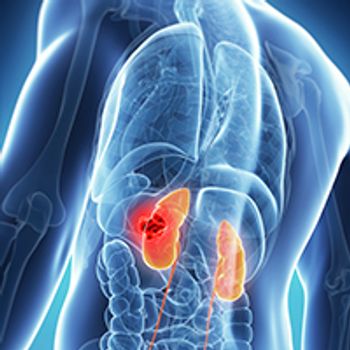
Four molecular subtypes of clear-cell renal cell carcinoma were prognostic for outcomes after metastasectomy, with striking differences seen in overall survival and disease-free survival between each of the groups.
Kerstin Junker, MD, associate professor, Department of Urology, Universit

An extension in overall survival seen with the combination of nivolumab and ipilimumab has completely changed the standard of care for patients with metastatic renal cell carcinoma.

Alessandro Volpe, MD, University of Eastern Piedmont Hospital, Maggiore Della Carita Hospital, Novara, Italy, discusses the management of locally advanced kidney cancer.

A wealth of new clinical trial data for immune checkpoint inhibitors has recently been reported for the treatment of patients with metastatic muscle-invasive urothelial carcinoma.
The addition of incomplete metastasectomy to systemic therapy improved median overall survival by 3 months in patients with metastatic renal cell carcinoma.

Andrea Necchi, MD, a medical oncologist at the Fondazione IRCCS Istituto Nazionale dei Tumori in Milan, discusses the impact of PD-1 inhibition in bladder cancer as well as the promise with combination strategies.
Primo N. Lara Jr, MD, associate director for translational research, UC Davis Comprehensive Cancer Center, discusses the FDA approval of adjuvant sunitinib (Sutent) for high-risk patients with renal cell carcinoma (RCC).
The FDA has approved sunitinib (Sutent) for use as an adjuvant therapy in patients with renal cell carcinoma who have received nephrectomy and are high risk for recurrence.

Cabozantinib (Cabometyx) remains to be the sole oral drug to meet 3 clinical trial endpoints of progression-free survival, overall survival, and overall response rate in patients with advanced RCC.

Matthew Galsky, MD, professor of medicine, hematology and medical oncology, Mount Sinai Hospital, discusses resistance to checkpoint blockade in metastatic bladder cancer.
Przemyslaw W. Twardowski, MD, discusses a variety of factors to consider when treating patients with prostate cancer.

Neeraj Agarwal, MD, associate professor, Division of Oncology, Department of Medicine, University of Utah School of Medicine, Huntsman Cancer Institute, discusses remaining questions in renal cell carcinoma.

Guru P. Sonpavde, MD, discusses degarelix, androgen-deprivation therapy, and ongoing trials with immunotherapy that are crucial to advancing the treatment of patients with prostate cancer.

Sumanta K. Pal, MD, discusses advancements in prostate cancer, bladder cancer, and promising results in kidney cancer.
Petros Grivas, MD, PhD, medical oncologist, Cleveland Clinic, discusses combining chemotherapy and immunotherapy as a treatment approach for patients with bladder cancer.
The combination of the CD122-biased cytokine NKTR-214 and the PD-1 inhibitor nivolumab demonstrated target lesion reductions of 72% for patients with advanced cancers.

The combination of nivolumab and BMS-986205 generated promising response rates without increasing adverse effects in patients with advanced cervical or bladder cancers.

Jason J. Luke, MD, assistant professor of medicine, University of Chicago Medicine, discusses a study evaluating the IDO1 inhibitor BMS-986205 as a monotherapy and in combination with nivolumab in patients with advanced cancers.
Robert G. Uzzo, MD, chair, Surgical Oncology, G. Willing "Wing" Pepper Chair in Cancer Research, senior vice president, Physician Services, president, Fox Chase Cancer Center Medical Group, Inc., professor of surgery, Temple University Health System, Fox Chase Cancer Center, discusses biomarker development for patients with renal cell carcinoma (RCC).

Thomas Hope, MD, assistant professor of abdominal imaging and nuclear medicine at University of California, San Francisco (UCSF), discusses the future of imaging for biochemical recurrent prostate cancer.

Brant Inman, MD, surgical oncologist, urologic oncologist, Duke Cancer Center discusses biomarkers for immunotherapy in patients with bladder cancer.

Decades of clinical trials exploring modifications of cytotoxic regimens, including the use of different or more drugs, demonstrated that a therapeutic plateau had been reached with conventional chemotherapeutic agents, highlighting the need for novel approaches in urothelial carcinoma.

Andrea Apolo, MD, discusses the combination of cabozantinib plus nivolumab and ipilimumab, as well as the latest data on avelumab in urothelial carcinoma.

Nivolumab reduced the risk of death by 26% compared with everolimus in patients with previously treated advanced renal cell carcinoma.
Advertisement
Advertisement
Trending on OncLive
1
Savolitinib Plus Osimertinib NDA Submitted to FDA for MET-Driven, EGFR-Mutated NSCLC After EGFR TKI
2
FDA Grants Priority Review to Elinzanetant for Endocrine Therapy–Associated Vasomotor Symptoms in HR+ Breast Cancer
3
Calculating the Real Cost of False Positive Findings in Cancer Screening
4
Cilta-Cel Shows Long-Term Treatment-Free Remissions in Lenalidomide-Refractory Myeloma
5