




Genitourinary Cancers
Latest News
Advertisement
Latest Videos


































































Advertisement
More News

Petros Grivas, MD, PhD, medical oncologist, Cleveland Clinic, discusses next steps for immunotherapy for the treatment of patients with bladder cancer.
Andrew J. Armstrong, MD, associate professor of medicine and surgery, Department of Medicine, Duke University School of Medicine, discusses sipuleucel-T (Provenge) for patients with prostate cancer.

Hans Hammers, MD, PhD, associate professor, Internal Medicine, UT Southwestern Medical Center, discusses the CheckMate-214 study for patients with renal cell carcinoma (RCC).
Eric Jonasch, MD, professor, The University of Texas MD Anderson Cancer Center, discusses sequencing challenges facing patients with renal cell carcinoma (RCC).

Treatment with neoadjuvant chemotherapy prior to radical cystectomy significantly improved overall survival compared with cystectomy alone for patients with the basal subtype of muscle-invasive bladder cancer.

Martin H. Voss, MD, medical oncologist, Memorial Sloan Kettering Cancer Center, discusses neoadjuvant immunotherapy trials in renal cell carcinoma (RCC).

Andrea B. Apolo, MD, medical oncologist, chief of the bladder cancer section of the Genitourinary Malignancies Branch, National Cancer Institute, discusses managing toxicities with checkpoint inhibitors in bladder cancer.

The established efficacy of single-agent checkpoint inhibition for metastatic urothelial carcinoma along with molecule expression analyses suggests that PD-1/PD-L1 inhibition could hold promise for patients with non-muscle invasive bladder cancer, particularly those unresponsive to Bacillus Calmette-Guérin.

Guru Sonpavde, MD, director of Bladder Cancer at the Dana-Farber Cancer Institute, discusses current clinical trials in penile cancer.

Hans J. Hammers, MD, PhD, associate professor, Internal Medicine, UT Southwestern Medical Center, discusses the potential combination of IDO inhibitors and PD-1 inhibitors in renal cell carcinoma.

Michael R. Harrison, MD, assistant professor of medicine, Duke Cancer Institute, discusses choosing frontline treatment for patients with renal cell carcinoma (RCC).
It has been a landmark year for immunotherapy in bladder cancer with the approval of 5 checkpoint inhibitors across first and second line.
The combination of PD-1 or PD-L1 inhibitors with existing frontline therapies could represent a superior approach for some treatment-naïve patients with renal cell carcinoma.

Stemming from the wave of checkpoint inhibitor approvals, multiple trials have begun evaluating immunotherapies in combination with other agents for the treatment of patients with advanced bladder cancer.
Elizabeth Plimack, MD, director of Genitourinary Clinical Research at Fox Chase Cancer Center, discusses checkpoint inhibitors in the frontline setting of bladder cancer.

David F. McDermott, MD, director of the Biologic Therapy Program at Beth Israel Deaconess Medical Center, discusses the combination of nivolumab (Opdivo) and ipilimumab (Yervoy) in renal cell carcinoma (RCC).
Elizabeth Plimack, MD, discusses the impact of the immunotherapy approvals in the first- and second-line setting for bladder cancer and the future of combinations for these patients.

Terence Friedlander, MD, an assistant clinical professor in the Division of Hematology/Oncology, Helen Diller Family Comprehensive Cancer Center, University of California, San Francisco, discusses checkpoint inhibitors in the second-line setting for patients with bladder cancer.

Petros Grivas, MD, shares insight on the value of combining immunotherapy regimens in the treatment of patients with urothelial carcinoma.

Neeraj Agarwal, MD, recaps the latest advancements in newly diagnosed RCC.

Jeffrey M. Holzbeierlein, MD, professor, director of Urologic Oncology, Department of Urology, University of Kansas Medical Center, discusses the management guidelines for patients with bladder cancer.
Eric Jonasch, MD, professor, The University of Texas MD Anderson Cancer Center, discusses the CABOSUN study in renal cell carcinoma (RCC).

The European Commission has approved abiraterone acetate (Zytiga) in combination with prednisone/prednisolone for the treatment of adult men with newly-diagnosed high-risk metastatic hormone-sensitive prostate cancer.

Brant Inman, MD, surgical oncologist, urologic oncologist, Duke Cancer Center, discusses novel immunotherapy combinations for patients with bladder cancer.
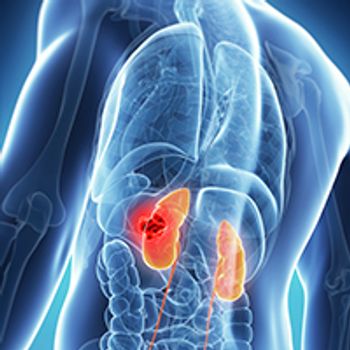
Patients with high-risk renal cell carcinoma who harbor early systemic dissemination with very poor survival prognosis may derive some benefit from adjuvant therapy.
Advertisement
Advertisement
Trending on OncLive
1
Savolitinib Plus Osimertinib NDA Submitted to FDA for MET-Driven, EGFR-Mutated NSCLC After EGFR TKI
2
FDA Grants Priority Review to Elinzanetant for Endocrine Therapy–Associated Vasomotor Symptoms in HR+ Breast Cancer
3
Calculating the Real Cost of False Positive Findings in Cancer Screening
4
Cilta-Cel Shows Long-Term Treatment-Free Remissions in Lenalidomide-Refractory Myeloma
5