


Genitourinary Cancers
Latest News

Advertisement
Latest Videos





























































Advertisement
More News

Matthew R. Zibelman, MD, assistant professor, Department of Hematology/Oncology, Fox Chase Cancer Center, discusses immunotherapy combinations in the treatment of patients with renal cell carcinoma (RCC).

Jean Hoffman-Censits, MD, discusses ever-changing bladder cancer field, ongoing combination trials that are showing early promise, and the unmet need of patient selection for novel therapies.
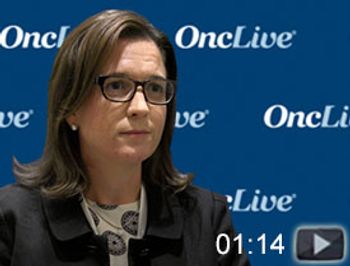
Jean Hoffman-Censits, MD, associate professor of Medical Oncology, Thomas Jefferson University Hospital, Sidney Kimmel Cancer Center, discusses the future treatment landscape of bladder cancer.

Robert G. Uzzo, MD, chair, Surgical Oncology, G. Willing "Wing" Pepper Chair in Cancer Research, senior vice president, Physician Services, president, Fox Chase Cancer Center Medical Group, Inc., professor of surgery, Temple University Health System, Fox Chase Cancer Center, discusses the role of surgery in kidney cancer.
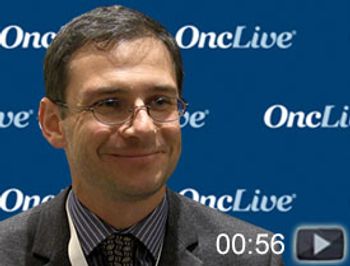
Daniel M. Geynisman, MD, assistant professor, Department of Hematology/Oncology, Fox Chase Cancer Center, discusses immunotherapy in metastatic renal cell carcinoma.

The UK’s National Institute for Health and Care Excellence has issued guidelines recommending against nivolumab (Opdivo), lenvatinib (Lenvima), and sorafenib (Nexavar).

Daniel M. Geynisman, MD, discusses remaining challenges in the landscape of RCC, despite progress with systemic therapies and the pivotal ongoing studies combining immunotherapy and targeted therapy.
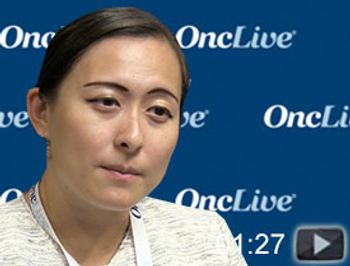
Tian Zhang, MD, assistant professor of medicine, Duke University School of Medicine, Duke Cancer Institute, discusses the impact of the STAMPEDE trial in prostate cancer.
Michael R. Harrison, MD, assistant professor of medicine, Duke Cancer Institute, discusses the possibility of nivolumab (Opdivo) plus ipilimumab (Yervoy) becoming the new interleukin-2 (IL-2).
Jean Hoffman-Censits, MD, associate professor of medical oncology, Thomas Jefferson University Hospital, Sidney Kimmel Cancer Center, discusses immunotherapy in bladder cancer.
Sumanta Kumar Pal, MD, co-director of the Kidney Cancer Program at the City of Hope, discusses the sequencing of immunotherapy regimens in patients with urothelial carcinoma.
Dominick Bosse, MD, fellow, Dana-Farber Cancer Institute, discusses the quality of life when combining VEGF-targeted therapies and radium-223 dichloride (Xofigo) in metastatic renal cell carcinoma (mRCC).
The FDA has granted a priority review to a supplemental new drug application for cabozantinib (Cabometyx) for previously untreated patients with advanced renal cell carcinoma.
Toni Choueiri, MD, clinical director, Lank Center for Genitourinary Oncology, director, Kidney Cancer Center, senior physician, Dana-Farber Cancer Institute, discusses research involving immunotherapy regimens for patients with renal cell carcinoma (RCC).
Brant Inman, MD, surgical oncologist, urologic oncologist, Duke Cancer Center, discusses the role of chemotherapy in bladder cancer.
Robert G. Uzzo, MD, discusses recent guidelines that have impacted clinical practice and ongoing biomarker research in the field of kidney cancer.
Sumanta Kumar Pal, MD, co-director of the Kidney Cancer Program at the City of Hope in Duarte, California, discusses the CheckMate-214 and CABOSUN trials for patients with renal cell carcinoma (RCC).

Matthew R. Zibelman, MD, discussed the promise of immunotherapy combinations for patients with kidney cancer.
Aly-Khan Lalani, MD, genitourinary oncology fellow, Dana-Farber Cancer Institute, discusses the results of a study investigating neutrophil-lymphocyte ratio (NLR) in patients with renal cell carcinoma (RCC).
Toni Choueiri, MD, clinical director, Lank Center for Genitourinary Oncology, director, Kidney Cancer Center, senior physician, Dana-Farber Cancer Institute, discusses the role of cabozantinib (Cabometyx) for patients with renal cell carcinoma

The therapeutic landscape is rapidly being altered by clinical trials of immunotherapy for patients with metastatic urothelial carcinoma, but simply changing the way quality of life is monitored could provide dramatic improvements in overall survival.
Dominick Bosse, MD, fellow, Dana-Farber Cancer Institute, discusses the safety profile demonstrated with the combination of radium-223 and VEGF-targeted therapy for patients with renal cell carcinoma (RCC).
The aim of treating NMIBC is avoid the loss of the bladder and to prevent recurrence and progression to muscle-invasive disease.
Robert Jones, MD, discusses the future treatment landscape for patients with urothelial carcinoma in a more multidisciplinary setting.
Eva Comperat, MD, Hospital Tenon, discusses the treatment strategy for patients with neuroendocrine tumors (NETs).
Advertisement
Advertisement
Trending on OncLive
1
Savolitinib Plus Osimertinib NDA Submitted to FDA for MET-Driven, EGFR-Mutated NSCLC After EGFR TKI
2
FDA Grants Priority Review to Elinzanetant for Endocrine Therapy–Associated Vasomotor Symptoms in HR+ Breast Cancer
3
Calculating the Real Cost of False Positive Findings in Cancer Screening
4
Cilta-Cel Shows Long-Term Treatment-Free Remissions in Lenalidomide-Refractory Myeloma
5