


Genitourinary Cancers
Latest News
Advertisement
Latest Videos






























































Advertisement
More News
Maria De Santis, MD, associate clinical professor at the University of Warwick, discusses the future treatment landscape for patients with bladder cancer.
Andrea Necchi, MD, discusses the current role of immunotherapy and chemotherapy for patients with muscle-invasive bladder cancer.
As first-line therapy in cisplatin-ineligible advanced urothelial cancer, pembrolizumab (Keytruda) was safe and provided tumor reduction as well as durable responses.
Michael R. Harrison, MD, discusses emerging data that are likely to impact the treatment landscape for patients with RCC.
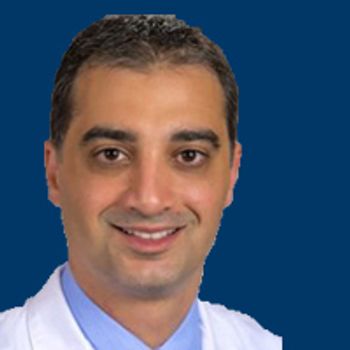
Adjuvant therapy with tyrosine kinase inhibitors for patients with high-risk renal cell carcinoma (RCC) who have undergone a nephrectomy may be supported by level IIa evidence from the National Comprehensive Cancer Network guidelines.

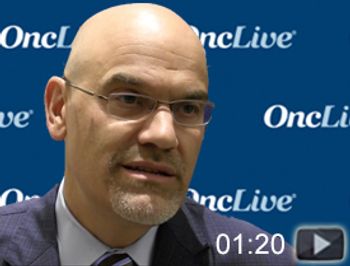
Robert G. Uzzo, MD, chair, Surgical Oncology, G. Willing "Wing" Pepper Chair in Cancer Research, senior vice president, Physician Services, president, Fox Chase Cancer Center Medical Group, Inc., professor of surgery, Temple University Health System, Fox Chase Cancer Center, discusses pressing unmet needs for patients with kidney cancer.

Jean Hoffman-Censits, MD, associate professor of medical oncology, Thomas Jefferson University Hospital, Sidney Kimmel Cancer Center, discusses challenges facing the sequencing of agents for patients with urothelial carcinoma.
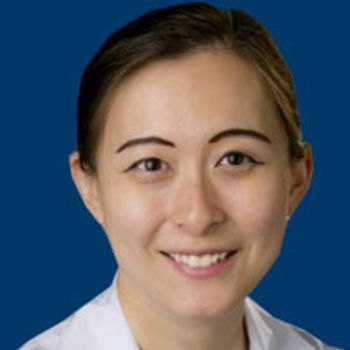
Tian Zhang, MD, discusses emerging results for patients with metastatic castration-sensitive prostate cancer.

Brant Inman, MD, discusses the biology of bladder cancer, the evolving role of checkpoint inhibitors, and the future of chemotherapy in the disease.

Brant Inman, MD, surgical oncologist, urologic oncologist, Duke Cancer Center, discusses the biology of bladder cancer.
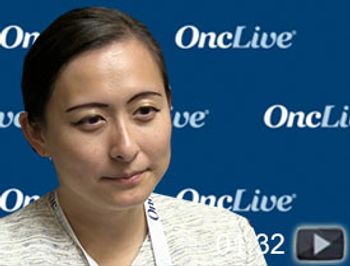
Tian Zhang, MD, a medical instructor in the Department of Medicine, Duke University School of Medicine, discusses the impact of the LATITUDE study in prostate cancer.

Matthew R. Zibelman, MD, assistant professor, Department of Hematology/Oncology, Fox Chase Cancer Center, discusses determining treatments for patients with renal cell carcinoma (RCC).

Daniel M. Geynisman, MD, assistant professor, Department of Hematology/Oncology, Fox Chase Cancer Center, discusses challenges facing the sequencing of agents for patients with metastatic kidney cancer.
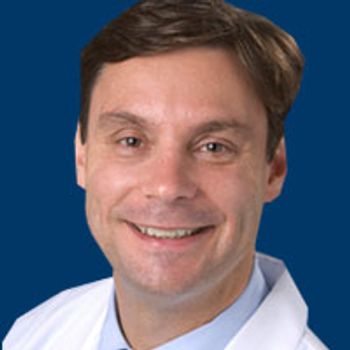
Daniel J. George, MD, discusses the major questions practitioners are asking regarding optimizing upfront therapy for patients with mCRPC.
Jean Hoffman-Censits, MD, associate professor of Medical Oncology, Thomas Jefferson University Hospital, Sidney Kimmel Cancer Center, discusses biomarker development in the field of urothelial carcinoma.
Rana R. McKay, MD, discusses the promising findings from the CheckMate-214 and CABOSUN studies in renal cell carcinoma.

Robert G. Uzzo, MD, chair, Surgical Oncology, G. Willing "Wing" Pepper Chair in Cancer Research, senior vice president, Physician Services, president, Fox Chase Cancer Center Medical Group, Inc., professor of surgery, Temple University Health System, Fox Chase Cancer Center, discusses the guidelines for the treatment and management of patients with kidney cancer.
Elizabeth Plimack, MD, director of Genitourinary Clinical Research at Fox Chase Cancer Center, discusses strategies for developing cures for patients with locally advanced urothelial carcinoma.
Terence Friedlander, MD, discusses the targeted therapies emerging in the field of bladder cancer, as well as immunotherapy combinations that are traveling through the pipeline.

Thomas Hope, MD, discusses the novel technique PSMA-PET and how, if approved, it will significantly alter detection of biochemically recurrent prostate cancer.
Toni K. Choueiri, MD, sheds light on the excitement surrounding the CABOSUN and CheckMate-214 trials, and why the future of the renal cell carcinoma field lies in novel combination regimens.
Advertisement
Advertisement
Trending on OncLive
1
Savolitinib Plus Osimertinib NDA Submitted to FDA for MET-Driven, EGFR-Mutated NSCLC After EGFR TKI
2
FDA Grants Priority Review to Elinzanetant for Endocrine Therapy–Associated Vasomotor Symptoms in HR+ Breast Cancer
3
Calculating the Real Cost of False Positive Findings in Cancer Screening
4
China's NMPA Approves Pirtobrutinib Across CLL
5