

Hematologic Oncology
Latest News
Advertisement
Latest Videos





















































Advertisement
More News
JAK2 Inhibitor Selection for Primary Myelofibrosis
ByHarry P. Erba, MD, PhD, Duke Cancer Institute,Krisstina Gowin, DO, University of Arizona Cancer Center,Ruben A. Mesa, MD, FACP, UT Health San Antonio MD Anderson Cancer Center,Jamile M. Shammo, MD, FASCP, FACP, Rush University Medical Center,Srdan Verstovsek, MD, PhD, The University of Texas MD Anderson Cancer Center
Fedratinib for Primary Myelofibrosis
ByHarry P. Erba, MD, PhD, Duke Cancer Institute,Krisstina Gowin, DO, University of Arizona Cancer Center,Ruben A. Mesa, MD, FACP, UT Health San Antonio MD Anderson Cancer Center,Jamile M. Shammo, MD, FASCP, FACP, Rush University Medical Center,Srdan Verstovsek, MD, PhD, The University of Texas MD Anderson Cancer Center

Ruxolitinib and Surgical Interventions
ByHarry P. Erba, MD, PhD, Duke Cancer Institute,Krisstina Gowin, DO, University of Arizona Cancer Center,Ruben A. Mesa, MD, FACP, UT Health San Antonio MD Anderson Cancer Center,Jamile M. Shammo, MD, FASCP, FACP, Rush University Medical Center,Srdan Verstovsek, MD, PhD, The University of Texas MD Anderson Cancer Center

Ruxolitinib for Primary Myelofibrosis
ByHarry P. Erba, MD, PhD, Duke Cancer Institute,Krisstina Gowin, DO, University of Arizona Cancer Center,Ruben A. Mesa, MD, FACP, UT Health San Antonio MD Anderson Cancer Center,Jamile M. Shammo, MD, FASCP, FACP, Rush University Medical Center,Srdan Verstovsek, MD, PhD, The University of Texas MD Anderson Cancer Center
Treating Intermediate/High-Risk Primary Myelofibrosis
ByHarry P. Erba, MD, PhD, Duke Cancer Institute,Krisstina Gowin, DO, University of Arizona Cancer Center,Ruben A. Mesa, MD, FACP, UT Health San Antonio MD Anderson Cancer Center,Jamile M. Shammo, MD, FASCP, FACP, Rush University Medical Center,Srdan Verstovsek, MD, PhD, The University of Texas MD Anderson Cancer Center
Management of Low-Risk Primary Myelofibrosis
ByHarry P. Erba, MD, PhD, Duke Cancer Institute,Krisstina Gowin, DO, University of Arizona Cancer Center,Ruben A. Mesa, MD, FACP, UT Health San Antonio MD Anderson Cancer Center,Jamile M. Shammo, MD, FASCP, FACP, Rush University Medical Center,Srdan Verstovsek, MD, PhD, The University of Texas MD Anderson Cancer Center

Primary Myelofibrosis: Risk Stratification
ByHarry P. Erba, MD, PhD, Duke Cancer Institute,Krisstina Gowin, DO, University of Arizona Cancer Center,Ruben A. Mesa, MD, FACP, UT Health San Antonio MD Anderson Cancer Center,Jamile M. Shammo, MD, FASCP, FACP, Rush University Medical Center,Srdan Verstovsek, MD, PhD, The University of Texas MD Anderson Cancer Center
Polycythemia Vera: PROUD-PV Trial
ByHarry P. Erba, MD, PhD, Duke Cancer Institute,Krisstina Gowin, DO, University of Arizona Cancer Center,Ruben A. Mesa, MD, FACP, UT Health San Antonio MD Anderson Cancer Center,Jamile M. Shammo, MD, FASCP, FACP, Rush University Medical Center,Srdan Verstovsek, MD, PhD, The University of Texas MD Anderson Cancer Center
Utilization of Ruxolitinib for Polycythemia Vera
ByHarry P. Erba, MD, PhD, Duke Cancer Institute,Krisstina Gowin, DO, University of Arizona Cancer Center,Ruben A. Mesa, MD, FACP, UT Health San Antonio MD Anderson Cancer Center,Jamile M. Shammo, MD, FASCP, FACP, Rush University Medical Center,Srdan Verstovsek, MD, PhD, The University of Texas MD Anderson Cancer Center
Polycythemia Vera: Ruxolitinib Trial Data
ByHarry P. Erba, MD, PhD, Duke Cancer Institute,Krisstina Gowin, DO, University of Arizona Cancer Center,Ruben A. Mesa, MD, FACP, UT Health San Antonio MD Anderson Cancer Center,Jamile M. Shammo, MD, FASCP, FACP, Rush University Medical Center,Srdan Verstovsek, MD, PhD, The University of Texas MD Anderson Cancer Center

Polycythemia Vera: Switching Therapy
ByHarry P. Erba, MD, PhD, Duke Cancer Institute,Krisstina Gowin, DO, University of Arizona Cancer Center,Ruben A. Mesa, MD, FACP, UT Health San Antonio MD Anderson Cancer Center,Jamile M. Shammo, MD, FASCP, FACP, Rush University Medical Center,Srdan Verstovsek, MD, PhD, The University of Texas MD Anderson Cancer Center
Treatment Options for High-Risk Polycythemia Vera
ByHarry P. Erba, MD, PhD, Duke Cancer Institute,Krisstina Gowin, DO, University of Arizona Cancer Center,Ruben A. Mesa, MD, FACP, UT Health San Antonio MD Anderson Cancer Center,Jamile M. Shammo, MD, FASCP, FACP, Rush University Medical Center,Srdan Verstovsek, MD, PhD, The University of Texas MD Anderson Cancer Center
Management of Low-Risk Polycythemia Vera
ByHarry P. Erba, MD, PhD, Duke Cancer Institute,Krisstina Gowin, DO, University of Arizona Cancer Center,Ruben A. Mesa, MD, FACP, UT Health San Antonio MD Anderson Cancer Center,Jamile M. Shammo, MD, FASCP, FACP, Rush University Medical Center,Srdan Verstovsek, MD, PhD, The University of Texas MD Anderson Cancer Center
Polycythemia Vera: Monitoring Patients
ByHarry P. Erba, MD, PhD, Duke Cancer Institute,Krisstina Gowin, DO, University of Arizona Cancer Center,Ruben A. Mesa, MD, FACP, UT Health San Antonio MD Anderson Cancer Center,Jamile M. Shammo, MD, FASCP, FACP, Rush University Medical Center,Srdan Verstovsek, MD, PhD, The University of Texas MD Anderson Cancer Center
Polycythemia Vera: Risk Assessment
ByHarry P. Erba, MD, PhD, Duke Cancer Institute,Krisstina Gowin, DO, University of Arizona Cancer Center,Ruben A. Mesa, MD, FACP, UT Health San Antonio MD Anderson Cancer Center,Jamile M. Shammo, MD, FASCP, FACP, Rush University Medical Center,Srdan Verstovsek, MD, PhD, The University of Texas MD Anderson Cancer Center
Polycythemia Vera: Prognostic Markers
ByHarry P. Erba, MD, PhD, Duke Cancer Institute,Krisstina Gowin, DO, University of Arizona Cancer Center,Ruben A. Mesa, MD, FACP, UT Health San Antonio MD Anderson Cancer Center,Jamile M. Shammo, MD, FASCP, FACP, Rush University Medical Center,Srdan Verstovsek, MD, PhD, The University of Texas MD Anderson Cancer Center
Polycythemia Vera: Bone Marrow Biopsies
ByHarry P. Erba, MD, PhD, Duke Cancer Institute,Krisstina Gowin, DO, University of Arizona Cancer Center,Ruben A. Mesa, MD, FACP, UT Health San Antonio MD Anderson Cancer Center,Jamile M. Shammo, MD, FASCP, FACP, Rush University Medical Center,Srdan Verstovsek, MD, PhD, The University of Texas MD Anderson Cancer Center
Polycythemia Vera: Diagnostic Work-up
ByHarry P. Erba, MD, PhD, Duke Cancer Institute,Krisstina Gowin, DO, University of Arizona Cancer Center,Ruben A. Mesa, MD, FACP, UT Health San Antonio MD Anderson Cancer Center,Jamile M. Shammo, MD, FASCP, FACP, Rush University Medical Center,Srdan Verstovsek, MD, PhD, The University of Texas MD Anderson Cancer Center
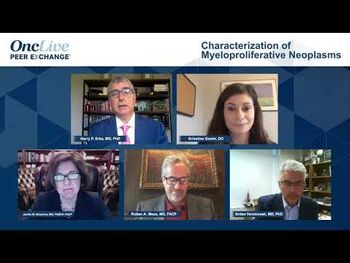
Characterization of Myeloproliferative Neoplasms
ByHarry P. Erba, MD, PhD, Duke Cancer Institute,Krisstina Gowin, DO, University of Arizona Cancer Center,Ruben A. Mesa, MD, FACP, UT Health San Antonio MD Anderson Cancer Center,Jamile M. Shammo, MD, FASCP, FACP, Rush University Medical Center,Srdan Verstovsek, MD, PhD, The University of Texas MD Anderson Cancer Center

Andrew Yee, MD, discusses the utility of isatuximab-irfc in relapsed/refractory multiple myeloma.

The FDA has lifted a partial clinical hold that was placed on the phase 2 clinical trial of camidanlumab tesirine in patients with relapsed/refractory Hodgkin lymphoma.

Courtney D. DiNardo, MD, MSCE, discusses the results of the study evaluating the combination of azacitidine plus venetoclax in elderly patients with AML.
John P. Leonard, MD, discusses the FDA approval of tazemetostat in patients with follicular lymphoma.
Patient recruitment has been discontinued to an interim futility analysis of a phase 3 trial evaluating pracinostat in combination with azacitidine in patients with acute myeloid leukemia demonstrated that it is unlikely to meet the primary end point of overall survival compared with a control arm.

Jia Ruan, MD, PhD, discusses the utility of molecular profiling in mantle cell lymphoma.
Advertisement
Advertisement
Trending on OncLive
1
FDA Approves Zidesamtinib in Pretreated ROS1+ NSCLC
2
NMPA Accepts Toripalimab Plus Chemotherapy Application for Expanded Stage II-III NSCLC Use
3
Dr Patel on the Unmet Need in EGFR+ Transformed Small Cell Lung Cancer
4
Dr Hoffmann on the Significance of Efficacy Data for Sonrotoclax Plus Zanubrutinib in MCL
5