




Hematologic Oncology
Latest News
Advertisement
Latest Videos





















































Advertisement
More News
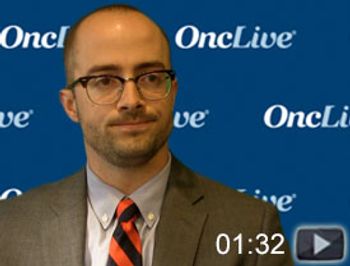
Ryan W. Jacobs, MD, physician, Levine Cancer Institute, discusses the efficacy of ibrutinib (Imbruvica) and acalabrutinib (Calquence) in patients with mantle cell lymphoma (MCL).

Quizartinib improved overall survival compared with chemotherapy in patients with FLT3-ITD–positive relapsed/refractory acute myeloid leukemia after first-line treatment with or without hematopoietic stem cell transplantation, according to findings from the phase III QuANTUM-R study.

Saad Z. Usmani, MD, discusses the current state of immune checkpoint inhibitors in hematologic cancers, recent setbacks, and ongoing studies that could further shape the landscape.

Michael R. Grunwald, MD, discusses new and emerging agents in acute myeloid leukemia and acute lymphoblastic leukemia, as well as sequencing and toxicity challenges with these treatments.
Jing Ai, MD, physician, Levine Cancer Institute, discusses the use of hypomethylating agents in patients with myelodysplastic syndrome (MDS).

Nilanjan Ghosh, MD, PhD, physician, Levine Cancer Institute, discusses the future of chimeric antigen receptor (CAR) T-cell therapy in the treatment of patients with hematologic malignancies.

The National Institute for Health and Care Excellence has authorized the use of midostaurin in combination with standard chemotherapy for the treatment of patients with newly diagnosed FLT3-positive acute myeloid leukemia.

CAR T-cell therapy can induce next generation sequencing negativity in patients with relapsed/refractory acute lymphoblastic leukemia, suggesting a "synergistic" relationship with hematopoietic cell transplant.
Michael Rosenzweig, MD, assistant professor in the Department of Hematology and Hematopoietic Cell Transplantation at City of Hope, discusses the standard of care for the treatment of patients with amyloidosis.

The FDA has approved tisagenlecleucel (Kymriah) for use in adult patients with relapsed/refractory large B-cell lymphoma—including diffuse large B-cell lymphoma (DLBCL), high-grade B-cell lymphoma, and DLBCL arising from follicular lymphoma—after 2 or more lines of systemic therapy.

David S. Snyder, MD, details mutations and discusses investigational treatments within the field of myeloproliferative neoplasms.
Saad Z. Usmani, MD, clinical professor of medicine, UNC-Chapel Hill School of Medicine, chief, Plasma Cell Disorders Program, director, clinical research in hematologic malignancies, Levine Cancer Institute, discusses the evolution of PD-1/PD-L1 inhibitors in the treatment of patients with hematologic malignancies.

The European Medicines Agency’s Committee for Medicinal Products for Human Use has recommended adding final overall survival data from the phase III ASPIRE trial to the label for carfilzomib for the treatment of patients with relapsed/refractory multiple myeloma.

Nilanjan Ghosh, MD, PhD, physician, Levine Cancer Institute, discusses PET-adapted therapy in patients with Hodgkin lymphoma.

Michael Rosenzweig, MD, discusses emerging treatment options for patients with immunoglobulin light chain amyloidosis such as daratumumab and NEOD001.
Michael Rosenzweig, MD, assistant professor in the department of Hematology and Hematopoietic Cell Transplantation at City of Hope, discusses emerging agents in the treatment of patients with amyloidosis.

Jing Ai, MD, physician, Levine Cancer Institute, discusses the rationale behind single-agent therapy and the development of combination therapy in patients with myelodysplastic syndrome (MDS).

David S. Snyder, MD, associate chair and professor, Department of Hematology and Hematopoietic Cell Transplantation, City of Hope, discusses the use of ruxolitinib (Jakafi) in myelofibrosis.

The European Commission has approved the antibody-drug conjugate gemtuzumab ozogamicin (Mylotarg) for use in combination with daunorubicin and cytarabine for the treatment of patients aged 15 years and older with newly diagnosed, CD33-positive acute myeloid leukemia, except acute promyelocytic leukemia.
Advertisement
Advertisement
Trending on OncLive
1
FDA Accepts NDA for Daraxonrasib in Previously Treated Metastatic Pancreatic Cancer
2
Dr Pant on the Potential Significance of Daraxonrasib for PDAC Management
3
Teclistamab Plus Talquetamab Yields Significant Survival Benefits in Earlier-Line R/R Myeloma
4
European Commission Approves Camizestrant Plus CDK4/6 Inhibition for Emergent ESR1-Mutated Advanced Breast Cancer
5