




Immuno-Oncology
Latest News

FDA Approves Subcutaneous Atezolizumab and Hyaluronidase-tqjs for Use in All Indications of IV Atezolizumab
By Chris Ryan
Advertisement
Latest Videos
































































Advertisement
More News
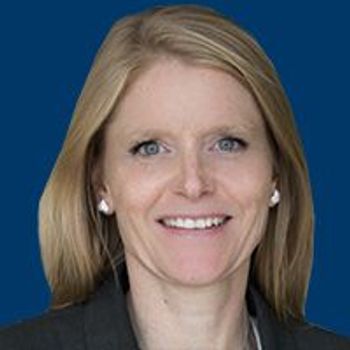
Solange Peters, MD, PhD, discusses ways to refine checkpoint inhibition in the treatment of non–small cell lung cancer.
Here is your snapshot of all therapeutic options that the FDA approved in August 2024 and their clinical implications.

Bhavana Pothuri, MD, discusses real-world testing patterns for MMR/MSI status in patients with advanced endometrial cancer.

Krishnansu S. Tewari, MD, discusses the FDA approval of dostarlimab plus chemotherapy for patients with primary advanced or recurrent endometrial cancer.

Enfortumab vedotin plus pembrolizumab has been approved by Health Canada for use in unresectable locally advanced or metastatic urothelial cancer.

John V. Heymach, MD, PhD, and Marina Chiara Garassino, MD, detail new trial design proposals for perioperative regimens in resectable NSCLC.
Brendon M. Stiles, MD, discusses the FDA approval of perioperative durvalumab plus chemotherapy in early-stage non–small cell lung cancer.
The FDA has approved neoadjuvant durvalumab plus chemotherapy, followed by adjuvant durvalumab, for select resectable non–small cell lung cancer.
The FDA granted priority review to durvalumab in limited-stage small cell lung cancer after platinum-based concurrent chemoradiotherapy.

Durvalumab plus chemotherapy, then durvalumab with or without olaparib, was approved in Europe for select advanced/recurrent endometrial cancer.

Clinicians specializing in caring for patients with lung cancer discussed clinical trial updates on agents in stage III NSCLC.

A sNDA seeking the approval of toripalimab for frontline use in patients with unresectable or metastatic melanoma is under review by the NMPA.

Samuel Cytryn, MD, and David B. Zhen, MD, discuss how immunotherapy plus chemotherapy has improved the durability of outcomes in advanced GI cancers.
Samuel Cytryn, MD, and David B. Zhen, MD, on factors for selecting nivolumab plus chemotherapy or ipilimumab in esophageal squamous cell carcinoma.
Samuel Cytryn, MD, and David B. Zhen, MD, on long-term data for nivolumab plus chemotherapy or ipilimumab in advanced esophageal squamous cell carcinoma.
Samuel Cytryn, MD, and David B. Zhen, MD, discuss findings from a Q-TWiST analysis of the CheckMate 649 trial in advanced gastric/GEJ cancer.
Samuel Cytryn, MD, and David B. Zhen, MD, on 4-year data from CheckMate 649 for nivolumab plus chemotherapy in first-line advanced gastric/GEJ cancer.
Samuel Cytryn, MD, and David B. Zhen, MD, discuss how immunotherapy has affected the treatment paradigm for upper gastrointestinal cancers.

Kaushal Parikh, MBBS, highlights how PD-L1 expression affects treatment decision-making in the absence of other targetable mutations or prognostic indicators in non–small cell lung cancer.
The FDA has approved dostarlimab plus carboplatin and paclitaxel, followed by single-agent dostarlimab, for primary advanced or recurrent endometrial cancer.

Frontline pembrolizumab, carboplatin, and paclitaxel demonstrated antitumor activity in recurrent or metastatic head and neck squamous cell carcinoma.

The CHMP has recommended pembrolizumab plus enfortumab vedotin-ejfv in frontline unresectable or metastatic urothelial carcinoma.
The addition of nivolumab to tivozanib did not improve PFS in advanced metastatic renal cell carcinoma following prior immune checkpoint inhibition

Adjuvant nivolumab plus ipilimumab significantly improved 3-year DMFS rates compared with historical controls in patients with high-risk uveal melanoma.

The addition of ipilimumab to cabozantinib plus nivolumab was safe and showed notable efficacy in patients with rare genitourinary cancers.
Advertisement
Advertisement
Trending on OncLive
1
FDA Approves Tucatinib Plus Trastuzumab/Pertuzumab as First-Line Maintenance in Advanced HER2+ Breast Cancer
2
VIR-5500 Receives FDA Fast Track Designation in mCRPC
3
Iberdomide Plus Daratumumab/Dexamethasone Yields Significant PFS Benefit in R/R Myeloma
4
FDA Approves Atezolizumab Plus Chemo for Stage III dMMR Colon Cancer
5