





Immuno-Oncology
Latest News

Vibostolimab Plus Pembrolizumab Coformulation ± Docetaxel Did Not Significantly Improve PFS in NSCLC
By Kristi Rosa
Advertisement
Latest Videos
































































Advertisement
More News

The combination of nivolumab and ipilimumab led to a statistically significant and clinically meaningful improvement in progression-free survival per blinded independent central review compared with investigator’s choice of chemotherapy as frontline therapy in patients with metastatic colorectal cancer.

Maintenance Pembrolizumab/Olaparib Misses Survival End Points in Locally Advanced or Metastatic TNBC
Pembrolizumab plus olaparib did not improve progression-free or overall survival vs pembrolizumab plus chemotherapy in patients with locally recurrent inoperable or metastatic triple-negative breast cancer who received induction pembrolizumab plus chemotherapy.

The addition of pembrolizumab to neoadjuvant chemotherapy followed by adjuvant pembrolizumab plus endocrine therapy improved pathologic complete responses in key subsets of patients with early-stage, high-risk, estrogen receptor–positive/HER2-negative breast cancer enrolled in the phase 3 KEYNOTE-756 trial.

The addition of serplulimab to carboplatin and nab-paclitaxel significantly prolonged survival vs chemotherapy alone when used in the first-line treatment of patients with previously untreated locally advanced or metastatic squamous non–small cell lung cancer.

Biagio Ricciuti, MD, discusses the need to improve the identification of patients with advanced non–small cell lung cancer that benefit most from immune checkpoint inhibition.

The use of the first-in-class, microbiome-derived therapeutic vaccine EO2401 in combination with nivolumab with or without bevacizumab produced clinical activity and was well tolerated in patients with progressive/recurrent glioblastoma.

China’s National Medical Products Administration has approved durvalumab plus gemcitabine and cisplatin for frontline use in adult patients with locally advanced or metastatic biliary tract cancer.

The European Medicines Agency’s Committee for Medicinal Products for Human Use has recommended the approval of subcutaneous atezolizumab for all indications in which the intravenous formulation is approved, including certain types of lung, liver, bladder, and breast cancer

Concurrent administration of durvalumab and platinum-based chemoradiation failed to significantly improve progression-free survival over chemoradiation alone in patients with unresectable stage III non–small cell lung cancer, missing the primary end point of the phase 3 PACIFIC-2 trial.

The European Medicines Agency’s Committee for Medicinal Products for Human Use (CHMP) has recommended the approval of pembrolizumab (Keytruda) combined with gemcitabine and cisplatin in the frontline treatment of adult patients with locally advanced unresectable or metastatic biliary tract cancer

The combination of PDS0101, PDS0301 (formerly M-9241), and bintrafusp alfa, an investigational immune checkpoint inhibitor extended survival in patients with advanced human papillomavirus 16–positive cancers, according to final data from a phase 2 trial (NCT04287868) led by the National Cancer Institute.
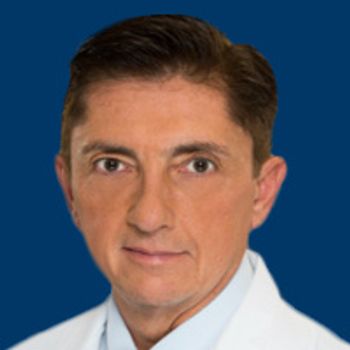
Durvalumab plus concurrent transarterial chemoembolization followed by durvalumab with bevacizumab resulted in a significant improvement in PFS over TACE alone in patients with hepatocellular carcinoma who are eligible for embolization, meeting the primary end point of the phase 3 EMERALD-1 trial.

The combination of domvanalimab, zimberelimab, and FOLFOX elicited responses in patients with locally advanced unresectable or metastatic gastric, gastroesophageal junction, or esophageal adenocarcinoma, irrespective of PD-L1 status.

Atezolizumab Plus Bevacizumab and Chemo Improves Survival in Metastatic or Recurrent Cervical Cancer
The addition of atezolizumab to bevacizumab and chemotherapy resulted in a significant improvement in progression-free survival and overall survival vs standard treatment with bevacizumab and chemotherapy in patients with metastatic, persistent, or recurrent cervical cancer.
Adjuvant treatment with pembrolizumab significantly improved overall survival vs placebo in patients with renal cell carcinoma at intermediate-high or high risk of recurrence after nephrectomy, or after nephrectomy and resection of metastatic lesions, meeting a key secondary end point of the phase 3 KEYNOTE-564 trial.

The European Medicines Agency has validated a type II variation application for the first-line combination of nivolumab and cisplatin-based chemotherapy for adult patients with unresectable or metastatic urothelial carcinoma.

Richard Kim, MD, discusses the range of systemic treatment options available for patients with unresectable hepatocellular carcinoma and the importance of assessing patients for high-risk disease criteria before beginning any systemic treatment.

Denise M. Wolf, PhD, discusses the methods used to conduct the I-SPY2 study and the implications that immune biomarkers could have on selecting treatment for patients with hormone receptor–positive, HER2-negative breast cancer in the future.

Tian Zhang, MD, MHS, details how updated data presented at the 2023 ASCO Annual Meeting from trials such as KEYNOTE-426 and CLEAR have showed the sustained efficacy of VEGF plus immunotherapy combinations vs sunitinib in the first-line setting; discusses where the immunotherapy-only combination of ipilimumab and nivolumab fits in the frontline setting; and highlights how data from CONTACT-03 provided key insights on the use of immunotherapy in patients with advanced renal cell carcinoma after progression on a prior immune checkpoint inhibitor.
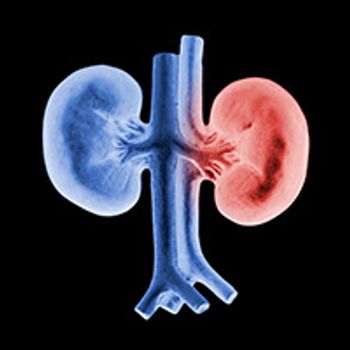
Nephrectomy with immune-targeted therapy was associated with a progression-free survival benefit compared with immunotherapy alone in patients with metastatic renal cell carcinoma.

Frontline treatment with the combination of enfortumab vedotin-ejfv and pembrolizumab led to a statistically significant improvement in overall survival vs chemotherapy in patients with previously untreated locally advanced or metastatic urothelial carcinoma.

The addition of durvalumab to first-line chemotherapy, followed by maintenance treatment with durvalumab plus olaparib significantly improved progression-free survival in patients with newly diagnosed advanced or recurrent endometrial cancer, according to data from the phase 3 DUO-E/GOG-3041/ENGOT-EN10 trial.

Neoadjuvant treatment with nivolumab plus chemotherapy followed by surgery and adjuvant nivolumab resulted in a statistically significant improvement in event-free survival vs placebo plus chemotherapy, in patients with previously untreated resectable stage II to IIIB non-small cell lung cancer, according to data from the phase 3 CheckMate 77T trial.

Lifileucel demonstrated clinically meaningful activity in patients with advanced mucosal melanoma who experienced disease progression on immune checkpoint inhibitors, according to findings from a subgroup of patients in the phase 2 C-144-01 study.

Neoadjuvant pembrolizumab plus chemotherapy followed by adjuvant pembrolizumab plus endocrine therapy generated a statistically significant increase in pathologic complete response vs neoadjuvant placebo plus chemotherapy followed by adjuvant pembrolizumab and endocrine therapy in patients with high-risk, early-stage, estrogen receptor–positive, HER2-negative breast cancer.
Advertisement
Advertisement
Trending on OncLive
1
FDA Approves Tucatinib Plus Trastuzumab/Pertuzumab as First-Line Maintenance in Advanced HER2+ Breast Cancer
2
VIR-5500 Receives FDA Fast Track Designation in mCRPC
3
Iberdomide Plus Daratumumab/Dexamethasone Yields Significant PFS Benefit in R/R Myeloma
4
FDA Approves Atezolizumab Plus Chemo for Stage III dMMR Colon Cancer
5