

Immuno-Oncology
Latest News
Advertisement
Latest Videos






























































Advertisement
More News
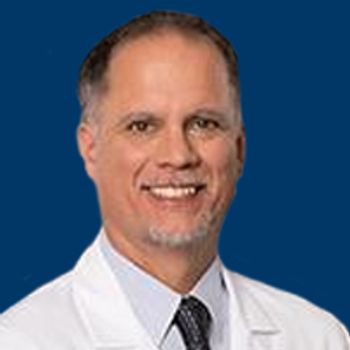
Jonathan C. Trent, MD, PhD, discusses data from 2 phase 2 trials of immunotherapy in soft tissue sarcoma, as well as their clinical significance.

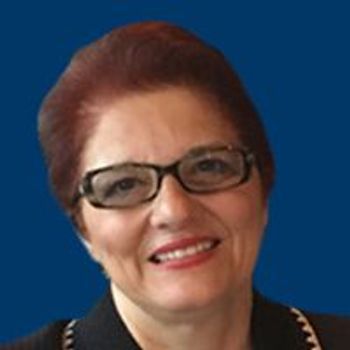
Amira Marouf, MD, PhD student, describes the nature of a comparative analysis conducted based on propensity score matching, and discussed the main takeaways regarding the efficacy of PD-1 inhibitors for patients with relapsed/refractory ENKTCL.
Neoadjuvant pembrolizumab plus chemotherapy led to an improvement in pathological complete response rate compared with chemotherapy plus placebo in patients with high-risk, early-stage, estrogen receptor–positive, HER2-negative breast cancer.

Long-term data demonstrated that treatment with cosibelimab improved complete response rates over time in patients with locally advanced or metastatic cutaneous squamous cell carcinoma in a phase 1 trial.

The combination of mRNA-4157 and pembrolizumab will be further evaluated as an adjuvant treatment option for patients with resected, high-risk, stage IIB to IV melanoma in the phase 3 V940-001 trial.
Treatment with the combination of rivoceranib and camrelizumab led to a statistically significant and clinically meaningful benefit in progression-free survival and overall survival compared with sorafenib in previously untreated patients with unresectable hepatocellular carcinoma.

An evaluation of the utility of a cancer therapeutic in a clinical trial is determined through metrics that define 2 distinctive features of an antineoplastic strategy: efficacy and toxicity. Although that may be an oversimplification, the aim of such therapy is to improve clinical outcomes.

Omid Hamid, MD, discusses the key efficacy and safety findings for the combination of fianlimab plus cemiplimab in patients with advanced melanoma.
The European Medicines Agency’s Committee for Medicinal Products for Human Use has recommended the approval of pembrolizumab plus trastuzumab, fluoropyrimidine- and platinum-containing chemotherapy for the frontline treatment of patients with advanced unresectable or metastatic HER2-positive gastric or gastroesophageal junction adenocarcinoma whose tumors have a PD-L1 combined positive score of at least 1.

Treatment with the combination of ENB-003 and pembrolizumab was well tolerated and produced preliminary signs of clinical activity in patients with platinum-refractory or -resistant, microsatellite stable ovarian cancer, and those with other advanced refractory solid tumors.
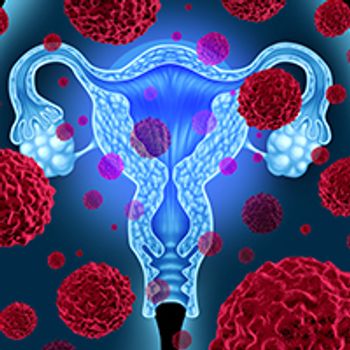
The addition of the PD-L1 inhibitor tislelizumab to standard bevacizumab and platinum-doublet chemotherapy in the first-line setting prolonged progression-free survival, produced encouraging responses, and was well tolerated in patients with cervical cancer.
The addition of pembrolizumab to external beam radiotherapy and concurrent chemotherapy, followed by brachytherapy, improved progression-free survival vs concurrent chemoradiotherapy alone in newly diagnosed patients with high-risk locally advanced cervical cancer.

The combination of the NOX1/4 inhibitor setanaxib and pembrolizumab produced progression-free survival benefits compared with placebo plus pembrolizumab in patients with recurrent or metastatic head and neck squamous cell carcinoma.
Michael J. Birrer, MD, PhD, highlights the effect of improved molecular characterization in endometrial cancer, the clinical significance of the KEYNOTE-775 trial, and recent changes in the frontline treatment landscape in advanced endometrial cancer.

ONC-392/BNT316 demonstrated early signs of antitumor activity and manageable safety in patients with metastatic, PD-(L)1–resistant non–small cell lung cancer.
Pembrolizumab led to sustained improvements in recurrence-free survival and distant metastasis–free survival vs placebo as adjuvant therapy in patients with resected stage IIB or IIC melanoma

The European Commission has approved nivolumab in combination with platinum-based chemotherapy for the neoadjuvant treatment of patients with resectable non–small cell lung cancer at high risk of recurrence with tumor cell PD-L1 expression of at least 1%.

The FDA has granted fast track designation to the combination of quaratusugene ozeplasmid and atezolizumab as maintenance therapy in patients with extensive-stage small cell lung cancer whose disease did not progress after receiving initial standard treatment with atezolizumab and chemotherapy.
The combination of galinpepimut-S and nivolumab provided positive survival outcomes with an acceptable safety profile in patients with malignant pleural mesothelioma who were refractory to or relapsed after at least 1 line of standard treatment.

In this fourth episode of OncChats: Examining LIFU–Aided Liquid Biopsy in Glioblastoma, Manmeet Singh Ahluwalia, MD, MBA, FASCO, and Michael W. McDermott, MD, discuss the key objectives of the phase 3 LIMITLESS study (NCT05317858) examining low-intensity focused ultrasound with immunotherapy and chemotherapy in patients with lung cancer and brain metastases.

Camrelizumab combined with famitinib elicited responses and was well tolerated in patients with advanced melanoma previously exposed to an immune checkpoint inhibitor regimen.
The combination of favezelimab and pembrolizumab continued to demonstrate a manageable safety profile and antitumor activity in patients with relapsed/refractory classical Hodgkin lymphoma, irrespective of whether they received prior anti–PD-1 therapy.
Kidney and renal pelvis cancers are one of the 10 most common new malignant diagnoses in both men and women in the United States, with an estimated 52,360 new cases in men and 29,440 new cases in women per year.
Frontline treatment with the combination of brentuximab vedotin, nivolumab, doxorubicin, and dacarbazine led to an overall response rate of 98% and a complete response rate of 93% in patients with early-stage, classical Hodgkin lymphoma.
Stephen V. Liu, MD, highlighted the importance of next-generation sequencing in lung cancer, key trials that have shifted the non–small cell lung cancer treatment landscape, and detailed ongoing research at Georgetown University Lombardi Comprehensive Cancer Center.
Advertisement
Advertisement
Trending on OncLive
1
FDA Approves Tucatinib Plus Trastuzumab/Pertuzumab as First-Line Maintenance in Advanced HER2+ Breast Cancer
2
VIR-5500 Receives FDA Fast Track Designation in mCRPC
3
Iberdomide Plus Daratumumab/Dexamethasone Yields Significant PFS Benefit in R/R Myeloma
4
FDA Approves Atezolizumab Plus Chemo for Stage III dMMR Colon Cancer
5