



Immuno-Oncology
Latest News
FDA Approves Enfortumab Vedotin Plus Pembrolizumab for Locally Advanced or Metastatic Urothelial Carcinoma
By Kristi Rosa
Advertisement
Latest Videos


































































Advertisement
More News

BDC-1001 monotherapy and in combination with nivolumab generated antitumor activity with acceptable tolerability in patients with advanced HER2-expressing solid tumors, according to topline data from the dose-escalation portion of a phase 1 trial.

The addition of cemiplimab to platinum-doublet chemotherapy continued to provide a clinically meaningful and statistically significant improvement in clinical benefit over chemotherapy alone in patients with advanced non–small cell lung cancer, irrespective of histology or PD-L1 expression level.

Neoadjuvant nivolumab plus chemotherapy produced a long-term event-free survival benefit vs chemotherapy alone in patients with resectable non–small cell lung cancer, independent of whether patients underwent minimally invasive surgery or thoracotomy or complete or partial resection of the lung.

Nearly 40 years after the first cytokine-based therapy was approved for the treatment of patients with hairy cell leukemia, investigators are taking a fresh look at ways to leverage these signaling proteins to enhance immunotherapies and vaccines in other cancers.

The FDA has granted full approval to pembrolizumab for the treatment of adult and pediatric patients with unresectable or metastatic microsatellite instability–high or mismatch repair–deficient solid tumors that have progressed following previous treatment and who have no satisfactory alternative options.

Brian Mitzman, MD, FACS, FCCP, discusses the emergence of immunotherapy as a treatment option for patients with early-stage non–small cell lung cancer.
Brian S. Henick, MD, discusses the importance of expanding on the current knowledge of biomarkers and the tumor microenvironment to enhance treatment approaches for patients with non–small cell lung cancer.
Yvonne Chao, MD, PhD, discusses key trials leading to FDA approvals in metastatic non–small cell lung cancer.

Updated data from key trials in non–small cell lung cancer continue to demonstrate the superiority of immunotherapy and targeted therapy regimens for non–small cell lung cancer treatment, but the optimal use of these agents in the adjuvant vs neoadjuvant settings is still contested.
When the fully human IgG4 monoclonal antibody SRK-181 was given as a monotherapy or in combination with anti–PD-1 or PD-L1 agents in patients with locally advanced or metastatic solid tumors, it was found to be generally well tolerated and to demonstrate early indications of efficacy.

Although the immune system plays a vital role in attacking tumor cells, the immune mechanisms vary from tumor to tumor, and factors in the tumor microenvironment can reduce the effectiveness of the body’s immune response.
Given the current lack of positive phase 3 immunotherapy trials for glioblastoma, a misconception held by oncologists and neuro-oncologists is that immunotherapy has no place in this malignancy.
Durvalumab plus neoadjuvant chemotherapy followed by surgery and adjuvant single-agent durvalumab significantly improved event-free survival vs neoadjuvant chemotherapy and surgery alone in patients with resectable stage IIA-IIIB non–small cell lung cancer.

The addition of pembrolizumab to standard therapies failed to improve survival outcomes in patients with metastatic castration-resistant prostate cancer in the KEYNOTE-641 trial and patients with EGFR-mutated non–small cell lung cancer in the KEYNOTE-789 trial.
The FDA has provided PDS Biotechnology Corporation with guidance on the required contents of a design for a potential registrational trial examining PDS0101 in combination with PDS0301 and an FDA-approved immune checkpoint inhibitor in patients with recurrent or metastatic human papillomavirus–positive, ICI-refractory head and neck cancer.

The National Medical Products Administration of China has granted approval to tislelizumab in combination with fluoropyrimidine and platinum chemotherapy in the frontline treatment of patients with locally advanced unresectable or metastatic gastric or gastroesophageal junction adenocarcinoma with a high PD-L1 expression.

The combination of the targeted immunotherapy Bria-IMT and retifanlimab demonstrated signs of clinical benefit and was found to be well tolerated in patients with advanced metastatic breast cancer.

Pradnya D. Patil, MD, FACP, discusses unmet needs that remain to be addressed with the use of immunotherapy in patients with non–small cell lung cancer.
French investigators evaluated a potential solution to reduce myotoxicity and improve survival for patients with cancer receiving treatment with immune checkpoint inhibitors.
The FDA has granted a breakthrough therapy designation to the investigational personalized mRNA cancer vaccine mRNA-4157/V940 in combination with pembrolizumab for the adjuvant treatment of patients with high-risk melanoma following complete resection.

In this third episode of OncChats: Traveling Through the Lung Cancer Treatment Paradigm, Aaron Franke, MD, discusses the expanding role of neoadjuvant therapy in non–small cell lung cancer and efforts to better identify patients who can benefit from curative-intent treatment.
Checkpoint inhibitor–based salvage regimens significantly reduced the likelihood that patients with relapsed/refractory classic Hodgkin lymphoma undergoing transplant would need further salvage therapy vs conventional salvage regimens.

The combination of maveropepimut-S, pembrolizumab, and intermittent low-dose cyclophosphamide elicited responses in patients with relapsed or refractory diffuse large B-cell lymphoma, according to preliminary findings from the phase 2b VITALIZE trial.
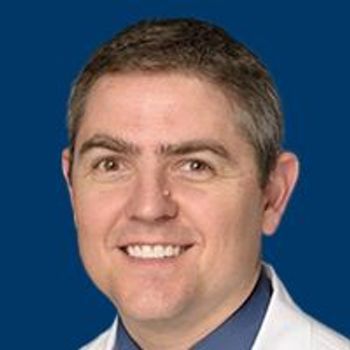
Pembrolizumab Plus Total Neoadjuvant Therapy Improves Long-Term OS in Locally Advanced Rectal Cancer
Thomas J. George, MD, FACP, highlights the long-term data from the NRG-GI002 trial, the next steps for exploring subsets of patients who may benefit from the addition of pembrolizumab or veliparib to total neoadjuvant therapy, and what the use of total neoadjuvant therapy has meant for patients with stage II/III locally advanced rectal cancer.
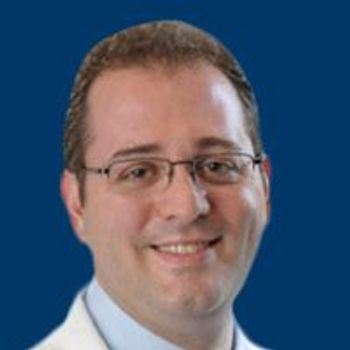
James Harding, MD, highlighted current and emerging areas of research in biliary tract cancer, including key contributions from TOPAZ-1 and the phase 3 SWOG 1815 trial, the development of immunotherapy and chemotherapy combinations, and continued efforts to utilize personalized medicine in clinical practice.
Advertisement
Advertisement
Trending on OncLive
1
FDA Approves Tucatinib Plus Trastuzumab/Pertuzumab as First-Line Maintenance in Advanced HER2+ Breast Cancer
2
VIR-5500 Receives FDA Fast Track Designation in mCRPC
3
Iberdomide Plus Daratumumab/Dexamethasone Yields Significant PFS Benefit in R/R Myeloma
4
FDA Approves Atezolizumab Plus Chemo for Stage III dMMR Colon Cancer
5