





Immuno-Oncology
Latest News
Advertisement
Latest Videos




































































Advertisement
More News

Improved overall survival was achieved with nivolumab plus ipilimumab vs standard-of-care TKIs in patients with advanced hepatocellular carcinoma.

Michael J. Overman, MD, discusses the potential advantages of using nonoperative immunotherapy-based approaches in select gastrointestinal cancers.

Discordant dMMR/IHC Status Correlates With Improved Treatment Outcomes in CRC and Endometrial Cancer
Patients with mismatch repair–deficient, immunohistochemistry-intact colorectal cancer or endometrial cancer benefit from immune checkpoint inhibitors.

Adjuvant nivolumab significantly improved relapse-free survival vs ipilimumab in resected stage III/IV melanoma, according to 7-year minimum follow-up.
The FDA and EMA have accepted applications seeking the approval of neoadjuvant nivolumab/chemotherapy followed by surgery and adjuvant nivolumab in NSCLC.

Lenvatinib/pembrolizumab demonstrated efficacy irrespective of tumor burden in advanced renal cell carcinoma in the overall patient population of the phase 3 CLEAR study.

A sNDA seeking approval of enfortumab vedotin plus pembrolizumab for first-line use in patients with urothelial cancer has been submitted to Japan’s MHLW.

Kohei Shitara, MD, discusses 4-year survival data of chemotherapy plus nivolumab in advanced gastric/GEJ cancer or esophageal adenocarcinoma.

The type II variation application for enfortumab vedotin plus pembrolizumab in untreated metastatic urothelial cancer has been validated by the EMA.

Functional imaging information from 18F-FDG PET can complement data from anatomic imaging studies from CT and MRI to predict response to ICI therapy.

Enfortumab vedotin plus pembrolizumab showed consistent overall survival and progression-free survival benefit in all patients enrolled in EV-302.
Benjamin Garmezy, MD, discusses challenges associated with navigating the current frontline armamentarium in both clear cell and variant RCC, the impact of frontline IO doublets and IO/TKI regimens on patient outcomes, and the importance of ongoing combination studies for patients with variant RCC.

PFS was significantly improved with durvalumab plus bevacizumab and TACE vs TACE alone in patients with unresectable HCC eligible for embolization.

Pembrolizumab plus lenvatinib produced survival outcomes that were consistent with previous findings from the phase 3 LEAP-002 trial along with an extended duration of response.

Neoadjuvant camrelizumab plus nab-paclitaxel and cisplatin improved pCR vs chemotherapy alone in patients with esophageal squamous cell carcinoma.

Tiragolumab plus atezolizumab and chemotherapy produced superior survival benefit vs chemotherapy for patients with esophageal squamous cell carcinoma.
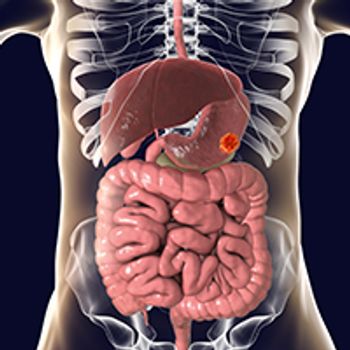
Nivolumab plus chemotherapy improved PFS and OS vs chemotherapy alone in patients with advanced gastric, gastroesophageal junction, and esophageal cancers, according to 4-year data from the phase 3 CheckMate 649 study.
The FDA has approved pembrolizumab (Keytruda) plus chemoradiation for patients with FIGO 2014 stage III to IVA cervical cancer.

Neil D. Gross, MD, FACS, shares how neoadjuvant cemiplimab followed by surgery improved EFS in patients with stage II-IV cutaneous squamous cell carcinoma.

China’s NMPA has accepted the sNDA seeking the approval of cadonilimab plus chemotherapy for use in select patients with gastric or GEJ adenocarcinomas.

Significant tumor necrosis greater than 70% occurred in 3 patients with resectable hepatocellular carcinoma following neoadjuvant treatment with low-dose stereotactic body radiation therapy and cemiplimab-rwlc and adjuvant cemiplimab.

Lenvatinib plus pembrolizumab, pemetrexed, and carboplatin or cisplatin did not improve treatment outcomes compared with placebo plus pembrolizumab, pemetrexed, and carboplatin or cisplatin when given as first-line therapy in patients with stage IV nonsquamous non–small cell lung cancer.

Lifileucel demonstrated clinically meaningful antitumor activity alongside early, durable responses in patients with advanced melanoma following progression on checkpoint inhibitors.

Lenvatinib plus pembrolizumab did not provide a survival advantage vs standard-of-care docetaxel in patients with advanced-stage non–small cell lung cancer who experienced disease progression following prior exposure to a PD-L1 inhibitor and platinum-based chemotherapy.

The safety and efficacy data observed with the administration of 5 or more cycles of induction platinum/etoposide and concurrent durvalumab in patients with extensive-stage small cell lung cancer enrolled in the phase 3b LUMINANCE study aligned with outcomes reported in the phase 3 CASPIAN trial.
Advertisement
Advertisement
Trending on OncLive
1
FDA Approves Tucatinib Plus Trastuzumab/Pertuzumab as First-Line Maintenance in Advanced HER2+ Breast Cancer
2
VIR-5500 Receives FDA Fast Track Designation in mCRPC
3
Iberdomide Plus Daratumumab/Dexamethasone Yields Significant PFS Benefit in R/R Myeloma
4
FDA Approves Atezolizumab Plus Chemo for Stage III dMMR Colon Cancer
5