






Immuno-Oncology
Latest News
Advertisement
Latest Videos




































































Advertisement
More News

Brett Miles, MD, DDS, discusses the potential of ADXS11-001 in HPV-associated head and neck cancer and other emerging therapies and treatment strategies.

Treatment with nivolumab reduced the risk of death by 28% compared with docetaxel for patients with previously treated nonsquamous non–small cell lung cancer.

The combination of the attenuated oncolytic virus talimogene laherparepvec and the immune checkpoint inhibitor pembrolizumab for unresectable melanoma has passed an early safety evaluation.

Second-line atezolizumab demonstrated significant clinical benefit in patients with metastatic urothelial carcinoma who had a poor prognosis after progressing following platinum-based chemotherapy.

Inhibition of PD-L1 with atezolizumab demonstrated significant clinical efficacy as monotherapy in patients with advanced non-small cell lung cancer.
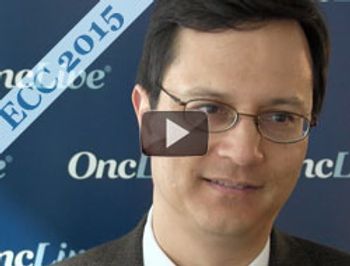
Paul Nghiem, MD, PhD, Michael Piepkorn Endowed Chair in Dermatology Research, professor of Dermatology/Medicine at Fred Hutchinson Cancer Research Center, University of Washington Medicine discusses a phase II trial investigating the PD-1 blockade pembrolizumab as first systemic therapy in patients with advanced Merkel cell carcinoma (MCC).

Two strategies of sequential immunotherapy for advanced melanoma showed similar safety and tolerability but substantially different efficacy.

More than a fifth of patients with previously treated metastatic nasopharyngeal carcinoma showed a measurable response when treated with the immune checkpoint inhibitor pembrolizumab.

The FDA has granted a priority review designation to a supplemental biologics license application for nivolumab plus ipilimumab in previously untreated patients with advanced melanoma.

Nivolumab reduced the risk of death by 27% versus everolimus in patients with advanced renal cell carcinoma, improving overall survival by 5.4 months.

Immunotherapy expert Jeffrey Weber, MD, PhD, will join NYU Langone Medical Center's Laura and Isaac Perlmutter Cancer Center as its deputy director and co-director of its melanoma program.

Immunotherapy pioneer James P. Allison, PhD, has been named the 2015 recipient of the Lasker-DeBakey Clinical Medical Research Award by the Albert and Mary Lasker Foundation.

Tom Herzog, MD, discusses the vaccine ADXS11-001 (axalimogene filolisbac) in patients with persistent or recurrent metastatic cervical cancer.

Nivolumab (Opdivo) demonstrated clinical activity and safety in patients with platinum-resistant ovarian cancer.

Nivolumab (Opdivo) has received an FDA breakthrough therapy designation for the treatment of patients with advanced renal cell carcinoma.

Carolyn D. Britten, MD, chief, Division of Hematology Oncology, associate director, Clinical Investigations, at the Hollings Cancer Center, Medical University of South Carolina, discusses questions that remain in immunotherapy.

A chemotherapy-free regimen of nivolumab and ipilimumab demonstrated activity as a first-line therapy for patients with advanced non–small cell lung cancer.

Treatment with the PD-1 inhibitor nivolumab demonstrated a 32% reduction in the risk of death compared with docetaxel for patients with previously treated squamous non–small cell lung cancer.

Patients with newly diagnosed metastatic non-small lung cancer had double the expected response when the PD-L1 inhibitor atezolizumab was added to chemotherapy.

Dennis Slamon, MD, PhD, discusses the inhibition of CDK 4/6 and PD-1, which represent two of the most exciting developments in the field of metastatic breast cancer.
Nivolumab (Opdivo) has received an FDA priority review designation for patients with previously treated nonsquamous non–small cell lung cancer.
S. Yousuf Zafar, MD, associate professor of medicine, Duke Cancer Institute, discusses the potential of immunotherapy for the treatment of patients with colorectal cancer (CRC).

Anna Pavlick, DO, discusses immunotherapy and targeted combination regimens in advanced melanoma.
Mismatch repair deficiency may serve as an immuno-oncology biomarker and may illustrate the clinical utility of analyzing the number of mutations per tumor.

The FDA has assigned a priority review designation to the intravesical immunotherapy MCNA as a treatment for patients with high-risk non-muscle invasive bladder cancer following first-line bacillus Calmette-Guerin therapy.
Advertisement
Advertisement
Trending on OncLive
1
FDA Approves Tucatinib Plus Trastuzumab/Pertuzumab as First-Line Maintenance in Advanced HER2+ Breast Cancer
2
VIR-5500 Receives FDA Fast Track Designation in mCRPC
3
Iberdomide Plus Daratumumab/Dexamethasone Yields Significant PFS Benefit in R/R Myeloma
4
FDA Approves Atezolizumab Plus Chemo for Stage III dMMR Colon Cancer
5