





Immuno-Oncology
Latest News

Advertisement
Latest Videos



































































Advertisement
More News

The FDA has extended the review period for frontline nivolumab in patients with advanced melanoma by 3 months, to allow ample time to review additional data submitted by the PD-1 inhibitor's developer Bristol-Myers Squibb.

Premal H. Thaker, MD, discusses EGEN-001 in combination with pegylated liposomal doxorubicin and the potential of immunotherapy agents in ovarian and other similar cancers.

Achieving true precision medicine with PD-1/PD-L1 agents in NSCLC will only come from biomarker-driven frontline regimens delivered to the right patients.

Immunotherapy for the treatment of cancer has evolved alongside our improved understanding of the immune system.

Yung-Jue Bang, MD, PhD, discusses how the results of the KEYNOTE-012 study demonstrate the potential of immunotherapy in treating gastric cancer.
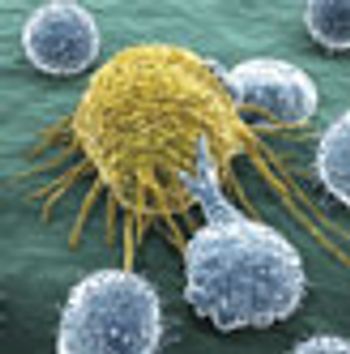
Results from clinical trials demonstrate that immunotherapy is ready to take center stage in the fight against bladder cancer.

A number of clinical trials are now assessing PD-1 and PD-L1 inhibitors in combination with chemotherapy, targeted therapies, and radiation therapy in an attempt to further improve outcomes for patients with non–small cell lung cancer.

Paul Bunn, MD, discussed the latest translational advances in NSCLC at the 2015 International Lung Cancer Congress.

At the 2015 ASCO Annual Meeting, we witnessed an extraordinary explosion into the general oncology consciousness of the Programmed Death-1: Programmed Death Ligand-1 axis and drugs that target that interaction.

Emerging clinical data suggest that targeted immunotherapy in cancer will become an integral part of the clinical management strategy for solid tumors.

Tanguy Y. Seiwert, MD, discusses the significance of the expansion results of KEYNOTE-012 for advanced squamous cell carcinoma of the head and neck.

A group of researchers at Washington University in St. Louis recently opened a clinical trial to evaluate pembrolizumab as treatment intensification therapy for patients with high-risk locoregionally advanced, previously untreated, HPV-negative head and neck squamous cell carcinomas.
Luis A. Diaz, Jr. MD, associate professor of Oncology, Johns Hopkins Sidney Kimmel Comprehensive Cancer Center, discusses the efficacy of PD-1 inhibitor pembrolizumab (Keytruda) in heavily pretreated colorectal cancer patients with mismatch repair (MMR).
Jeffrey R. Infante, MD, director, Drug Development Program, Sarah Cannon Research Institute, discusses the potential impact avelumab could have on the treatment of patients with ovarian cancer.

The European Commission has approved the PD-1 inhibitor pembrolizumab as a treatment for adult patients with unresectable or metastatic melanoma in the first-line and previously treated settings.

Advances in the field of immunotherapy and targeted therapy have brought about new recommendations for patients with melanoma.
The phase III CheckMate-025 trial has been halted after an independent panel determined that nivolumab improved overall survival versus everolimus in patients with advanced renal cell carcinoma.
Rita Nanda, MD, assistant professor of Medicine, associate director, Breast Medical Oncology, The University of Chicago Medicine, discusses the efficacy of pembrolizumab and atezolizumab for the treatment of patients with metastatic triple-negative breast cancer.

The FDA has granted an orphan drug designation to the immunotherapy DPX-Survivac as a treatment for women with ovarian cancer.
Advertisement
Advertisement
Trending on OncLive
1
FDA Approves Tucatinib Plus Trastuzumab/Pertuzumab as First-Line Maintenance in Advanced HER2+ Breast Cancer
2
VIR-5500 Receives FDA Fast Track Designation in mCRPC
3
Iberdomide Plus Daratumumab/Dexamethasone Yields Significant PFS Benefit in R/R Myeloma
4
FDA Approves Atezolizumab Plus Chemo for Stage III dMMR Colon Cancer
5