

Immuno-Oncology
Latest News
Advertisement
Latest Videos



































































Advertisement
More News

Yung-Jue Bang, MD, PhD, discusses pembrolizumab for the treatment of advanced gastric cancer. Pembrolizumab was investigated as part of the KEYNOTE-012 study, which looked at the checkpoint inhibitor across several solid tumors.

Second-line treatment with atezolizumab (MPDL3280A) has met the primary endpoint of a pivotal phase II study by effectively shrinking tumors in patients with locally advanced or metastatic urothelial bladder cancer.

Stephen Liu, MD, discusses the results and purpose of the uniquely designed trial examining atezolizumab in combination with platinum-based doublet chemotherapy in treatment-naïve patients with advanced non–small cell lung cancer.

James P. Allison, PhD, was honored in the Scientific Advances category with a 2014 Giants of Cancer Care® award, a program that the Intellisphere® Oncology Specialty Group launched to honor leaders in the field.

Josep Tabernero, MD, PhD, summarized novel agents that are currently under exploration for patients with gastric cancer.

Howard L. Kaufman, MD, discusses the rapidly advancing immunotherapy armamentarium in melanoma.

OncLive sat down with Jason J. Luke, MD, discusses the key areas in the treatment of melanoma discussed at the 2015 ASCO Annual Meeting included selecting appropriate immunotherapy regimens based on PD-L1 status and improving surgical practices.

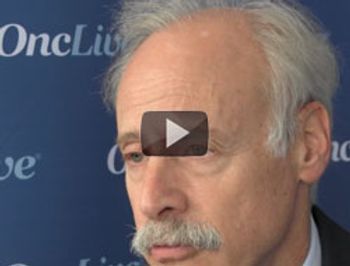
Marc Ernstoff, MD, Department of Hematology and Oncology, Cleveland Clinic, discusses results from a study examining the combination of nivolumab (Opdivo) and ipilimumab (Yervoy) in patients with advanced BRAF-mutated or BRAF wild-type melanoma.

The European Commission has approved nivolumab as a treatment for patients with advanced melanoma in the first- and later-line setting regardless of BRAF mutation status, making it the first PD-1 inhibitor to gain approval in Europe.

For clinicians, a central message from 2015 ASCO is that a framework for managing immune-related adverse events in patients who receive these immune checkpoint agents is taking shape.

Nivolumab continued to show high activity and a good safety profile after more than a year of follow-up in heavily pretreated patients with relapsed or refractory lymphoid malignancies or those with classical Hodgkin lymphoma.

Laurie H. Glimcher, MD, discusses the promise of XBP1 inhibition as an immunotherapy strategy in ovarian cancer.
Advertisement
Advertisement
Trending on OncLive
1
FDA Approves Tucatinib Plus Trastuzumab/Pertuzumab as First-Line Maintenance in Advanced HER2+ Breast Cancer
2
VIR-5500 Receives FDA Fast Track Designation in mCRPC
3
Iberdomide Plus Daratumumab/Dexamethasone Yields Significant PFS Benefit in R/R Myeloma
4
FDA Approves Atezolizumab Plus Chemo for Stage III dMMR Colon Cancer
5