



Immuno-Oncology
Latest News
Advertisement
Latest Videos



































































Advertisement
More News
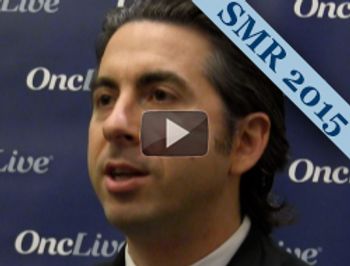
Jason Luke, MD, Assistant Professor of Medicine, the University of Chicago Medicine Comprehensive Cancer Center, discusses how inflammation in the tumor microenvironment can serve as a biomarker in melanoma.

As immunotherapy begins to be studied across central nervous system tumors it becomes increasingly important for practitioners to understanding the unique adverse event profiles associated with these agents.

Long-term data continue to show sustained improvements in overall survival with nivolumab alone or in combination with ipilimumab as a frontline treatment for patients with advanced melanoma.

There were few differences in quality of life, global health, and symptom burden between patients with melanoma who were treated with nivolumab plus ipilimumab or either agent alone.

Predictive genetic signatures and novel combination strategies may be the key to improving the often dramatic responses seen with immune checkpoint inhibitors.
Sheri Holmen, PhD, investigator, Associate Professor in the Department of Surgery, Adjunct Professor in the Department of Oncological Sciences, Huntsman Cancer Institute, the University of Utah School of Medicine, discusses understanding drivers for melanoma metastasis.

There is a wide variety of novel targets and corresponding checkpoint and immune blocker/activator therapies that may soon show promise in cancer care.
With several novel therapies approaching regulatory approval, the treatment landscape for renal cell carcinoma is facing a major upheaval.

An FDA panel voted against approval of the immunotherapy MCNA as a treatment for patients with high-risk non-muscle invasive bladder cancer following first-line bacillus Calmette-Guérin therapy.

The FDA has granted a breakthrough therapy designation to avelumab as a potential treatment for patients with metastatic Merkel cell carcinoma following progression on at least one prior chemotherapy regimen.

The FDA has assigned a priority review designation to the PD-1 inhibitor nivolumab as a treatment for patients with advanced renal cell carcinoma following prior antiangiogenic therapy.

The dramatic and often practice-changing findings demonstrated by trials of immunotherapies in melanoma and lung cancer may soon be reflected in the treatment of bladder cancer.

Roswell Park Cancer Institute is taking the final steps toward what we believe would be the first-ever clinical trial combining two novel and highly promising techniques: adoptive cellular therapy utilizing re-engineered mature T cells and re-engineered adult hematopoietic stem cells.

Robert Figlin, MD, and Daniel Petrylak, MD, discuss emerging agents in RCC they are excited about and what challenges still remain in treating the disease.

The latest FDA approval for nivolumab in non–small cell lung cancer means that the drug potentially can be administered to any patient in the second-line setting, regardless of tumor histology or PD-L1 expression level.

Immune checkpoint inhibitors have demonstrated encouraging results for patients with small cell lung cancer and mesothelioma, which are two aggressive thoracic malignancies with few options.

Howard L. Kaufman, MD, FACS, Chief Surgical Officer, Associate Director for Clinical Science, Surgical Oncologist, Rutgers Cancer Institute, Society for Immunotherapy of Cancer (SITC) President, discusses the impact of the recent FDA approval of talimogene laherparepvec (T-VEC) for the treatment of melanoma lesions in the skin and lymph nodes.
Willem Overwijk, PhD, Associate Professor, Department of Melanoma Medical Oncology, Research, Division of Cancer Medicine, The University of Texas MD Anderson Cancer Center, explains the role of innate immunity in the treatment of cancer.
Stephen Grupp, MD, PhD, director of translational research for the center for Childhood Cancer Research at The Children's Hospital of Philadelphia (CHOP) and medical director of the Stem Cell Laboratory at CHOP, discusses the use of engineered cell therapy for the treatment of Acute Lymphoblastic Leukemia (ALL).

Early promising responses seen with immune checkpoint inhibitors for patients with ovarian cancer still need to be validated in larger randomized trials before a conclusion is made regarding their true efficacy.

Immune checkpoint blockade has transformed the treatment paradigms of multiple advanced solid tumors-and bladder cancer is no exception.
Toni Choueiri, MD, Dana-Farber Cancer, Clinical Director, Lank Center for Genitourinary Oncology, Director, Kidney Cancer Center, Senior Physician, Dana Farber Cancer, discusses the potential for combination treatments in kidney cancer.

Marianne Davies, NP, Assistant Professor of and Clinical Instructor in Nursing, Yale Cancer Center, discusses immune-mediated adverse events in lung cancer.

The FDA has granted a breakthrough therapy designation to pembrolizumab as a potential therapy for patients with microsatellite instability-high metastatic colorectal cancer.

Robert J. Motzer, MD, discusses nivolumab's impact for renal cell carcinoma treatment.
Advertisement
Advertisement
Trending on OncLive
1
FDA Approves Tucatinib Plus Trastuzumab/Pertuzumab as First-Line Maintenance in Advanced HER2+ Breast Cancer
2
VIR-5500 Receives FDA Fast Track Designation in mCRPC
3
Iberdomide Plus Daratumumab/Dexamethasone Yields Significant PFS Benefit in R/R Myeloma
4
FDA Approves Atezolizumab Plus Chemo for Stage III dMMR Colon Cancer
5