





Immuno-Oncology
Latest News
Advertisement
Latest Videos



































































Advertisement
More News

The addition of the CTLA-4 inhibitor ipilimumab to cisplatin and gemcitabine did not significantly improve overall survival for patients with metastatic urothelial cancer.

The investigational anti-PD-L1 antibody avelumab demonstrated antitumor activity with an acceptable safety profile in a phase Ib trial of patients with metastatic urothelial cancer refractory to standard therapy.
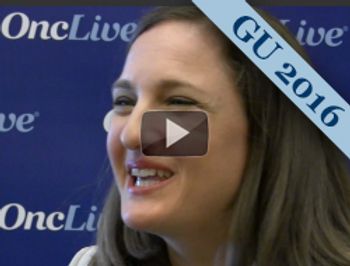
Elizabeth Plimack, MD, MS, Associate Professor, Director of Genitourinary Clinical Research at Fox Chase Cancer Center, discusses immunotherapy in bladder cancer.
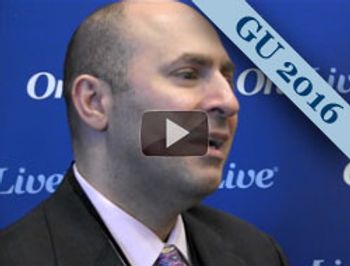
Toni K. Choueiri, MD, clinical director, Lank Center for Genitourinary Oncology, director, Kidney Cancer Center, senior physician, Dana-Farber Cancer Institute, associate professor of Medicine, Harvard Medical School, discusses the significance of the CheckMate-025 for renal cell carcinoma.
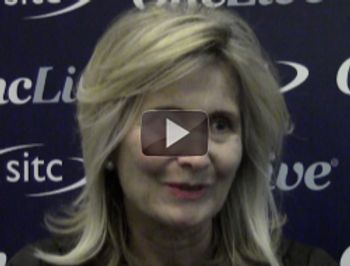
Silvia Formenti, MD, chair of Radiation Oncology at Weill Cornell Medical College and radiation oncologist-in-chief at Weill Cornell Medicine and NewYorkPresbyterian Hospital, discusses combining radiotherapy with immunotherapy in non-small cell lung cancer (NSCLC).

Jason J. Luke, MD, discusses potential new methods for determining prognostic markers in melanoma and the challenges of balancing toxicity with efficacy in designing combination regimens.
Arlene Sharpe, MD, PhD, immunology faculty member, Harvard Medical School, discusses the biology of the PD-1 pathway.

Victoria Atkinson, MD, discusses the impact of the phase III CheckMate-066 trial and nivolumab’s future as both a monotherapy and in combination with other therapies.

Jesus San Miguel, MD, PhD, discusses a phase I study examining pembrolizumab added to lenalidomide and low-dose dexamethasone in patients with heavily pretreated relapsed/refractory multiple myeloma, while emphasizing the need for further follow-up.
Jason J. Luke, MD, assistant professor of Medicine, The University of Chicago Medicine, discusses what the future holds for combination therapies for patients with melanoma.

Thomas F. Gajewski, MD, PhD, discusses how the field of immune checkpoints is expanding beyond PD-1 and CTLA-4.
It is becoming increasingly clear that PD-1/ PD-L1 and CTLA-4 represent just the tip of the iceberg when it comes to manipulating the immune system to fight cancer, and the number of known checkpoints—and with it the list of potential drug targets—has expanded in recent years.

As clinical experience grows with new agents, combinations, and sequences of therapy, the use of molecular profiling in metastatic melanoma is likely to become an essential means of choosing among treatment options.

Treatment with pembrolizumab reduced the risk of death by 29% compared with docetaxel for patients with PD-L1-positive non–small cell lung cancer.

The European Commission has approved talimogene laherparepvec as a treatment for adult patients with unresectable stage IIIb, IIIc, and IVM1a melanoma that has not spread to the bone, brain, lung, or other viscera.

The FDA has expanded the approval for single-agent pembrolizumab to include the frontline treatment of patients with advanced melanoma regardless of BRAF status.
Advertisement
Advertisement
Trending on OncLive
1
FDA Approves Tucatinib Plus Trastuzumab/Pertuzumab as First-Line Maintenance in Advanced HER2+ Breast Cancer
2
FDA Approves Atezolizumab Plus Chemo for Stage III dMMR Colon Cancer
3
Iberdomide Plus Daratumumab/Dexamethasone Yields Significant PFS Benefit in R/R Myeloma
4
VIR-5500 Receives FDA Fast Track Designation in mCRPC
5