

Immuno-Oncology
Latest News
Advertisement
Latest Videos































































Advertisement
More News

The ASCO annual meeting has retained its core purpose of providing a unique platform for oncologists to interact and exchange the latest practice-changing research.
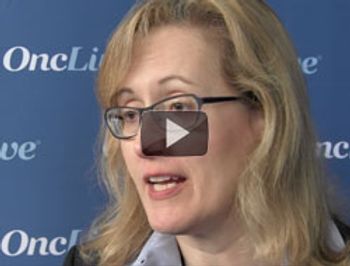
Julie R. Brahmer, MD, interim director, Sidney Kimmel Comprehensive Cancer Center, associate professor of oncology, Johns Hopkins Medicine, discusses how the CheckMate-057 trial could impact the treatment of non-small cell lung cancer (NSCLC).

Jedd D. Wolchok, MD, discusses the unique design and goals of the CheckMate-067 trial, and what its results mean for patients with advanced melanoma going forward.

The CD19-targeted chimeric antigen receptor T-cell therapy CTL019 demonstrated early evidence of activity and safety in patients with refractory multiple myeloma.

The FDA has assigned a priority review designation to the PD-1 inhibitor pembrolizumab as a treatment for patients with advanced NSCLC across all histologies whose disease has progressed on or after platinum-containing chemotherapy, as well as a targeted agent in EGFR- or ALK-positive patients.
Mark A. Socinski, MD, professor of Medicine and Cardiothoracic Surgery, director, Lung Cancer Section, Division of Hematology/Oncology, clinical associate director, Lung SPORE, co-director, UPMC Lung Cancer Center of Excellence, co-leader, UPCI Lung Cancer Program, discusses a phase III study which examined nivolumab in non-small cell lung cancer (NSCLC).
Alexander Spira, MD, PhD, FACP, medical oncology, hematology, Virginia Cancer Specialists, discusses the POPLAR study for non-small cell lung cancer (NSCLC).

Frontline nivolumab as monotherapy and in combination with ipilimumab more than doubled progression-free survival versus ipilimumab alone in patients with advanced melanoma.

Treatment with atezolizumab doubled overall survival compared with docetaxel in previously treated patients with PD-L1-positive squamous and non-squamous non-small cell lung cancer.

An immunotherapy combination demonstrated "high levels of clinical activity" in previously treated non-small cell lung cancer across a range of doses.

Nivolumab has now been shown to have an overall survival benefit versus docetaxel in both nonsquamous and squamous non–small cell lung cancer.
Tanguy Seiwert, MD, assistant professor of medicine and associate leader of the head and neck cancer program, University of Chicago, discusses the efficacy of pembrolizumab in head and neck cancer.

In a multisite study offering the largest experience to date of how immunotherapy can be deployed in patients with head and neck cancer, the anti-PD-1 antibody pembrolizumab produced broad and durable responses in patients with advanced disease.

Treatment with the PD-1 inhibitor pembrolizumab demonstrated high response rates in patients with heavily pretreated colorectal cancer who harbored genetic defects in mismatch repair.
Howard Burris, III, MD, chief medical officer and executive director of Drug Development at the Sarah Cannon Research Institute discusses the importance of the ASCO annual meeting, taking place May 29 - June 2.

To better understand the impact of the EORTC 18071 trial, the chances of approval in the adjuvant setting, and the challenges concerning the dosage and toxicity with ipilimumab, OncLive spoke with the study's lead author Jeffrey S. Weber, MD, PhD.
Advertisement
Advertisement
Trending on OncLive
1
FDA Approves Tucatinib Plus Trastuzumab/Pertuzumab as First-Line Maintenance in Advanced HER2+ Breast Cancer
2
VIR-5500 Receives FDA Fast Track Designation in mCRPC
3
Iberdomide Plus Daratumumab/Dexamethasone Yields Significant PFS Benefit in R/R Myeloma
4
FDA Approves Atezolizumab Plus Chemo for Stage III dMMR Colon Cancer
5