



Immuno-Oncology
Latest News
Advertisement
Latest Videos






























































Advertisement
More News
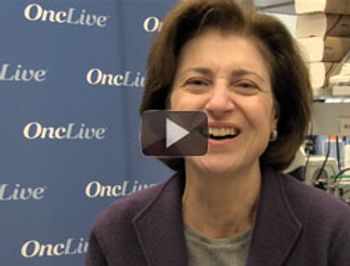
Suzanne Topalian, MD, professor of surgery and oncology, John Hopkins Medicine, and director of the melanoma program, Sidney Kimmel Comprehensive Cancer Center, compares biomarker detection for anti- PD-1 therapies like nivolumab to anti-CTLA-4 therapies like ipilimumab for the treatment of melanoma.

The FDA has granted an orphan drug designation to Reolysin for the treatment of patients with ovarian cancer.

The anti–PD-L1 agent MPDL3280A has received a breakthrough therapy designation from the FDA for PD-L1–positive non–small cell lung cancer that has progressed during or after platinum-based chemotherapy, as well as a targeted therapy for patients with EGFR- or ALK-positive tumors.
Jeffrey Weber, MD, PhD, a senior member at the Moffitt Cancer Center, discusses the EORTC 18701 study, which compared ipilimumab with placebo for patients with stage III node-positive melanoma.

Harriet Kluger, MD, associate professor of medicine, Yale Cancer Center, talks about the toxicity of nivolumab and ipilimumab for the treatment of patients with advanced melanoma.

An increased understanding of tumor immunology has led to seven new melanoma drug approvals since 2011, including the recent approvals of the PD-1 inhibitors nivolumab (Opdivo) and pembrolizumab (Keytruda).

Ten or 15 years ago, a diagnosis of advanced non– small cell lung cancer (NSCLC) led directly to a discussion of chemotherapy.

Immune checkpoint inhibitors targeted against PD-1 and its ligand PD-L1 have rapidly advanced as treatments for patients with melanoma and non–small cell lung cancer (NSCLC), following their initial debut in 2012.

As varying immunotherapy options become available for different types of cancers, researchers will have to take the next steps in clinical studies and in practice before the growing excitement over emerging agents can truly be translated into beneficial new therapies for patients.
Kei Muro, MD, of the Aichi Cancer Center Hospital in Nagoya, Japan, discusses updated findings from the KEYNOTE-012 study, which looked at pembrolizumab for the treatment if several types of cancer.


Among patients with metastatic gastric cancer treated with the anti-PD-1 monoclonal antibody pembrolizumab, the agent showed promising antitumor activity and a manageable toxicity profile.

Increased utilization of the autologous cellular immunotherapy sipuleucel-T (Provenge) led to a $20.1 million improvement in total revenue in 2014 for the manufacturer Dendreon, when compared with 2013.

Jedd D. Wolchok, MD, PhD, medical oncologist, Memorial Sloan Kettering Cancer Center, discusses remaining questions regarding immunotherapies for the treatment of melanoma.

To gain insight on the integration of these agents and other immunotherapies into clinical practice, OncLive interviewed Jeffery S. Weber, MD, PhD, a senior member at Moffitt Cancer Center in Tampa, Florida.
Nivolumab improved survival versus docetaxel in patients with pretreated squamous cell non–small cell lung cancer in the phase III CheckMate-017 trial.

Amgen and Kite Pharma have announced that they will collaborate on the development of novel CAR T-cell immunotherapies, with Amgen providing cancer targets and Kite offering its engineered autologous cell therapy platform.


Newer drugs for patients with relapsed and refractory Hodgkin lymphoma

The FDA has approved the PD-1 inhibitor nivolumab for patients with unresectable or metastatic melanoma following treatment with ipilimumab or a BRAF inhibitor.

Metastatic melanoma is associated with a poor prognosis, but recent breakthroughs in tumor biology and immune regulation have led to the development of agents that could change clinical practice.

In attending the Society of Urologic Oncology's annual meeting in Bethesda in early December, I was struck by the number of presentations focusing sharply on the burgeoning fields of biomolecular markers and immunotherapy and their application to urologic oncology.
Rita Nanda, MD, assistant professor of medicine and associate director of the Breast Medical Oncology Program at the University of Chicago, discusses the potential of pembrolizumab (Keytruda) for the treatment of triple-negative breast cancer (TNBC). A recent small-scale trial showed treatment response for 18.5% of patients with PD-L1 positive TNBC.
Edith A. Perez, MD, the deputy director at large for the Mayo Clinic Cancer Center, discusses the potential for immune checkpoint blockage as treatment for patients with advanced breast cancer.
Advertisement
Advertisement
Trending on OncLive
1
FDA Approves Tucatinib Plus Trastuzumab/Pertuzumab as First-Line Maintenance in Advanced HER2+ Breast Cancer
2
VIR-5500 Receives FDA Fast Track Designation in mCRPC
3
Iberdomide Plus Daratumumab/Dexamethasone Yields Significant PFS Benefit in R/R Myeloma
4
FDA Approves Atezolizumab Plus Chemo for Stage III dMMR Colon Cancer
5