



Immuno-Oncology
Latest News
Advertisement
Latest Videos
































































Advertisement
More News
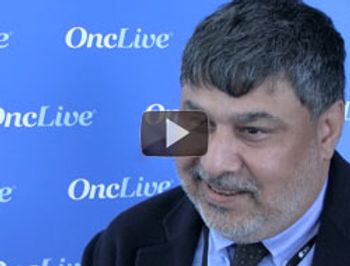
Naiyer A. Rizvi, MD, an associate attending physician, Memorial Sloan Kettering Cancer Center, discusses pembrolizumab (MK-3475) for the treatment of non-small cell lung cancer (NSCLC).

Sipuleucel-T (Provenge) is effective when given either before or after androgen deprivation therapy (ADT) in men with biochemically recurrent prostate cancer (BRPC) who face a high risk of developing metastases, a study has found.
Advaxis and Merck have entered into a clinical trial collaboration agreement to evaluate the combination of two novel immunotherapies for the treatment of patients with metastatic castration-resistant prostate cancer.

A major step toward improved tolerability of cisplatin-based therapy came in the early 2000s with the advent of the modern regimen of gemcitabine and cisplatin.

A number of large pharmaceutical companies have forged clinical trial collaborations focused on the investigation of novel combinations and companion diagnostics across multiple cancer indications.
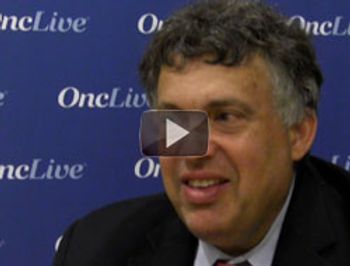
Roy S. Herbst, MD, PhD, a professor of medicine at the Yale Cancer Center and chief of medical oncology at Smilow Cancer Hospital at Yale-New Haven in Connecticut, discusses new immunotherapy agents showing potential as treatment options for patients with lung cancer.

Ever since ipilimumab (Yervoy) gained FDA approval in 2011 for the treatment of metastatic melanoma, the immune checkpoint blockade strategy that the agent employs has been an intense focus of interest in research and pharmaceutical circles.
James P. Allison, PhD, director, immunotherapy platform, The University of Texas MD Anderson Cancer Center, Giant of Cancer Care, discusses the potentiation of immune checkpoint blockade cancer immunotherapy with oncolytic virus.

Emerging agents and pressing research questions in immunotherapy were reviewed in depth during the 15th Annual International Lung Cancer Congress, with Roy S. Herbst, MD, PhD, of the Yale Cancer Center, leading the way.
Vassiliki Papadimitrakopoulou, MD, Professor, Department of Thoracic/Head and Neck Medical Oncology, University of Texas MD Anderson Cancer Center, discusses the Lung-MAP trial, which uses next-generation sequencing as a screening test rather than screening for one mutation.
Suresh S. Ramalingam, MD, a professor of medical oncology at the Winship Cancer Institute of Emory University, discusses the utility of the vaccine tecemotide as treatment for non-small cell lung cancer.

Melanoma care has fortunately undergone a whirlwind of changes over the past several years. Novel immunotherapies are perhaps the most exciting recent development in cancer care because patients can enjoy long-term benefit from these treatments, meaning that they are possibly "cured."

One-third (30%) of chemotherapy-naïve non–small cell lung cancer (NSCLC) patients treated with nivolumab, an anti-PD-1 immune checkpoint antibody, responded to treatment in a phase I study.

The combination of the immunotherapy CRS-207 and the vaccine GVAX Pancreas has received a breakthrough therapy designation from the FDA for its potential as a treatment for patients with metastatic pancreatic cancer.
Advertisement
Advertisement
Trending on OncLive
1
FDA Approves Tucatinib Plus Trastuzumab/Pertuzumab as First-Line Maintenance in Advanced HER2+ Breast Cancer
2
VIR-5500 Receives FDA Fast Track Designation in mCRPC
3
Iberdomide Plus Daratumumab/Dexamethasone Yields Significant PFS Benefit in R/R Myeloma
4
FDA Approves Atezolizumab Plus Chemo for Stage III dMMR Colon Cancer
5