


Immuno-Oncology
Latest News
Advertisement
Latest Videos






























































Advertisement
More News
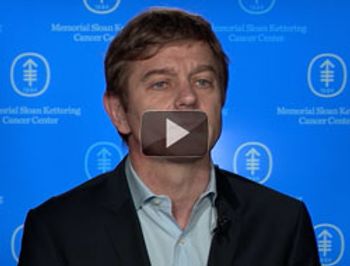
Marcel R.M. van den Brink, MD, PhD, Head, Division of Hematologic Oncology, Memorial Sloan Kettering Cancer Center, provides an overview of five notable studies being presented at the 2014 American Society of Hematology (ASH) Meeting and Exposition.

The presence of an immune-suppressing protein in non-cancerous immune cells may predict how patients with different types of cancer respond to treatment, a multi-center phase I study using an investigational immune therapy drug has found.

Pfizer and Merck KGaA have agreed to collaborate on the development of the PD-L1 inhibitor MSB0010718C as a potential treatment for multiple types of cancer.

Recent advances with immune checkpoint inhibitors could improve outcomes for patients with squamous cell non-small cell lung cancer, a traditionally hard to treat histology.
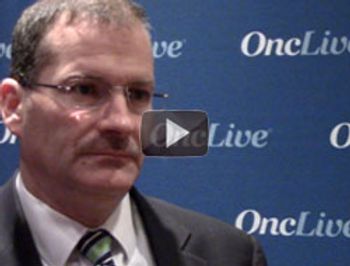
Christopher Sweeney, MBBS, medical oncologist, Dana-Farber Cancer Institute, discusses the future of prostate cancer research.
Roy S. Herbst, MD, PhD, professor, Yale Cancer Center, chief of medical oncology, Smilow Cancer Hospital at Yale-New Haven, discusses the state of immunotherapy in lung cancer.
Immunotherapy's promise as well as its challenges as a treatment for patients with brain cancer was the focus of a plenary session held November 15 at the Society of Neuro-Oncology's (SNO) 2014 Annual Meeting in Miami Beach.

Frontline treatment with nivolumab significantly extended OS and PFS compared with dacarbazine in patients with untreated BRAF wild-type advanced melanoma.

The PD-1 inhibitor pembrolizumab significantly improved PFS by over 43% compared with chemotherapy as a treatment for patients with metastatic melanoma who were refractory to ipilimumab.
The vaccine rindopepimut appears to help PFS and OS in patients with epidermal growth factor receptor variant III mutation in glioblastoma-a patient group with traditionally poor outcomes.

Dendreon, the maker of the first FDA-approved immunotherapy for advanced prostate cancer, sipuleucel-T (Provenge), has filed for chapter 11 bankruptcy.
Roy S. Herbst, MD, PhD, led some of the first trials of gefitinib, the EGFR inhibitor that helped introduce targeted therapies of this important mutation into the treatment landscape of non–small cell lung cancer.
Benjamin P. Levy, MD, director, Thoracic Medical Oncology, Mount Sinai Beth Israel, associate director, Cancer Clinical Trials Office, Mount Sinai Hospital, Mt. Sinai School of Medicine, discusses new data on immunotherapy for lung cancer.

Lung cancer experts provided insights into recent developments in the treatment of the disease, covering topics ranging from resistance to targeted therapies to immunotherapy agents under study, during the 9th Annual New York Lung Cancer Symposium in New York City.
Vassiliki Papadimitrakopoulou, MD, provides an update on research into pembrolizumab (Keytruda) for the treatment of lung cancer.

Both HPV-positive and -negative head and neck cancers are "outstanding candidates for immunotherapeutic strategies," said Andrew G. Sikora, MD, PhD, Baylor College of Medicine, at the 2014 Chemotherapy Foundation Symposium.

The addition of the GM-CSF agent sargramostim to the CTLA-4 inhibitor ipilimumab (Yervoy) prolonged overall survival (OS) and lowered toxicity for patients with unresectable stage III or IV melanoma

The combination of a FLT3L-primed in situ vaccine, low-dose radiotherapy, and a toll-like receptor 3 (TLR) 3 agonist has been shown to be feasible, safe, and immunologically and clinically effective in a phase I/II study for patients with low-grade lymphoma

Roy S. Herbst, MD, PhD, presented a top 10 list on immunotherapy in non-small cell lung cancer at the 2014 Multidisciplinary Symposium in Thoracic Oncology.

Nivolumab combined with platinum-based doublet chemotherapy achieved a manageable safety profile with clinical efficacy that was similar to single-agent nivolumab in patients with advanced NSCLC.

The PD-1 immune checkpoint inhibitor nivolumab achieved an ORR of 15% with a median duration of response that was not yet reached at a median 11-month follow-up for patients with advanced, refractory NSCLC.

Treatment with PD-1 immunotherapy across various oncology clinical trials has been associated with the induction of painless thyroiditis, characterized by transient thyrotoxicosis and hypothyroidism, in patients with metastatic malignancies

The FDA has granted a breakthrough therapy designation to pembrolizumab (Keytruda), an anti-PD-1 therapy, for the treatment of patients with non-small cell lung cancer (NSCLC) who are EGFR mutation- or ALK rearrangement-negative and whose disease has progressed on or following platinum-based chemotherapy.

A new method to identify protein mutations in cancer cells may help researchers create a personalized vaccine to treat patients with recurrent ovarian cancer.
Advertisement
Advertisement
Trending on OncLive
1
FDA Approves Tucatinib Plus Trastuzumab/Pertuzumab as First-Line Maintenance in Advanced HER2+ Breast Cancer
2
VIR-5500 Receives FDA Fast Track Designation in mCRPC
3
Iberdomide Plus Daratumumab/Dexamethasone Yields Significant PFS Benefit in R/R Myeloma
4
FDA Approves Atezolizumab Plus Chemo for Stage III dMMR Colon Cancer
5