



Immuno-Oncology
Latest News
Advertisement
Latest Videos
































































Advertisement
More News

Merck announced the signing of three separate clinical collaboration agreements to evaluate the potential of its investigational anti-PD-1 immunotherapy MK-3475 across multiple tumor types

High tumor expression of the protein PD-L1 is independently associated with shorter OS in patients with mRCC receiving treatment with VEGF-targeted therapy.

Robert Figlin, MD, FACP, discusses updated data on the ADAPT trial, which is an ongoing international phase III randomized trial of autologous dendritic cell immunotherapy (AGS-003) plus standard treatment in metastatic renal cell carcinoma (mRCC)
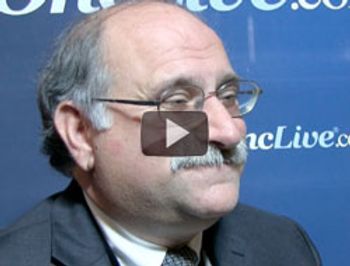
Leonard Gomella, MD, from the Kimmel Cancer Center Network, Thomas Jefferson University Hospital, provides an update on the dendritic cell cancer vaccine sipuleucel-T in castration-resistant prostate cancer.
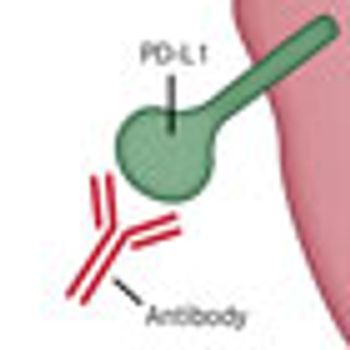
Immunotherapy has become an increasingly appealing therapeutic strategy for patients with cancer, with many late-stage clinical trials demonstrating overall survival (OS) advantages in melanoma and castrationresistant prostate cancer.

Harnessing multiple components of the immune system to fight cancer is the focus of NewLink Genetics' clinical pipeline.

The anti-PD-1 monoclonal antibody pidilizumab showed promising clinical activity and was safely administered to patients with diffuse large B-cell lymphoma after autologous hematopoietic stem-cell transplantation.

John L. Marshall, MD, from Georgetown University Hospital, on the recent advancements in colorectal cancer.

The renaissance in immunology is already affecting treatment paradigms for a variety of gynecologic cancers, and the impact is only likely to expand.

Mark G. Kris, MD, from the Memorial Sloan-Kettering Cancer Center, describes the new drugs and other emerging trends in lung cancer.
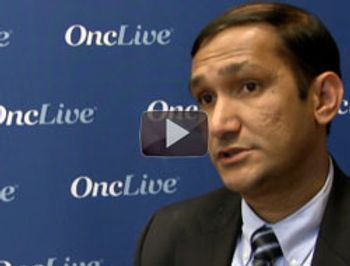
Bilal Piperdi, MD, Associate Professor of Clinical Medicine, Department of Medicine (Oncology), Albert Einstein College of Medicine, discusses the potential of immunotherapy for the treatment of patients with lung cancer.

Combining two specific anti-cancer vaccines, rather than administering one as monotherapy, doubles the 1-year survival probability in patients with metastatic pancreatic ductal adenocarcinoma (PDAC), according to the results of a phase II study presented January 14.

Tasquinimod, an experimental immunotherapy and anti-angiogenic agent, prolongs not just progression-free survival (PFS) but also overall survival (OS) in certain men with castration-resistant prostate cancer
Naiyer A. Rizvi, MD, an associate attending physician, Memorial Sloan-Kettering Cancer Center, discusses the phenomenon of pseudoprogression in patients with lung cancer after they receive immunotherapy treatment.
Harriet Kluger, MD, associate professor of medicine (medical oncology), associate director, Hematology/Oncology Fellowship Program, Yale Cancer Center, discusses the changes and challenges of treating patients with melanoma.

Sherene Loi, MD, PhD, on the association between immune cells and a pathologic complete response in patients with breast cancer after being given chemotherapy and trastuzumab.

Although immunotherapy advances in solid tumors have captured much attention in recent years, therapeutic strategies that enable the patient's own immune system to battle cancer cells have long been integrated into the treatment of patients with hematologic malignancies.
Matthew D. Galsky, MD, assistant professor of medicine, Department of Medicine, Division of Hematology and Medical Oncology, Icahn School of Medicine at Mount Sinai, director, Genitourinary Medical Oncology, Tisch Cancer Institute at Mount Sinai Medical Center, discusses the role of ipilimumab in bladder cancer.
Arjun Balar, MD, assistant professor of medicine, Division of Hematology & Oncology, New York University Cancer Institute, NYU Langone Medical Center, discusses the potential of immunotherapy agents as treatment for bladder cancer.

Immunotherapy can induce regressions of even advanced stage cancers, and many of these patients can have prolonged disease remissions.
Bilal Piperdi, MD, from the Albert Einstein College of Medicine, discussed a trial looking at a vaccine in patients with lung cancer at the 8th Annual New York Lung Cancer Symposium®.

Over the past few years, seven new drugs have gained approval from the FDA for the treatment of patients with metastatic renal cell carcinoma. Primarily these approaches target angiogenesis and mTOR. The advent of these molecularly targeted therapies has significantly improved the standard of care for patients with RCC.

The Malignant Melanoma Program at Wake Forest Baptist Health employs a multidisciplinary approach for the management of patients with all stages of this disease. The goals of the program are centered on unequivocal excellence in all areas of care for patients with malignant melanoma.
Matthew D. Galsky, MD, from the Tisch Cancer Institute at Mount Sinai Medical Center, explains the mechanism of action of ipilimumab in bladder cancer.
The investigational autologous dendritic cell vaccine AGS-003 successfully activated a cytotoxic T cell response that correlates with a prolongation in survival for patients with metastatic renal cell carcinoma
Advertisement
Advertisement
Trending on OncLive
1
FDA Approves Tucatinib Plus Trastuzumab/Pertuzumab as First-Line Maintenance in Advanced HER2+ Breast Cancer
2
VIR-5500 Receives FDA Fast Track Designation in mCRPC
3
Iberdomide Plus Daratumumab/Dexamethasone Yields Significant PFS Benefit in R/R Myeloma
4
FDA Approves Atezolizumab Plus Chemo for Stage III dMMR Colon Cancer
5