



Immuno-Oncology
Latest News
Advertisement
Latest Videos


































































Advertisement
More News

Yvonne M. Saenger, MD, Assistant Professor in Medicine and Dermatology, Hematology and Medical Oncology, Mount Sinai School of Medicine, discusses the need for biomarkers for immunotherapies.

Roy S. Herbst, MD, PhD, chief of Medical Oncology at Smilow Cancer Hospital at Yale-New Haven in Connecticut, discusses immunotherapy for patients with lung cancer.
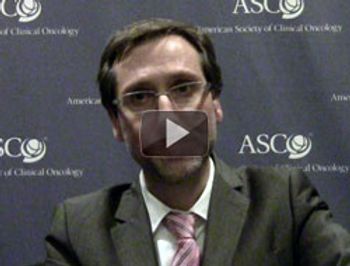
Antoni Ribas, MD, PhD, the director of the Tumor Immunology Program Area at UCLA's Jonsson Comprehensive Cancer Center, discusses the efficacy of ipilimumab for the treatment of melanoma.

Elizabeth Mittendorf, MD, PhD, from MD Anderson Cancer Center, discusses the use of peptide vaccines for the treatment of breast cancer.

Howard L. Kaufman, MD, Rush University Medical Center, discusses the implications of the Immunoscore for the treatment of patients with cancer.
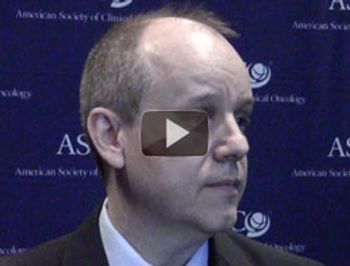
Charles J. Link, Jr, MD, from the Cancer Center of Iowa and NewLink Genetics, discusses the phase II trial of algenpantucel-L for pancreatic cancer.

A two-step immunotherapy approach consisting of adoptive T-cell therapy and a dendritic cell vaccine has shown activity in a phase I advanced ovarian cancer clinical trial.

Bruce Roth, MD, from the Siteman Cancer Center, Washington University School of Medicine, discusses the optimism for a cure with immunotherapies.
Jeffrey S. Weber, MD, PhD, from the Moffitt Cancer Center and Research Institute, describes a single institution phase I/II trial exploring the anti-PD-1 antibody nivolumab in combination with a peptide vaccine for patients with unresectable melanoma.

Neal D. Shore, MD, FACS, Medical Director, Carolina Urologic Research Center, Myrtle Beach, gives an overview of the development of immunotherapies for patients with prostate cancer.
Jedd D. Wolchok, MD, PhD, from the Memorial Sloan-Kettering Cancer Center, discusses a phase I trial exploring the combination of the anti-PD-1 antibody nivolumab and ipilimumab, a CTLA-4 inhibitor, for patients with advanced melanoma.

Yvonne M. Saenger, MD, Assistant Professor in Medicine and Dermatology, Hematology and Medical Oncology, Mount Sinai School of Medicine, discusses the idea of combining targeted and immune agents.
Drugs currently approved by the FDA for treatment of melanoma include aldesleukin, dabrafenib, dacarbazine, ipilimumab, trametinib, and vemurafenib. This article will explore pharmacologic agents currently being investigated for the treatment of melanoma.
Roy S. Herbst, MD, PhD, from the Yale Cancer Center, describes the emergence of immunotherapy as a treatment in multiple types of cancer that was highlighted at the 2013 ASCO Annual Meeting.

Adding the white blood cell booster granulocyte-macrophage colony-stimulating factor to the immunotherapy ipilimumab extended survival in patients with metastatic melanoma when compared with ipilimumab alone and may be a safer alternative than monotherapy.

Nivolumab has demonstrated an overall objective response rate of 31% with a median duration of two years in patients with advanced melanoma.
Mario Sznol, MD, from the Yale Cancer Center, discusses the long-term follow-up results from an expanded phase I study investigating the anti-PD-1 drug nivolumab in patients with advanced melanoma.

New data on emerging immunotherapies and fresh findings about established agents are likely to dominate clinical and marketplace news from this year's Annual Meeting of the ASCO, according to industry analysts.
Arta Monjazeb, MD, and Michael Kent, DVM, from the UC Davis Comprehensive Cancer Center, describe an early phase trial exploring the potential of translating successful treatment from dogs to humans with advanced melanoma or sarcoma.

Susan F. Slovin, MD, PhD, from Memorial Sloan-Kettering Cancer Center, provides an overview of the most promising immunotherapeutic follow-ups to sipuleucel-T in prostate cancer.

Combining the checkpoint antibodies ipilimumab and nivolumab led to deep tumor regression in approximately one-third of patients with advanced melanoma.

An antibody that targets PD-L1 to unleash the body's immune system has demonstrated a 21% response rate in a phase I study of patients with multiple solid tumors, setting the stage for an advance in immunotherapy with broad implications for treatment.

Daniel P. Petrylak, MD, from the Smilow Cancer Center at Yale-New Haven, describes the clinical investigation of the immunotherapeutic vaccine PROSTVAC in men with castration-resistant prostate cancer.

Janos L. Tanyi, MD, PhD, from the University of Pennsylvania, discusses two phase I studies that examined a novel two-step immunotherapy for women with advanced ovarian cancer.

Studies that continue to shed light on the optimal use of sipuleucel-T in men with prostate cancer were presented at the 2013 Genitourinary Cancers Symposium.
Advertisement
Advertisement
Trending on OncLive
1
FDA Approves Tucatinib Plus Trastuzumab/Pertuzumab as First-Line Maintenance in Advanced HER2+ Breast Cancer
2
VIR-5500 Receives FDA Fast Track Designation in mCRPC
3
Iberdomide Plus Daratumumab/Dexamethasone Yields Significant PFS Benefit in R/R Myeloma
4
FDA Approves Atezolizumab Plus Chemo for Stage III dMMR Colon Cancer
5