


Immuno-Oncology
Latest News
Advertisement
Latest Videos

































































Advertisement
More News

The notion of commandeering the immune system to treat cancer actually dates back more than a century with intratumoral bacterial injections to try and elicit tumor regression.
Ragini Kudchadkar, MD, assistant professor, medical oncology, Moffitt Cancer Center, discusses the potential for combining therapies for the treatment of melanoma.
Julie R. Brahmer, MD, from Johns Hopkins University School of Medicine, Sidney Kimmel Comprehensive Cancer Center, discusses how physicians distinguish between a response to an immunotherapy and cancer growth.

The PD-1 blocking antibody nivolumab continues to demonstrate sustained clinical activity in previously treated patients with advanced non-small cell lung cancer.
Omid Hamid, MD, chief, translational research and immunotherapy, director, cutaneous oncology and melanoma, The Angeles Clinic and Research Institute, discusses the treatment of melanoma.
Karl Lewis, MD, medical oncologist, associate professor, University of Colorado, discusses new and emerging treatments for metastatic melanoma
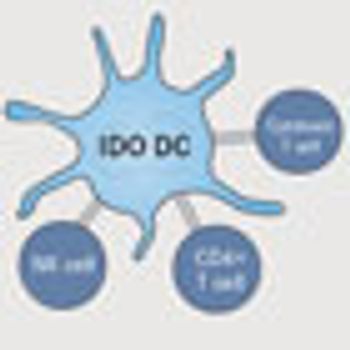
IDO is a key enzyme in the normal regulation of the host's adaptive immune response. Its role in regulating the immune response was initially demonstrated when pregnant mice were given IDO inhibitors, resulting in the rejection of the unborn fetus by the maternal immune system.

Results from a pooled analysis of data from 12 studies has demonstrated a long-term survival benefit that extends through at least 10 years for patients with advanced melanoma treated with ipilimumab.

Clifford A. Hudis, MD, ASCO president, chief, Breast Cancer Medicine Service, Attending Physician, Memorial Sloan-Kettering Cancer Center, discusses his optimism surrounding immunotherapy for cancer care.
Julie R. Brahmer, MD, from Johns Hopkins University School of Medicine, Sidney Kimmel Comprehensive Cancer Center, discusses the management of adverse events (AEs) from treatment with immunotherapies.
Douglas Hanahan and Robert Weinberg acknowledged the importance of the immune system in cancer development in 2011, when they added immune evasion to their list of "hallmark" abilities that are essential for the transformation of normal cells into cancerous ones.
Jeffrey A. Sosman, MD, professor of medicine, Director, Melanoma and Tumor Immunotherapy Program, Vanderbilt University School of Medicine, Vanderbilt-Ingram Cancer Center, describes the mechanism of action of ipilimumab in patients with melanoma.

Silvia Novello, MD, PhD, assistant professor, Thoracic Oncology Unit, University of Turin, San Luigi Hospital, Orbassano, Italy, discusses immunotherapy and targeting the MAGE-A3 protein in lung cancer.
Julie R. Brahmer, MD, from Johns Hopkins University School of Medicine, Sidney Kimmel Comprehensive Cancer Center, explains the role of PD-1 and PD-L1.

A phase III trial examining the anti-CTLA-4 immune checkpoint inhibitor ipilimumab in men with metastatic castration-resistant prostate cancer failed to meet its primary endpoint of prolongation in overall survival.

James L. Gulley, MD, PhD, Head, Clinical Trials Group, Deputy Laboratory Chief, National Cancer Institute, discusses measuring response to vaccines.
Until recently, the cornerstone of therapy for metastatic melanoma had been chemotherapy with dacarbazine (DTIC) and immunotherapy with high-dose interleukin-2 (HD IL-2) or interferon-α (IFN-α).
Jeffrey A. Sosman, MD, Professor of Medicine, Director, Melanoma and Tumor Immunotherpay Program, Vanderbilt University School of Medicine, Vanderbilt-Ingram Cancer Center, discusses how immunotherapies work in patients with melanoma or renal cancer.

High doses of interleukin-2 could be used to treat patients with melanoma whose disease has metastasized to the brain, potentially expanding options in a population facing a grim prognosis.
Andrew T. Parsa, MD, PhD, from the University of California, San Francisco, describes the administration of the prophage G-200 for patients with recurrent glioblastoma multiforme.

Lynn M. Schuchter, MD, from the University of Pennsylvania, describes two trials presented at the 2013 ASCO Meeting looking at nivolumab in patients with melanoma.

Nivolumab, the most advanced agent in the rapidly developing field of PD-1-targeting cancer immunotherapy, delivered durable clinical benefits across multiple solid tumor types.
Julie R. Brahmer, MD, from Johns Hopkins University School of Medicine, Sidney Kimmel Comprehensive Cancer Center, discusses the future of antibodies, including nivolumab, for the treatment of lung cancer.

Finding new ways of manipulating the body's own defenses to better combat various hematologic malignancies is yielding some interesting results and could represent a very promising new field of care for patients dealing with these disorders.

Adverse events associated with ipilimumab for the treatment of metastatic melanoma are better understood after further analysis of clinical trial data that led to the FDA's 2011 approval of the drug.
Advertisement
Advertisement
Trending on OncLive
1
FDA Approves Tucatinib Plus Trastuzumab/Pertuzumab as First-Line Maintenance in Advanced HER2+ Breast Cancer
2
VIR-5500 Receives FDA Fast Track Designation in mCRPC
3
Iberdomide Plus Daratumumab/Dexamethasone Yields Significant PFS Benefit in R/R Myeloma
4
FDA Approves Atezolizumab Plus Chemo for Stage III dMMR Colon Cancer
5