


Immuno-Oncology
Latest News

Advertisement
Latest Videos

































































Advertisement
More News

AGS-003, a personalized dendritic cell immunotherapy, demonstrated prolonged survival benefits in patients with metastatic renal cell carcinoma, with one-third of those who took the drug during a phase II trial still alive after nearly four years.

Leonard G. Gomella, MD, from the Thomas Jefferson University Hospital Kimmel Cancer Center, discusses the information currently available on sequencing the recently approved treatments for men with metastatic castration-resistant prostate cancer.
The novel immunotherapy talimogene laherparepvec has become the first oncolytic virus to successfully complete a phase III trial in advanced melanoma.

Daniel P. Petrylak, MD, from the Smilow Cancer Center at Yale-New Haven, discusses the relationship between sipuleucel-T and time to first use of an opioid analgesic in patients with metastatic castration-resistant prostate cancer.

Robert Dreicer, MD, MS, from the Taussig Cancer Institute at the Cleveland Clinic, describes potential combination therapies currently being considered as treatments for men with prostate cancer.

Susan F. Slovin, MD, PhD, from Memorial Sloan-Kettering Cancer Center, summarizes the development process of an effective immunotherapy for the treatment men with prostate cancer.
Emmanuel Stylianos Antonarakis, MBBCh, from the Johns Hopkins Sidney Kimmel Comprehensive Cancer Center, discusses a phase II trial evaluating the optimal sequence for sipuleucel-T and ADT in patients with biochemically recurrent prostate cancer.
Lana Kandalaft, PharmD, MTR, PhD, from the University of Pennsylvania School of Medicine, describes a study that examined a novel two-step immunotherapy for women with advanced ovarian cancer.
Matthew Cooperberg, MD, MPH, from the University of California, San Francisco, discusses the earlier administration of treatment with sipuleucel-T for men with prostate cancer.

William K. Oh, MD, from the Tisch Cancer Institute at Mount Sinai Medical Center, discusses ongoing research into combination strategies for men with castration-resistant prostate cancer.

Scott Gettinger, MD, associate professor of medicine (medical oncology), Yale School of Medicine, explains the development of immunotherapies in lung cancer.

Results of a large phase III trial testing the efficacy of the investigational vaccine L-BLP25 in patients with advanced lung cancer found that the vaccine failed to show a statistically significant improvement in overall survival
Ipilimumab provides a striking example of the way in which some patients derive long-term benefits from therapy while others do not. The reasons for such differences should be a priority for translational research.

Scott Gettinger, MD, from the Yale School of Medicine, discusses updated results from a phase I trial that examined the novel immunotherapy BMS-936558 in patients with NSCLC and other solid tumors.
Renier J. Brentjens, MD, PhD, Leukemia Service, Memorial Sloan-Kettering Cancer Center, explains the process by which his laboratory at MSKCC genetically modifies immune cells to fight cancer.

Interim data from a phase II clinical study of the dendritic cell vaccine CVac in patients with epithelial ovarian cancer showed promising signs of improving PFS compared with the observational standard of care.

Suzanne L. Topalian, MD, has led clinical development of monoclonal antibodies to treat patients with melanoma and other solid tumors, including those targeting the PD-1 T cell co-receptor.

Michael Rotkowitz, MD, says that one of the main challenges and a leading goal of immunotherapy research is measuring response to justify the administration.
Increasing evidence suggests that the ability to outsmart the body's immune response represents a hallmark of tumor development.

Michael Rotkowitz, MD, from Cancer Treatment Centers of America, discusses a phase III trial that examined ipilimumab plus dacarbazine for patients with metastatic melanoma.

David R. Gandara, MD, University of California, Davis Comprehensive Cancer Center, provides his opinion on some of the most exciting research currently taking place for patients with NSCLC.

Patients who received sipuleucel-T developed immune parameters that correlated with improved overall survival suggesting that these parameters should be the focus of further studies on the treatment.

Antoni Ribas, MD, from the UCLA Jonsson Comprehensive Cancer Center, discusses a phase I/II trial combining vemurafenib and ipilimumab for metastatic melanoma.
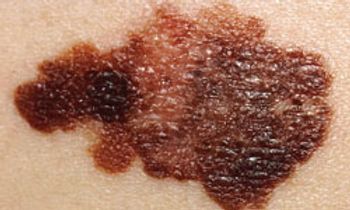
The incidence of melanoma, the deadliest of all skin cancers, is quickly rising, and the disease is responsible for more than 8000 deaths each year.
Nearly twice as many patients with metastatic melanoma who received a combination of ipilimumab and dacarbazine were alive after four years, suggesting that ipilimumab has long-term survival benefits.
Advertisement
Advertisement
Trending on OncLive
1
FDA Approves Tucatinib Plus Trastuzumab/Pertuzumab as First-Line Maintenance in Advanced HER2+ Breast Cancer
2
VIR-5500 Receives FDA Fast Track Designation in mCRPC
3
Iberdomide Plus Daratumumab/Dexamethasone Yields Significant PFS Benefit in R/R Myeloma
4
FDA Approves Atezolizumab Plus Chemo for Stage III dMMR Colon Cancer
5