





Immuno-Oncology
Latest News
Advertisement
Latest Videos



































































Advertisement
More News
Gary K. Schwartz, MD, discusses the clinical findings with the combination of nivolumab and ipilimumab in patients with dedifferentiated liposarcoma and undifferentiated pleomorphic sarcoma.

A new collaboration between the American Society of Clinical Oncology and the Association of Community Cancer Centers aims to encourage the enrollment of more racially and ethnically diverse patients with cancer onto clinical trials.

Treatment with immune checkpoint inhibitors did not increase the risk of mortality in patients with COVID-19 and cancer.

Pankti Reid, MD, MPH, discusses assessing immune-related adverse effects (irAEs) patients with cancer.
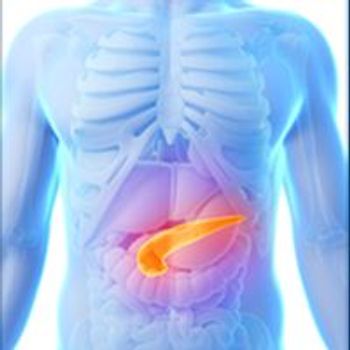
Investigators are working on a new generation of therapies that activate CD40, an immune checkpoint that helps promote an antitumor response by boosting T-cell–stimulatory signals.

Shilpa Gupta, MD, discusses challenges with perioperative immunotherapy in bladder cancer.

Yale Cancer Center researchers were awarded a $2.8 million grant from the National Cancer Institute to evaluate and model cytokine signaling related to immunotherapy for cancer.

Jamie E. Chaft, MD, discusses predictive biomarkers in lung cancer.

Marwan G. Fakih, MD, discusses the June 2020 FDA approval of pembrolizumab for use in select patients with unresectable or metastatic solid tumors that are tumor mutational burden–high provides a potentially life-saving option to those who have exhausted all other available therapies.

The FDA has approved pembrolizumab (Keytruda) for the first-line treatment of patients with unresectable or metastatic microsatellite instability–high or mismatch repair deficient colorectal cancer.

Sylvia Adams, MD, discusses the cohort 36 findings of the DART trial in metaplastic breast cancer and the evolution of immunotherapy, specifically in this rare breast cancer subtype.

The addition of the individualized neoantigen specific immunotherapy RO7198457 to atezolizumab induced neoantigen-specific T-cell responses, and was found to be well tolerated in patients with advanced solid malignancies.

The combination of atezolizumab and nab-paclitaxel, followed by doxorubicin and cyclophosphamide, demonstrated a statistically significant and clinically meaningful improvement in pathological complete response compared with placebo plus chemotherapy as a neoadjuvant treatment for patients with early triple-negative breast cancer, regardless of PD-L1 expression.

Shilpa Gupta, MD, discusses the potential utility of neoadjuvant versus adjuvant immunotherapy in urothelial carcinoma.

Andrew Coveler, MD, discusses the investigational CD40-directed monoclonal antibody SEA-CD40 in combination with gemcitabine, nab-paclitaxel, and pembrolizumab in patients with metastatic pancreatic ductal adenocarcinoma.

Jamie E. Chaft, MD, discusses considerations for restarting immunotherapy in patients with lung cancer.
Over the past decade, immunotherapy has established itself as one of the pillars of cancer treatment, thanks in large part to the success of monoclonal antibodies that target the immune checkpoint protein PD-1 or its main ligand, PD-L1.
Rogerio C. Lilenbaum, MD, discusses the promising future direction of immunotherapy in patients with advanced lung cancer.

Investigators are testing whether the addition of inhibitors targeting the PD-1 and IDO immune pathways to standard chemotherapy in the neoadjuvant setting will offer superior outcomes for patients with muscle-invasive bladder cancer.

Alexandra Drakaki, MD, discusses the ongoing research efforts being made in urothelial cancer, unmet needs and challenges faced in the space, and work that is generating further interest in the field.

Jüergen Wolf, MD, discusses data the phase 2 GEOMETRY mono-1 trial with capmatinib (Tabrecta) in patients with METex14-mutated or high MET amplified advanced non–small cell lung cancer.

MGD013, an investigational DART protein targeting PD-1 and LAG-3, demonstrated encouraging monotherapy activity as well as in combination with margetuximab in multiple tumor types.

Lyudmila A. Bazhenova, MD, discusses ongoing clinical trials in non–small cell lung cancer that are investigating the utility of immunotherapy.

Joshua Brody, MD, discusses addressing required resistance to immunotherapy in non-Hodgkin lymphoma.
Gregory A. Otterson, MD, discusses data examining immunotherapy alone versus in combination in non–small cell lung cancer.
Advertisement
Advertisement
Trending on OncLive
1
FDA Approves Tucatinib Plus Trastuzumab/Pertuzumab as First-Line Maintenance in Advanced HER2+ Breast Cancer
2
Iberdomide Plus Daratumumab/Dexamethasone Yields Significant PFS Benefit in R/R Myeloma
3
FDA Approves Atezolizumab Plus Chemo for Stage III dMMR Colon Cancer
4
VIR-5500 Receives FDA Fast Track Designation in mCRPC
5