



Immuno-Oncology
Latest News
Advertisement
Latest Videos

































































Advertisement
More News

Anti PD-L1 immunotherapy with atezolizumab (Tecentriq) was strongly superior to docetaxel in locally advanced or metastatic non–small cell lung cancer, according to 3-year survival findings from the phase II POPLAR study.

Andrew Ko, MD, discusses how the approval of pembrolizumab has impacted patients with positive PD-L1 expression and how clinical trials that have reshaped the standard of care in patients with gastric and GEJ cancers.
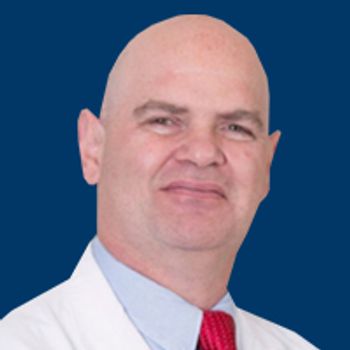
Benny Weksler, MD, FACS, discusses the use of surgery in a biomarker-driven and drug-dependent era and highlights other cases in which surgery can benefit patients with NSCLC.

Amit Gupta, MD, discusses the superiority of robotic cystectomy compared with open cystectomies and its relevance in the current treatment landscape of bladder cancer.

Single-agent treatment with the PD-1 inhibitor pembrolizumab improved overall survival versus chemotherapy as a frontline treatment for patients with locally advanced or metastatic non–small cell lung cancer and a PD-L1 expression level ≥1%.

Zev A. Wainberg, MD, discusses data from the pancreatic cancer cohort of a trial evaluating cabiralizumab in combination with nivolumab.
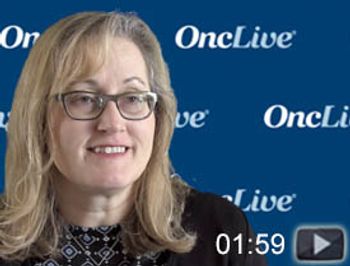
Julie R. Brahmer, MD, associate professor of oncology, co-director of the Upper Aerodigestive Department, Bloomberg Kimmel Institute for Cancer Immunotherapy, Johns Hopkins Medicine, discusses managing adverse events (AEs) of immunotherapy in lung cancer.

Jarushka Naidoo, MBBCh, assistant professor of oncology, Johns Hopkins University, discusses studies investigating immune-related adverse events for patients with lung cancer.
The FDA has granted a priority review to a supplemental biologics license application for nivolumab plus ipilimumab for the treatment of adult patients with microsatellite instability-high or mismatch repair deficient metastatic colorectal cancer following progression on a fluoropyrimidine, oxaliplatin, and irinotecan.

Almost half of patients with platinum-resistant ovarian cancer had objective responses to combination therapy with pembrolizumab plus the antifolate antibody-drug conjugate mirvetuximab soravtansine.
The European Medicines Agency’s Committee for Medicinal Products for Human Use has recommended adding the option of a 4-week dosing schedule to the label for nivolumab for the treatment of patients with advanced melanoma and previously treated renal cell carcinoma (RCC).

Treatment with the combination of atezolizumab, bevacizumab, carboplatin, and paclitaxel significantly improved overall survival compared with bevacizumab and chemotherapy alone for patients with advanced nonsquamous non–small cell lung cancer.

Mario Sznol, MD, professor of medicine, co-director, Yale SPORE in Skin Cancer, Yale Cancer Center, discusses advancements in immunotherapy for the treatment of patients with renal cell carcinoma.

Chad Pecot, MD, discusses the rapidly growing area of combination immunotherapy in non–small cell lung cancer.
David M. Nanus, MD, medical oncologist, Weill Cornell Medicine/NewYork-Presbyterian Hospital, discusses managing side effects from immunotherapy in renal cell carcinoma (RCC).
Guru Sonpavde, MD, director of Bladder Cancer at Dana-Farber Cancer Institute, discusses the next steps for the prognostic model for atezolizumab (Tecentriq) in patients with urothelial carcinoma.
A pair of trials that used checkpoint inhibitors as monotherapy reported lackluster overall response rates in breast cancer.

Michael J. Overman, MD, associate professor, department of Gastrointestinal Medical Oncology, The University of Texas MD Anderson Cancer Center, discusses the impact of nivolumab (Opdivo) on the treatment of patients with metastatic colorectal cancer (mCRC).
Edward S. Kim, MD, chair, Department of Solid Tumor Oncology, Levine Cancer Institute, discusses the impact of the PACIFIC trial in non–small cell lung cancer (NSCLC).

The addition of atezolizumab to frontline carboplatin and nab-paclitaxel delayed progression or death compared with chemotherapy alone for patients with advanced squamous non–small cell lung cancer.
Leonard Gomella, MD, professor, chair, Department of Urology, director, Sidney Kimmel Cancer Center Network, Thomas Jefferson University Hospital, discusses immunotherapy developments for patients with prostate cancer.
Mark J. Mann, MD, assistant professor, Sidney Kimmel Cancer Center, Thomas Jefferson Hospital, discusses the future of immunotherapy in prostate cancer.
Elizabeth Plimack, MD, director of Genitourinary Clinical Research at Fox Chase Cancer Center, discusses the growth of immunotherapy for the treatment of patients with bladder cancer.

Ani S. Balmanoukian, MD, discusses developments in genitourinary malignancies with promising immunotherapy breakthroughs in renal cell carcinoma and urothelial carcinoma.
Gilberto Lopes Jr, MD, a medical director for International Programs at Sylvester Comprehensive Cancer Center, University of Miami Miller School of Medicine, discusses the role of immunotherapy for patients with head and neck cancer.
Advertisement
Advertisement
Trending on OncLive
1
FDA Approves Tucatinib Plus Trastuzumab/Pertuzumab as First-Line Maintenance in Advanced HER2+ Breast Cancer
2
FDA Grants Breakthrough Device Designation to Natera’s Multi-Cancer Early Detection Assay
3
Iberdomide Plus Daratumumab/Dexamethasone Yields Significant PFS Benefit in R/R Myeloma
4
VIR-5500 Receives FDA Fast Track Designation in mCRPC
5